Passage Study
Balaam’s First Oracle: Whom God Blesses Cannot Be Cursed
Numbers 23:1–23:12
Numbers 23:1–12 shows Balak arranging seven altars and waiting for the curse he has paid for, while Balaam returns with a blessing he did not invent. The Lord’s covenant purpose over Israel cannot be overturned by ritual, fear, or hostile speech. In Jesus, that blessing reaches its goal as God brings people from every nation into the family promised to Abraham.
- In this study
- 12 verses · 5 movements
Numbers 23
23:1Balaam said to Balak, “Build here seven altars for me, and prepare here seven bulls and seven rams for me.”
23:2Balak did as Balaam had spoken; and Balak and Balaam offered on every altar a bull and a ram.
23:3Balaam said to Balak, “Stand by your burnt offering, and I will go. Perhaps the LORD will come to meet me. Whatever he shows me I will tell you.” He went to a bare height.
23:4God met Balaam, and he said to him, “I have prepared the seven altars, and I have offered up a bull and a ram on every altar.”
23:5The LORD put a word in Balaam’s mouth, and said, “Return to Balak, and thus you shall speak.”
23:6He returned to him, and behold, he was standing by his burnt offering, he, and all the princes of Moab.
23:7He took up his parable, and said, “From Aram has Balak brought me, the king of Moab from the mountains of the East. Come, curse Jacob for me. Come, defy Israel.
23:8How shall I curse whom God has not cursed? How shall I defy whom the LORD has not defied?
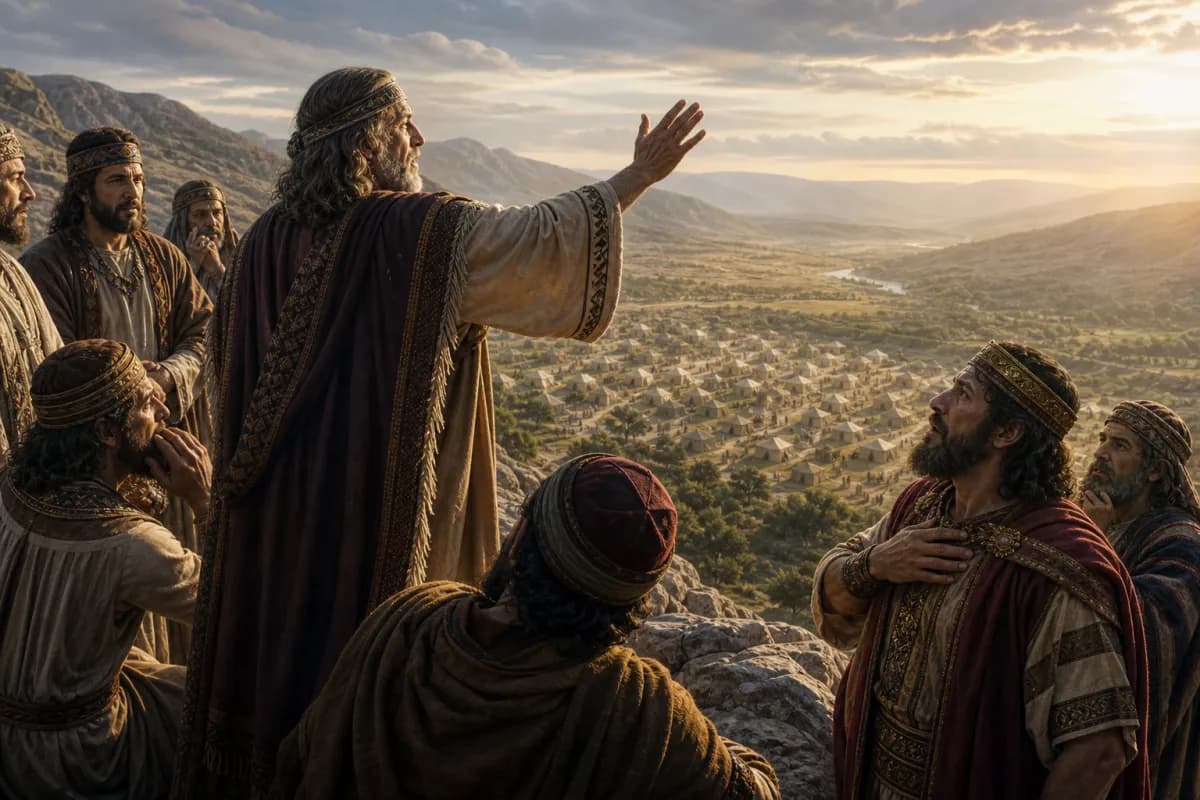
23:9For from the top of the rocks I see him. From the hills I see him. Behold, it is a people that dwells alone, and shall not be listed among the nations.
23:10Who can count the dust of Jacob, or count the fourth part of Israel? Let me die the death of the righteous! Let my last end be like his!”
23:11Balak said to Balaam, “What have you done to me? I took you to curse my enemies, and behold, you have blessed them altogether.”
23:12He answered and said, “Must I not take heed to speak that which the LORD puts in my mouth?”
CONTEXTUAL OVERVIEW
Balak now moves from hospitality to public ritual. Seven altars, seven bulls, and seven rams express the king’s determined effort to secure a curse. Yet the narrative’s center is not the scale of the sacrifice but the Lord’s freedom: Balaam goes alone, the Lord meets him, and the message placed in Balaam’s mouth reverses Balak’s aim.
The first oracle asks a question that exposes the whole project: How can Balaam curse those whom God has not cursed? Israel’s safety rests neither in Balaam’s skill nor in its own strength. It rests in God’s settled covenant favor, even as this wilderness generation remains accountable for unbelief and disobedience.
HISTORICAL AND LITERARY CONTEXT
The repeated altars fit Balak’s attempt to obtain a favorable verdict through elaborate religious action. Scripture does not explain the number seven here as a secret code; it simply records a lavish preparation that fails to control the Lord. The God who brought Israel from Egypt is not manipulated by a foreign king’s ritual setting.
Balaam’s language about Israel dwelling apart describes its covenant identity among the nations. It does not authorize pride, ethnic contempt, or permanent isolation from God’s concern for the nations. The Abrahamic promise always holds together a distinct covenant people and the eventual blessing of all families of the earth.
SECTION-BY-SECTION ANALYSIS
- Seven altars · Numbers 23:1Balak multiplies ritual action, but no quantity of sacrifice can compel the Lord to oppose His own promise.
- A people set apart · Numbers 23:9Israel’s distinct identity comes from God’s covenant calling, which carries both privilege and responsibility.
- A blessing spoken · Numbers 23:2The first oracle makes clear that God’s verdict, not Balak’s fear, governs the future of His people.
CHRIST IN THIS PASSAGE
The oracle directly concerns Israel, not the church as a replacement for Israel. Its strongest Christ-centered connection runs through the covenant promise that God would bless Abraham’s family and, through that family, bless the nations. Jesus is the promised descendant through whom that purpose reaches its saving fulfillment.
Because Christ bears the curse of sin for those who trust Him, hostile accusations and spiritual manipulation cannot cancel God’s grace. That does not mean believers escape every hardship; it means their standing before God is secured by Jesus’ death and resurrection, not by the verdict of enemies or the performance of rituals.
REFLECTION
When condemnation feels loud, people often look for a technique that will make them safe: a formula, a spiritual transaction, or another person’s approval. Balaam’s first oracle turns the gaze away from manipulation and toward God’s covenant faithfulness. The deepest security is not self-made protection but the God who keeps His word.
Receive Christ’s grace with humility rather than turning blessing into superiority. His mission creates a people who belong to Him and then sends them toward their neighbors with the good news that no curse has the final authority over those reconciled to God through Jesus.
Original Hebrew Word Study
Numbers 23:8
קָבַב
qavav · H6895
Usually translated: to curse
Qavav means to curse. Balaam cannot curse the people God has not cursed, because Israel’s future is governed by the Lord’s covenant word rather than a king’s payment.
Follow the Scripture trail
Balaam’s First Oracle: Whom God Blesses Cannot Be Cursed in the larger story
The connection: The Lord guards the blessing spoken over Abraham’s family despite Balak’s attempt to purchase a curse. That covenant purpose reaches its saving goal in Jesus, who bears sin’s curse and gathers believing people from the nations into God’s promised family.
Respond to the passage
When condemnation or fear presses in, turn deliberately to Jesus rather than a spiritual formula. Thank Him that your standing with God rests on His grace, then speak that hope to someone who feels marked by failure or accusation.
- Why does the scale of Balak’s altar-building make the Lord’s independent word especially clear?
- How does Israel’s being set apart differ from an excuse for spiritual pride?
- How does Christ’s bearing of the curse change the way you face accusation or fear?
Prayer
Father, thank You that Your grace is not controlled by human pressure or ritual. Keep me humble in the blessing I receive through Jesus, and send me to share His hope with those who feel condemned. Amen.