Passage Study
A Third High Place: When Manipulation Keeps Moving
Numbers 23:27–23:30
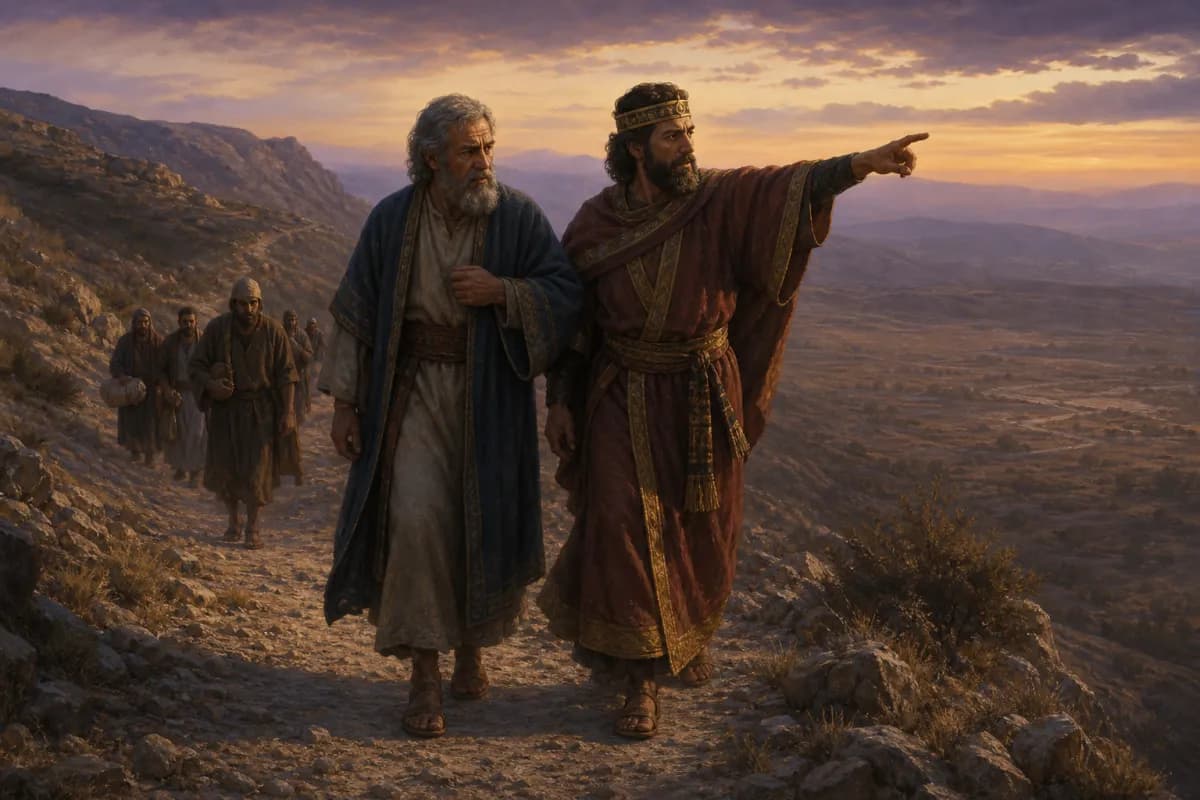
Numbers 23:27–30 records Balak’s final attempt to move Balaam to another mountain in hope that God may permit a curse from there. The brief passage offers no new oracle yet; it exposes the persistence of a king who keeps changing the setting instead of accepting the Lord’s word. Jesus calls His followers to repent of manipulation and to receive God’s will with the trust of children rather than trying to engineer a favorable verdict.
- In this study
- 4 verses · 5 movements
Numbers 23
23:27Balak said to Balaam, “Come now, I will take you to another place; perhaps it will please God that you may curse them for me from there.”
23:28Balak took Balaam to the top of Peor, that looks down on the desert.
23:29Balaam said to Balak, “Build seven altars for me here, and prepare seven bulls and seven rams for me here.”
23:30Balak did as Balaam had said, and offered up a bull and a ram on every altar.
CONTEXTUAL OVERVIEW
This is a deliberately small hinge between the second and third oracles. Balak has heard twice that the Lord will not curse Israel, yet he proposes one more location. The narrative does not let the reader rush past this repeated motion because it displays the heart of manipulation: changing the conditions while refusing the answer already given.
The top of Peor overlooks the wilderness, a view that will later stand near Israel’s grave covenant failure with Baal of Peor. At this moment the text does not yet narrate that sin; it records Balak’s choice of a high place and his hope that a new setting might alter the Lord’s decision.
HISTORICAL AND LITERARY CONTEXT
Balak’s words, “perhaps it will please God,” do not express humble submission. They continue his effort to obtain a curse after two explicit refusals. The phrase reveals a theological error: he imagines the Lord’s will can be adjusted by better positioning and repeated sacrifice.
The mention of Peor is geographically and narratively important, but it should not be overloaded here. Numbers 25 will show Israel’s later seduction into Baal worship at Peor. This scene prepares no direct explanation of that episode; it simply locates Balak’s last attempt on a height associated with the Moabite region.
SECTION-BY-SECTION ANALYSIS
- One more place · Numbers 23:27Balak responds to an unwelcome word by changing circumstances rather than changing his heart.
- Peor’s height · Numbers 23:28The new viewpoint gives Balak a different landscape but no authority over the Lord.
- Repeated preparation · Numbers 23:29The sacrifices increase narrative tension while showing that ritual cannot force God to act against His promise.
CHRIST IN THIS PASSAGE
This transition is not a messianic prediction. Its Christ-centered force is moral and pastoral: it exposes the opposite of Jesus’ obedience. In Gethsemane, Jesus brings His anguish honestly before the Father yet submits to the Father’s will rather than seeking a way to bend it to His own comfort.
Jesus’ saving mission also delivers people from the exhausting cycle of spiritual bargaining. Because He has opened access to God through His self-giving death, believers need not search for a formula, place, or performance that will force God’s favor. They can come as children who trust the Father and follow the Son.
REFLECTION
Some resistance to God is loud; some is more polished. It may look like endlessly revisiting a decision, adding a new condition, or seeking a different spiritual voice until we hear what we wanted in the first place. Balak’s third high place invites an honest question: where am I changing the setting because I will not receive God’s answer?
Jesus meets that resistance with both truth and mercy. Bring the desired outcome to Him openly, then ask for the grace to obey rather than bargain. This is part of the church’s mission too: we invite people into a relationship with the living God, not a technique for controlling life.
Original Hebrew Word Study
Numbers 23:27
נִסָּה
nissah · H5254
Usually translated: to test or try
Nasah means to test. Balak keeps moving Balaam in hope of a different result, but the changing location cannot change the Lord’s settled word.
Follow the Scripture trail
A Third High Place: When Manipulation Keeps Moving in the larger story
The connection: Balak’s repeated movement from height to height shows the futility of trying to engineer God’s verdict. Jesus receives the Father’s will and opens direct access to God through His saving death, freeing His people for trusting obedience and honest witness.
Respond to the passage
Tell Jesus where you have been trying to negotiate His will through delay, conditions, or repeated attempts to get a different answer. Ask for a willing heart, then take the next clear step of obedience He has already placed before you.
- Why is Balak’s third attempt a form of resistance rather than perseverance in faith?
- What does the repeated altar-building show about the limits of religious activity without submission?
- How does Jesus’ prayer in Gethsemane reshape the way you bring hard desires to God?
Prayer
Lord Jesus, I confess the ways I try to negotiate Your will instead of trusting You. Teach me to bring my desires honestly to the Father and to follow You in willing obedience. Amen.