Passage Study
The Trumpet Day: A People Summoned Before God
Numbers 29:1–29:6
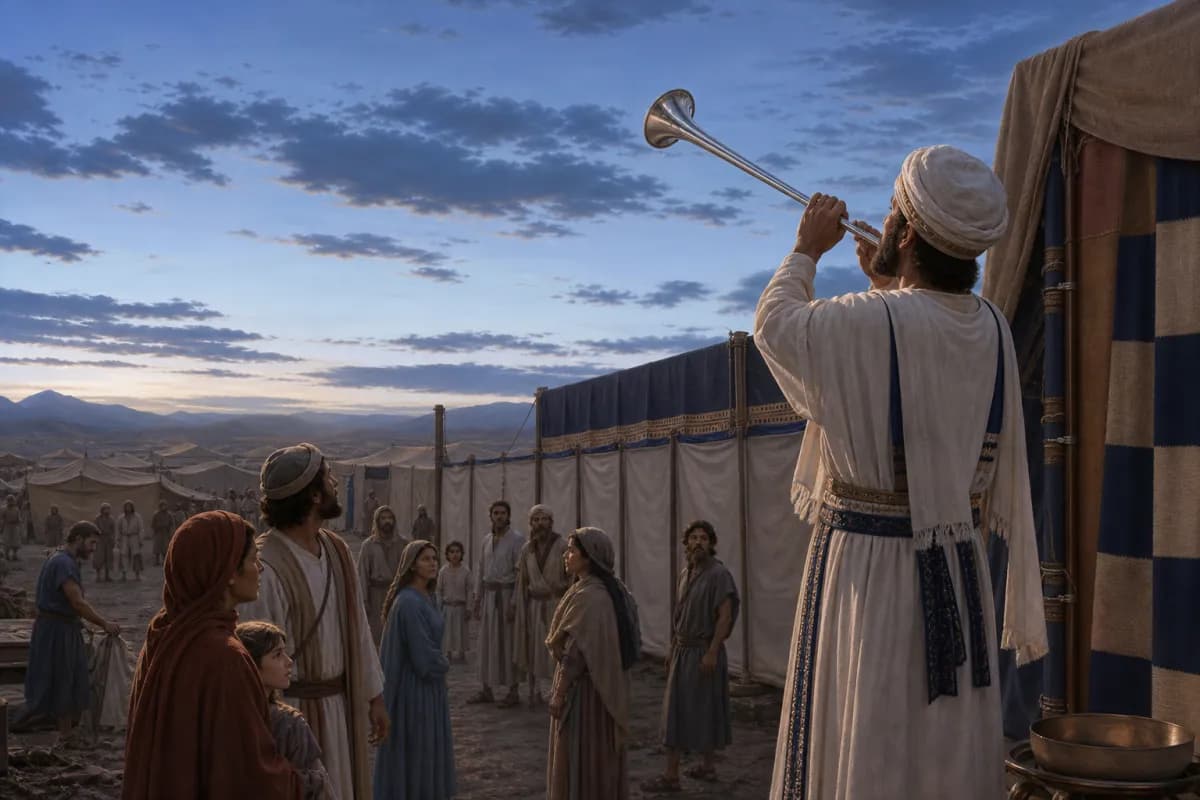
Numbers 29:1–6 sets apart the first day of the seventh month as a holy assembly marked by trumpet blasts, rest from ordinary labor, and prescribed offerings. The sound gathers Israel before the Lord at the beginning of its most solemn month. Jesus gathers His people through the gospel now and will openly summon them at His return, so His church lives awake, worshipful, and ready.
- In this study
- 6 verses · 5 movements
Numbers 29
29:1“‘In the seventh month, on the first day of the month, you shall have a holy convocation; you shall do no regular work. It is a day of blowing of trumpets to you.
29:2You shall offer a burnt offering for a pleasant aroma to the LORD: one young bull, one ram, seven male lambs a year old without defect;
29:3and their meal offering, fine flour mixed with oil: three tenths for the bull, two tenths for the ram,
29:4and one tenth for every lamb of the seven lambs;
29:5and one male goat for a sin offering, to make atonement for you;
29:6in addition to the burnt offering of the new moon with its meal offering, and the continual burnt offering with its meal offering, and their drink offerings, according to their ordinance, for a pleasant aroma, an offering made by fire to the LORD.
CONTEXTUAL OVERVIEW
The seventh month opens with sound. Israel is commanded to stop ordinary work, assemble as holy, and mark the day with teruah, a loud trumpet blast or shout. The chapter does not explain every social use of trumpets; it directs this particular sound toward worship at the start of a month that will include the Day of Atonement and the Festival of Booths.
The gathering is not empty ceremony. Israel comes before the Lord with animals without blemish, grain, drink, and a goat for purification. The blast calls a redeemed but still sinful people into the presence of their holy God.
HISTORICAL AND LITERARY CONTEXT
Numbers 29 records the offerings for the seventh-month feasts as Israel prepares to enter Canaan. The trumpet day corresponds to the first day named in Leviticus 23. Later Jewish tradition associates this day with Rosh Hashanah, but Numbers itself emphasizes the holy assembly, the sounding, and its sacrificial requirements.
The daily offering and the new-moon offering remain in force alongside the festival gifts. The accumulation teaches that a special day does not suspend Israel’s ordinary dependence on God. Celebration, cleansing, and regular worship meet in one public act.
SECTION-BY-SECTION ANALYSIS
- A holy assembly · Numbers 29:1The people respond together to God’s call; worship is not reduced to individual preference.
- A sounding blast · Numbers 29:2The trumpet makes the day audible and memorable, summoning Israel to attend to the Lord.
- Offerings in addition · Numbers 29:6The special gathering deepens rather than displaces the continual pattern of worship and cleansing.
CHRIST IN THIS PASSAGE
The trumpet in Numbers first serves Israel’s worship under the old covenant; it is not a coded prediction of every later trumpet image. Yet Scripture later uses trumpet language for God’s public gathering and final appearing. Jesus speaks of His angels gathering His elect, and Paul describes the Lord’s return with a trumpet call. Those are strong thematic and canonical connections, not a claim that Numbers 29 maps every end-time detail.
Christ has already begun His gathering by calling people through the gospel into one holy people. His return will make that summons visible and final. The goat for purification keeps Christian expectation from becoming curiosity about dates: the One who will come as Judge is the Savior who cleanses sinners now and sends them to call others to repentance and faith.
REFLECTION
A trumpet day interrupts normal labor because some realities must not be absorbed into the week’s noise. The church does not keep Numbers’ sacrificial calendar, but believers do need rhythms that interrupt self-importance and make them listen again to the God who calls them.
Receive gathered worship as a summons rather than a consumer choice. Ask whether some ordinary preoccupation has made you deaf to Christ’s call, and tell one person why Christian hope includes a returning King who invites sinners to come to Him before that day.
Original Hebrew Word Study
Numbers 29:1
תְּרוּעָה
teruah · H8643
Usually translated: trumpet blast or shout
Teruah is a sounding blast. The first day of the seventh month calls Israel into a holy assembly marked by remembrance and worship.
Follow the Scripture trail
The Trumpet Day: A People Summoned Before God in the larger story
The connection: The seventh-month trumpet gathers Israel before the Lord with sacrifice and cleansing. Jesus now gathers a holy people by His gospel and will finally summon them at His appearing, making present worship and mission a preparation for His public reign.
Respond to the passage
Set aside a deliberate time this week to hear Christ’s call in Scripture and gathered worship, then invite someone who is far from Him to consider the hope and warning of His return.
- What does the trumpet accomplish in this particular seventh-month gathering?
- Why does the passage retain the daily and monthly offerings alongside the festival offering?
- How does the prospect of Christ’s return change worship from routine into readiness?
Prayer
Lord Jesus, tune my distracted heart to Your voice. Thank You for gathering me by grace and for the sure promise of Your return. Make me watchful in worship, clean in conscience, and brave in inviting others to trust You. Amen.