Passage Study
Booths and Abundant Offerings: Joyful Dependence in the Wilderness
Numbers 29:12–29:40
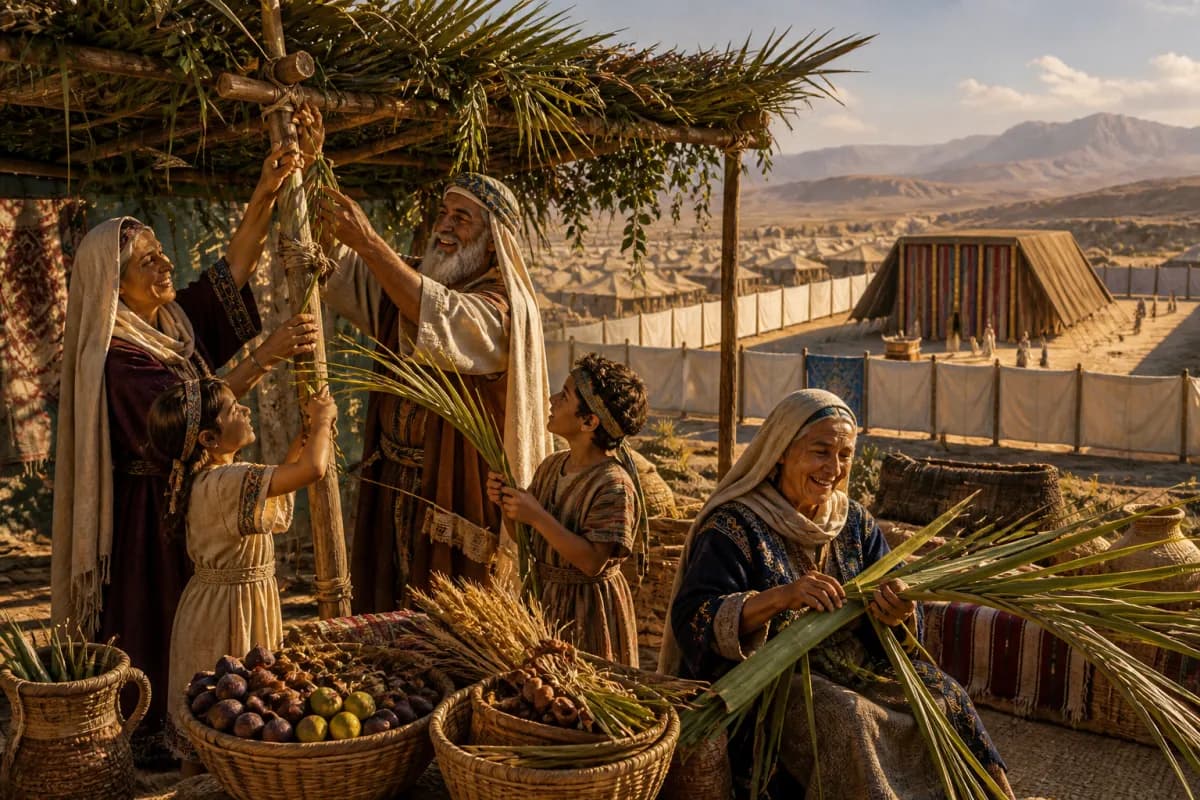
Numbers 29:12–40 details the offerings for the seven days of the Festival of Booths and the concluding eighth-day assembly. The descending number of bulls, the repeated lambs, and the final solemn gathering give Israel a full week of grateful worship after the harvest. Jesus fulfills the feast’s wilderness hope by dwelling with His people and giving the living water for which the festival’s joy longs.
- In this study
- 29 verses · 5 movements
Numbers 29
29:12“‘On the fifteenth day of the seventh month you shall have a holy convocation. You shall do no regular work. You shall keep a feast to the LORD seven days.
29:13You shall offer a burnt offering, an offering made by fire, of a pleasant aroma to the LORD: thirteen young bulls, two rams, fourteen male lambs a year old, all without defect;
29:14and their meal offering, fine flour mixed with oil: three tenths for every bull of the thirteen bulls, two tenths for each ram of the two rams,
29:15and one tenth for every lamb of the fourteen lambs;
29:16and one male goat for a sin offering, in addition to the continual burnt offering, its meal offering, and its drink offering.
29:17“‘On the second day you shall offer twelve young bulls, two rams, and fourteen male lambs a year old without defect;
29:18and their meal offering and their drink offerings for the bulls, for the rams, and for the lambs, according to their number, after the ordinance;
29:19and one male goat for a sin offering, in addition to the continual burnt offering, with its meal offering and their drink offerings.
29:20“‘On the third day: eleven bulls, two rams, fourteen male lambs a year old without defect;
29:21and their meal offering and their drink offerings for the bulls, for the rams, and for the lambs, according to their number, after the ordinance;
29:22and one male goat for a sin offering, in addition to the continual burnt offering, and its meal offering, and its drink offering.
29:23“‘On the fourth day ten bulls, two rams, fourteen male lambs a year old without defect;
29:24their meal offering and their drink offerings for the bulls, for the rams, and for the lambs, according to their number, after the ordinance;
29:25and one male goat for a sin offering; in addition to the continual burnt offering, its meal offering, and its drink offering.
29:26“‘On the fifth day: nine bulls, two rams, fourteen male lambs a year old without defect;
29:27and their meal offering and their drink offerings for the bulls, for the rams, and for the lambs, according to their number, after the ordinance,
29:28and one male goat for a sin offering, in addition to the continual burnt offering, and its meal offering, and its drink offering.
29:29“‘On the sixth day: eight bulls, two rams, fourteen male lambs a year old without defect;
29:30and their meal offering and their drink offerings for the bulls, for the rams, and for the lambs, according to their number, after the ordinance,
29:31and one male goat for a sin offering; in addition to the continual burnt offering, its meal offering, and the drink offerings of it.
29:32“‘On the seventh day: seven bulls, two rams, fourteen male lambs a year old without defect;
29:33and their meal offering and their drink offerings for the bulls, for the rams, and for the lambs, according to their number, after the ordinance,
29:34and one male goat for a sin offering; in addition to the continual burnt offering, its meal offering, and its drink offering.
29:35“‘On the eighth day you shall have a solemn assembly. You shall do no regular work;
29:36but you shall offer a burnt offering, an offering made by fire, a pleasant aroma to the LORD: one bull, one ram, seven male lambs a year old without defect;
29:37their meal offering and their drink offerings for the bull, for the ram, and for the lambs, shall be according to their number, after the ordinance,
29:38and one male goat for a sin offering, in addition to the continual burnt offering, with its meal offering, and its drink offering.
29:39“‘You shall offer these to the LORD in your set feasts—in addition to your vows and your free will offerings—for your burnt offerings, your meal offerings, your drink offerings, and your peace offerings.’”
29:40Moses told the children of Israel according to all that the LORD commanded Moses.
CONTEXTUAL OVERVIEW
The Festival of Booths is the most extended offering sequence in Numbers 29. Beginning on the fifteenth day of the seventh month, it fills seven days with a large and precisely ordered set of sacrifices. Israel celebrates after harvest while remembering that its ancestors lived in temporary shelters under the Lord’s care in the wilderness.
The passage is deliberately repetitive, but not empty. Bulls fall from thirteen on the first day to seven on the seventh; rams remain two; lambs remain fourteen; and each day includes grain, drink, and purification offerings. Joy is given a liturgy so that abundance does not become forgetfulness.
HISTORICAL AND LITERARY CONTEXT
Leviticus 23 names the booths themselves and connects the feast to Israel’s wilderness dwelling. Numbers 29 concentrates on the sacrifices offered at the sanctuary. Both dimensions matter: the people remember fragile shelter and bring the produce of settled land before the God who sustained them before they possessed fields.
The feast follows the Day of Atonement in the same seventh month. Cleansing before God and joy before God are not rivals. Israel’s celebration rests on the mercy by which a holy God receives His people.
SECTION-BY-SECTION ANALYSIS
- Seven days of offerings · Numbers 29:12Israel’s harvest joy is sustained worship, not a brief burst of thanks disconnected from obedience.
- The decreasing bulls · Numbers 29:14The changing count is a real feature of the liturgy; Numbers does not authorize speculative meanings for each number.
- The eighth-day assembly · Numbers 29:35The feast concludes by gathering the people once more in a solemn, God-centered act of worship.
CHRIST IN THIS PASSAGE
The direct background for Christ is the festival’s remembrance that Israel depended on God in the wilderness and its rejoicing in His provision. John places Jesus at the Festival of Booths when He invites the thirsty to come to Him and promises living water. That is an explicit Gospel setting, though Numbers 29 itself focuses on offerings rather than narrating the later water rites associated with the feast.
Jesus is also the Word who “tabernacled” among us, making God’s presence available in a way the sanctuary offerings anticipated but could not complete. His saving mission creates a pilgrim people who can enjoy created gifts without treating this present world as their permanent shelter. He sends them to offer grateful witness to the One who gives life that lasts.
REFLECTION
Harvest can make a person feel secure, successful, and self-sufficient. Booths says otherwise. Israel lives for a week under a reminder that homes, crops, and stability were gifts given after a long dependence on God in the desert.
Celebrate good provision with thanksgiving that has structure: share a meal, give generously, gather with God’s people, and remember those still living with uncertainty. Jesus’ living water equips His people to speak hope to neighbors who have abundance but remain thirsty for God.
Original Hebrew Word Study
Numbers 29:12
סֻכָּה
sukkah · H5521
Usually translated: booth or temporary shelter
Sukkah names the festival’s temporary shelters. The abundant offerings celebrate God’s provision while remembering Israel’s dependence in the wilderness.
Follow the Scripture trail
Booths and Abundant Offerings: Joyful Dependence in the Wilderness in the larger story
The connection: Booths trains Israel to rejoice in harvest without forgetting wilderness dependence. In Jesus, God dwells with His people and gives the Spirit’s living water, forming pilgrims who enjoy His gifts gratefully and invite the thirsty to Him.
Respond to the passage
Thank God for one provision you are tempted to treat as permanent, and turn that gratitude into generosity toward someone with less security while speaking of the living water Jesus gives.
- Why does the festival combine harvest abundance with the memory of temporary shelters?
- What does Numbers actually say about the changing number of bulls, and what does it leave unexplained?
- How does Jesus’ invitation in John 7 deepen the feast’s theme of dependence?
Prayer
God of the wilderness and the harvest, keep me from confusing Your gifts with my security. Thank You that Jesus has come to dwell with us and give living water. Teach me joyful gratitude, open-handed generosity, and a pilgrim heart. Amen.