Passage Study
The Day of Atonement: Humility Before Holy Mercy
Numbers 29:7–29:11
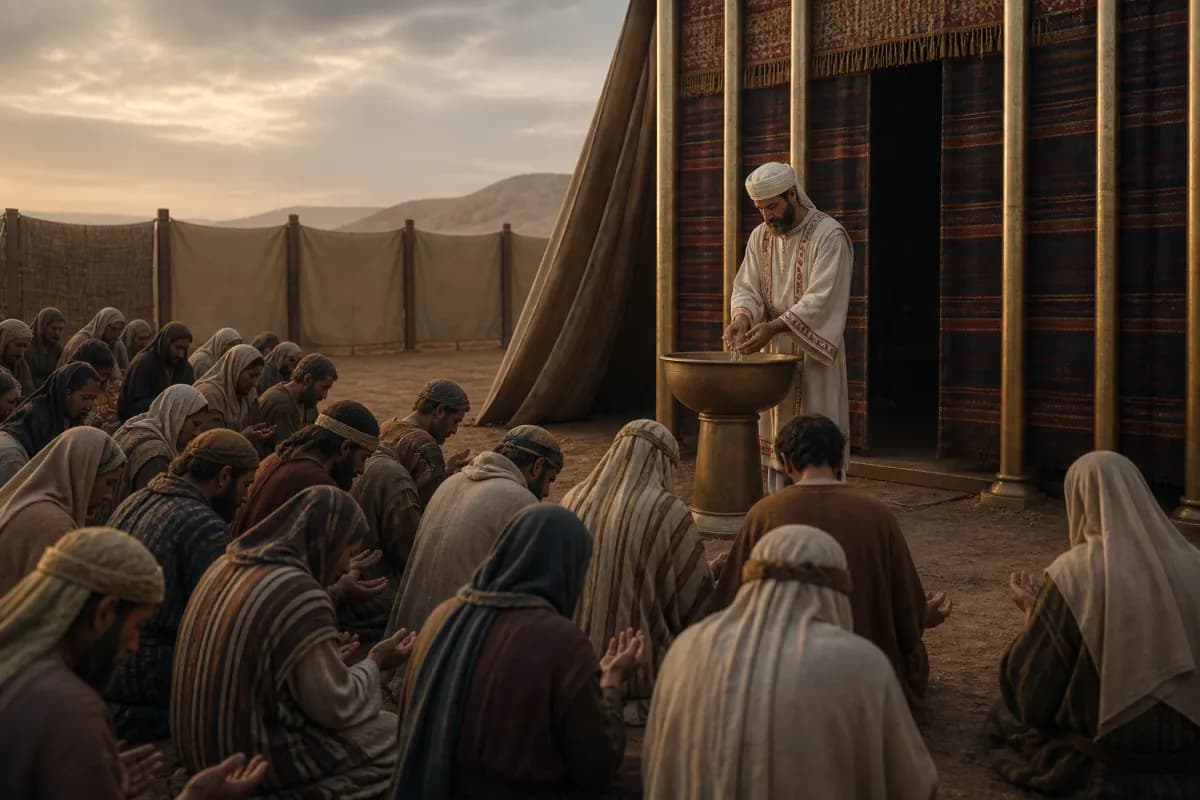
Numbers 29:7–11 commands Israel to humble itself on the Day of Atonement while the priest offers the sacrifices appointed for cleansing. The day holds grief for sin and confidence in God’s provision together. Jesus fulfills its hope by entering God’s presence through His own blood, securing forgiveness and calling His people to humble, trusting repentance.
- In this study
- 5 verses · 5 movements
Numbers 29
29:7“‘On the tenth day of this seventh month you shall have a holy convocation. You shall afflict your souls. You shall do no kind of work;
29:8but you shall offer a burnt offering to the LORD for a pleasant aroma: one young bull, one ram, seven male lambs a year old, all without defect;
29:9and their meal offering, fine flour mixed with oil: three tenths for the bull, two tenths for the one ram,
29:10one tenth for every lamb of the seven lambs;
29:11one male goat for a sin offering, in addition to the sin offering of atonement, and the continual burnt offering, and its meal offering, and their drink offerings.
CONTEXTUAL OVERVIEW
After the trumpet day at the beginning of the seventh month, Israel reaches its most solemn gathering. They are to afflict or humble themselves and do no work while offerings are brought before the Lord. The day refuses both denial and self-salvation: sin is serious enough to require atonement, and God Himself supplies the ordered means of approach.
The passage is concise because Leviticus 16 has already described the wider ritual. Its concentrated wording makes one point unmistakable for this new generation: atonement belongs at the center of the nation’s life, even as they prepare to receive land and settle into ordinary patterns.
HISTORICAL AND LITERARY CONTEXT
The Day of Atonement, later called Yom Kippur, occurs on the tenth day of the seventh month. Leviticus 16 describes the high priest’s entry into the most holy place and the sending away of the scapegoat; Numbers 29 lists the festival offerings that accompany that day. The passages belong together without being identical.
The command to humble oneself is communal. Israel cannot treat guilt as merely individual when the Lord dwells in the midst of the camp. Yet the ritual does not imply that outward fasting purchases forgiveness. It is a God-given response to the atonement He provides through the priestly ministry.
SECTION-BY-SECTION ANALYSIS
- Humble yourselves · Numbers 29:7Repentance begins with truthful dependence before God rather than self-justification.
- No ordinary work · Numbers 29:11Rest dramatizes that atonement is received from God, not achieved by human effort.
- The sin offering remains · Numbers 29:8The festival offerings do not replace the need for cleansing from actual guilt.
CHRIST IN THIS PASSAGE
The New Testament treats the Day of Atonement as a major pattern for understanding Jesus’ saving work. Hebrews does not say that the old ritual was useless; it says that its repeated and restricted access showed the need for a better priest and a decisive sacrifice. Jesus enters the heavenly holy place through His own blood and obtains eternal redemption.
Therefore Christian humility is not fear that Christ’s atonement may fail. It is honest repentance before the One who has made forgiveness possible. Jesus sends forgiven people into the world with no need to conceal their sin or proclaim their own goodness; they can testify to the mercy that reconciles the guilty to God.
REFLECTION
Some people avoid repentance because they confuse it with despair. Others perform remorse while protecting their self-rule. The Day of Atonement holds together a broken heart and a real hope: God addresses the sin His people cannot remove.
Come to Jesus without excuse and without pretending you can add to His sacrifice. Receive His cleansing, name the specific wrong that needs confession, and tell a fellow sinner that the gospel offers more than vague self-improvement—it offers peace with God.
Original Hebrew Word Study
Numbers 29:7
עָנָה
anah · H6031
Usually translated: to humble or afflict oneself
Anah means to humble oneself. The people respond to the Day of Atonement with repentance and dependence upon God’s cleansing mercy.
Follow the Scripture trail
The Day of Atonement: Humility Before Holy Mercy in the larger story
The connection: The Day of Atonement teaches Israel to humble itself before the mercy God provides. Jesus completes that pattern as the true high priest and sacrifice, cleansing sinners and sending forgiven people to announce reconciliation in His name.
Respond to the passage
Take time to confess one specific sin to Jesus without minimizing it. Trust His completed atonement, and where fitting seek reconciliation with the person your sin has harmed.
- Why are humility and rest both required on this day?
- What does the retained sin offering keep Israel from assuming about religious emotion?
- How does Hebrews change the way Christians approach confession and assurance?
Prayer
Merciful Father, I cannot cleanse my own conscience. Thank You for Jesus, who entered Your presence with His own blood. Give me a humble and truthful heart, restore what my sin has damaged, and make me a clear witness to Your forgiveness. Amen.