Passage Study
Levitical Cities: Holy Service Woven Through Israel’s Land
Numbers 35:1–35:8
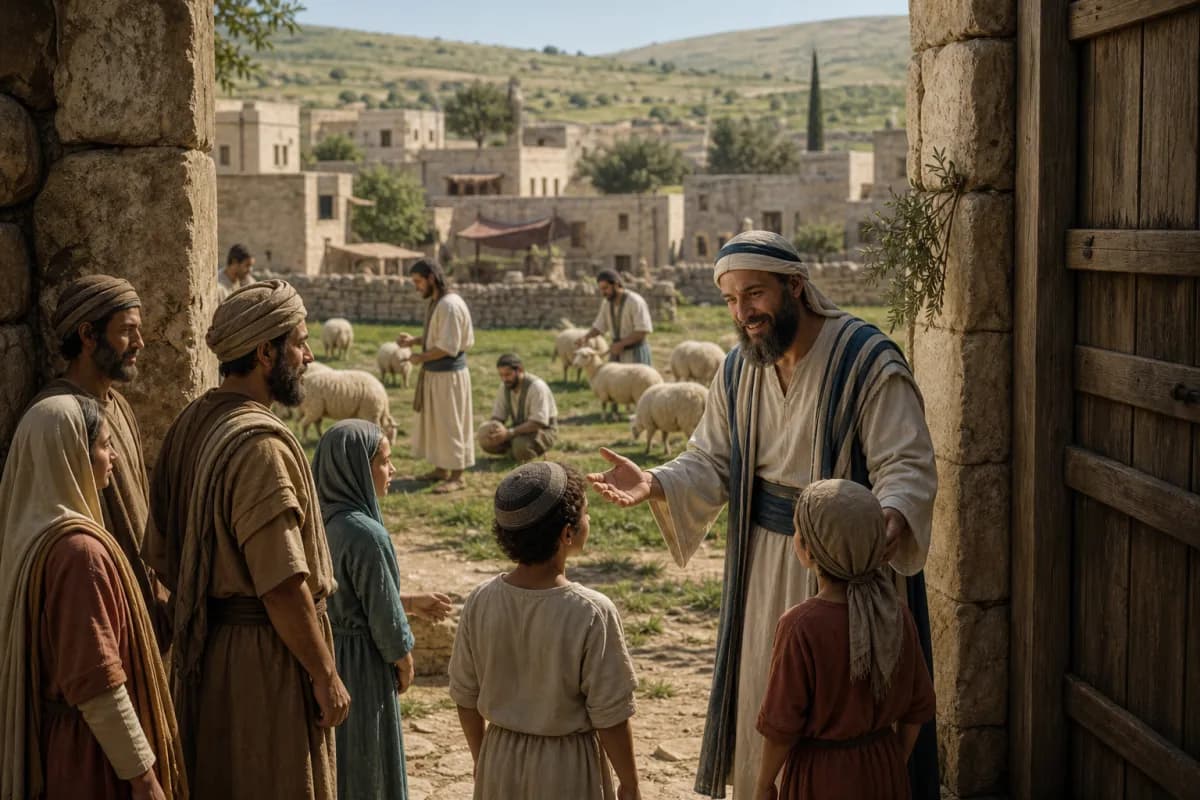
Numbers 35:1–8 requires the tribes to give forty-eight cities with surrounding pastureland to the Levites, who receive no single tribal territory. Their homes are distributed through Israel so the service of the sanctuary remains connected to the whole people. Jesus, the true priest who dwells with His people, forms a church in which every place can become a setting for holy service, generous provision, and gospel witness.
- In this study
- 8 verses · 5 movements
Numbers 35
35:1The LORD spoke to Moses in the plains of Moab by the Jordan at Jericho, saying,
35:2“Command the children of Israel to give to the Levites cities to dwell in out of their inheritance. You shall give pasture lands for the cities around them to the Levites.
35:3They shall have the cities to dwell in. Their pasture lands shall be for their livestock, and for their possessions, and for all their animals.
35:4“The pasture lands of the cities, which you shall give to the Levites, shall be from the wall of the city and outward one thousand cubits around it.
35:5You shall measure outside of the city for the east side two thousand cubits, and for the south side two thousand cubits, and for the west side two thousand cubits, and for the north side two thousand cubits, the city being in the middle. This shall be the pasture lands of their cities.
35:6“The cities which you shall give to the Levites, they shall be the six cities of refuge, which you shall give for the man slayer to flee to. Besides them you shall give forty-two cities.
35:7All the cities which you shall give to the Levites shall be forty-eight cities together with their pasture lands.
35:8Concerning the cities which you shall give of the possession of the children of Israel, from the many you shall take many, and from the few you shall take few. Everyone according to his inheritance which he inherits shall give some of his cities to the Levites.”
CONTEXTUAL OVERVIEW
Numbers 35 begins after the land boundaries and turns to the tribe that will not receive one contiguous territory. The Levites are given cities within the other tribes’ inheritances and open land around those cities for their animals and goods. Their lack of a single land allotment does not mean neglect; the whole nation makes room for the servants of the tabernacle.
The distribution keeps worship near the people. Levites live across Israel rather than retreating to one remote religious district. The chapter will soon name six of these cities as refuges, but verses 1–8 first establish the broad network of forty-eight places and the shared obligation that supports it.
HISTORICAL AND LITERARY CONTEXT
Earlier Numbers says the Levites are given to Aaron for service at the tent of meeting and receive tithes rather than a tribal land inheritance. Numbers 35 explains how that arrangement will look once Israel settles: cities come out of the other tribes’ land, with surrounding migrash, open land or pastureland, measured from the city wall.
The allocation is proportionate. Larger tribes give more cities and smaller tribes fewer, each contributing from the inheritance it receives. This is covenant economics rather than private philanthropy. Israel’s shared worship requires material provision from the whole people.
SECTION-BY-SECTION ANALYSIS
- Cities within tribal inheritances · Numbers 35:2Levitical service is geographically woven through Israel rather than confined to a separate territorial block.
- Pastureland around the cities · Numbers 35:4The Lord’s provision includes the practical needs of households, animals, and livelihood.
- According to tribal size · Numbers 35:8Larger inheritances carry a larger share of the responsibility for the Levites’ cities.
CHRIST IN THIS PASSAGE
The Levites’ distributed cities are not a blueprint for a Christian clergy class owning territory. They belong to Israel’s land settlement and sanctuary system. Their strongest canonical witness is to God’s determination that holy service and the knowledge of His law remain near the people, supported by the community rather than detached from it.
Jesus is the final high priest who has made access to God possible for all who trust Him. Through Him, the church becomes a priestly people whose worship and witness are not tied to one sanctuary city. His saving mission sends ordinary believers into neighborhoods and nations, where material generosity sustains gospel work and the presence of Christ is made known through serving love.
REFLECTION
It is easy to admire ministry while assuming someone else will provide for the people who do it. Numbers 35 makes spiritual service a shared material concern. The tribes do not merely applaud the Levites; they give space from their own inheritance so that the work assigned by God can continue.
Consider how your church’s worship, teaching, mercy, and mission are sustained. Give proportionately and personally, not as a way to buy favor with God but because Jesus has already given Himself for you. Look also for ways to bring His presence near through faithful service in the ordinary places where you live.
Original Hebrew Word Study
Numbers 35:2
מִגְרָשׁ
migrash · H4054
Usually translated: pastureland or open land
Migrash is the open land around a city. The Levites receive cities and pastureland throughout Israel, keeping their service connected to the whole people.
Follow the Scripture trail
Levitical Cities: Holy Service Woven Through Israel’s Land in the larger story
The connection: Levitical cities place sanctuary service throughout Israel’s inheritance and make its support a shared responsibility. Jesus, the true priest, gathers a priestly people whose generous, local, and worldwide service carries His saving presence into ordinary places.
Respond to the passage
Identify one concrete way your local church’s ministry is sustained, and contribute to it with time, skill, or resources this month. Ask Jesus to make your own neighborhood a place where His mercy is visibly near.
- Why are the Levites given cities throughout Israel instead of one tribal territory?
- What does the pastureland detail reveal about God’s care for practical needs?
- How does Christ transform the Levites’ service into a calling shared by the whole church?
Prayer
Lord Jesus, true priest and shepherd, thank You for bringing me near to God. Give me a generous share in the work of Your people, make my daily place useful for Your witness, and teach me to serve without seeking my own inheritance. Amen.