Passage Study
Cities of Refuge: Justice, Mercy, and a Life Preserved
Numbers 35:9–35:34
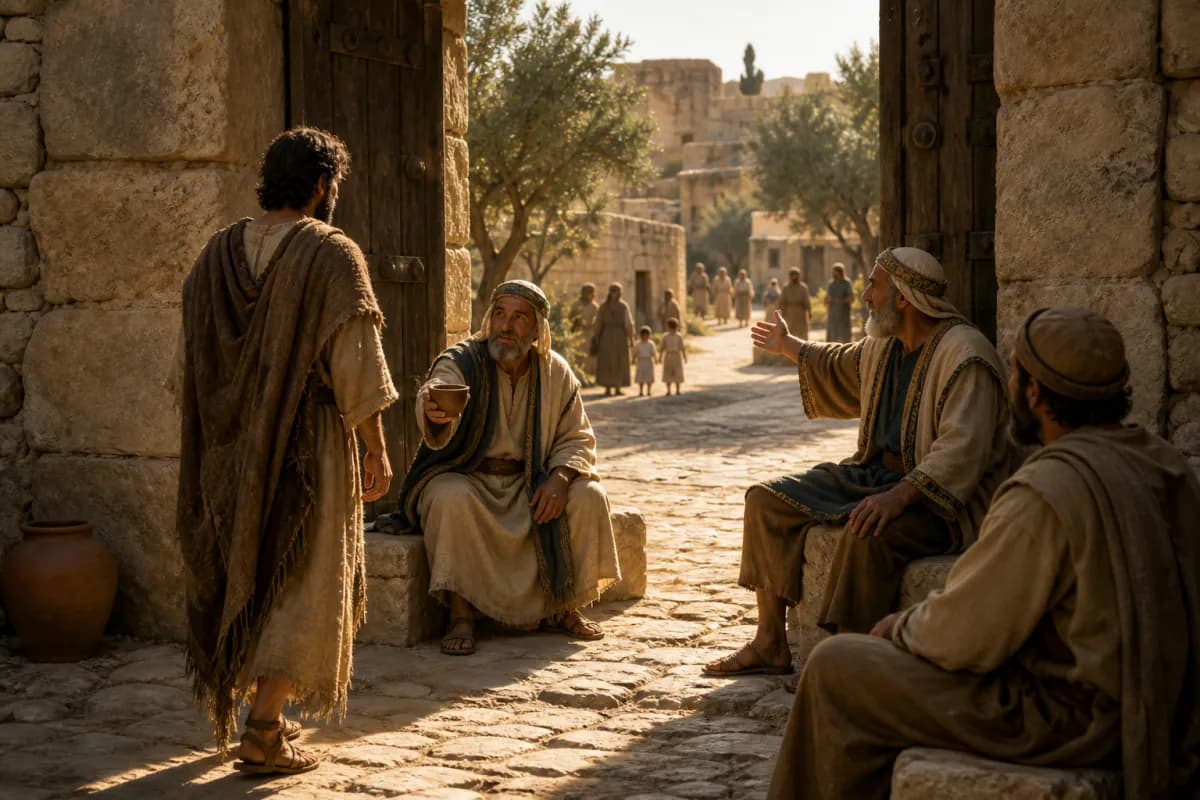
Numbers 35:9–34 establishes cities of refuge so an accused manslayer can receive a fair hearing instead of falling to immediate blood revenge. The law distinguishes intentional murder from accidental killing, protects life, and refuses to pollute the land where the Lord dwells. Jesus is the righteous refuge for guilty sinners, bearing judgment and reconciling them to God without weakening His justice.
- In this study
- 26 verses · 5 movements
Numbers 35
35:9The LORD spoke to Moses, saying,
35:10“Speak to the children of Israel, and tell them, ‘When you pass over the Jordan into the land of Canaan,
35:11then you shall appoint for yourselves cities to be cities of refuge for you, that the man slayer who kills any person unwittingly may flee there.
35:12The cities shall be for your refuge from the avenger, that the man slayer not die until he stands before the congregation for judgment.
35:13The cities which you shall give shall be for you six cities of refuge.
35:14You shall give three cities beyond the Jordan, and you shall give three cities in the land of Canaan. They shall be cities of refuge.
35:15These six cities shall be refuge for the children of Israel, for the stranger, and for the foreigner living among them, that everyone who kills any person unwittingly may flee there.
35:16“‘But if he struck him with an instrument of iron, so that he died, he is a murderer. The murderer shall surely be put to death.
35:17If he struck him with a stone in the hand, by which a man may die, and he died, he is a murderer. The murderer shall surely be put to death.
35:18Or if he struck him with a weapon of wood in the hand, by which a man may die, and he died, he is a murderer. The murderer shall surely be put to death.
35:19The avenger of blood shall himself put the murderer to death. When he meets him, he shall put him to death.
35:20If he shoved him out of hatred, or hurled something at him while lying in wait, so that he died,
35:21or in hostility struck him with his hand, so that he died, he who struck him shall surely be put to death. He is a murderer. The avenger of blood shall put the murderer to death when he meets him.
35:22“‘But if he shoved him suddenly without hostility, or hurled on him anything without lying in wait,
35:23or with any stone, by which a man may die, not seeing him, and cast it on him so that he died, and he was not his enemy and not seeking his harm,
35:24then the congregation shall judge between the striker and the avenger of blood according to these ordinances.
35:25The congregation shall deliver the man slayer out of the hand of the avenger of blood, and the congregation shall restore him to his city of refuge, where he had fled. He shall dwell therein until the death of the high priest, who was anointed with the holy oil.
35:26“‘But if the man slayer shall at any time go beyond the border of his city of refuge where he flees,
35:27and the avenger of blood finds him outside of the border of his city of refuge, and the avenger of blood kills the man slayer, he shall not be guilty of blood,
35:28because he should have remained in his city of refuge until the death of the high priest. But after the death of the high priest, the man slayer shall return into the land of his possession.
35:29“‘These things shall be for a statute and ordinance to you throughout your generations in all your dwellings.
35:30“‘Whoever kills any person, the murderer shall be slain based on the testimony of witnesses; but one witness shall not testify alone against any person so that he dies.
35:31“‘Moreover you shall take no ransom for the life of a murderer who is guilty of death. He shall surely be put to death.
35:32“‘You shall take no ransom for him who has fled to his city of refuge, that he may come again to dwell in the land before the death of the priest.
35:33“‘So you shall not pollute the land where you live; for blood pollutes the land. No atonement can be made for the land for the blood that is shed in it, but by the blood of him who shed it.
35:34You shall not defile the land which you inhabit, where I dwell; for I, the LORD, dwell among the children of Israel.’”
CONTEXTUAL OVERVIEW
As Israel prepares to inhabit the land, God gives a legal structure for cases where one person has caused another’s death. The cities of refuge do not excuse killing. They create space for a truthful distinction between murder and a death that occurred without intent, so that grief and anger do not become a second injustice.
The passage joins mercy to moral seriousness. A person accused of manslaughter receives protection until judgment, while a murderer may not be ransomed from the death penalty. The Lord’s concern is not only individual fairness; shed blood defiles the land in which He lives among His people.
HISTORICAL AND LITERARY CONTEXT
The ancient world commonly recognized a family member who pursued justice for a slain relative, here called the avenger of blood. Numbers does not simply endorse uncontrolled retaliation. It places that role within a judicial process, witnesses, evidence, and defined cities spread through the land.
The six refuge cities are drawn from the Levitical cities assigned earlier in the chapter, three on each side of the Jordan. The later laws in Deuteronomy and Joshua develop their administration. Together they show that Israel’s life in the land must be ordered by God’s justice, not by brute force or clan vengeance.
SECTION-BY-SECTION ANALYSIS
- Until judgment · Numbers 35:12Refuge protects the accused from vengeance while preserving the community’s responsibility to establish the truth.
- Witnesses required · Numbers 35:30A capital case cannot rest on one witness, placing a guard against hasty or self-serving accusation.
- The Lord dwells in the land · Numbers 35:34Justice is not merely social order; it reflects the holiness of the God who lives among His people.
CHRIST IN THIS PASSAGE
The city of refuge is a real legal institution, not a complete allegory of the gospel. Its direct purpose is fair judgment within Israel. Yet it creates a meaningful biblical pattern: the endangered person needs a God-provided place of protection, and justice cannot simply disappear. Jesus is the greater refuge because He does not hide sin or evade judgment; at the cross He bears the judgment sinners deserve and opens peace with God for those who trust Him.
Christ’s mission therefore rejects both revenge and moral indifference. He calls His people to tell the truth about violence, pursue justice with due care, protect the vulnerable, and proclaim forgiveness that has been purchased at great cost. In Him mercy does not cancel righteousness; it is established through His self-giving love.
REFLECTION
This passage is especially important wherever anger seeks a quick verdict. God requires careful hearing, credible witnesses, and proportionate justice because human life is precious. Christians should resist both the instinct to excuse harm because a person is familiar and the instinct to condemn before facts are established.
Run to Jesus as refuge with your real guilt, not a cleaned-up version of yourself. Then become a person who makes truth, safety, and reconciliation more possible in your community. Tell someone burdened by shame that Christ’s mercy is not denial—it is costly reconciliation with God.
Original Hebrew Word Study
Numbers 35:11
מִקְלָט
miqlat · H4733
Usually translated: refuge or asylum
Miqlat is a place of refuge. The cities protect an accused manslayer from revenge until a just hearing can distinguish accidental death from murder.
Follow the Scripture trail
Cities of Refuge: Justice, Mercy, and a Life Preserved in the larger story
The connection: God gives Israel refuge cities so a threatened person can receive justice rather than revenge in the land where He dwells. Jesus is the lasting refuge for sinners: He bears sin’s judgment and sends a reconciled people to pursue truth, protection, and peace in His name.
Respond to the passage
Bring one area of guilt, anger, or fear into honest prayer before Jesus. Ask Him to make you a person who seeks careful truth and reconciliation rather than quick revenge or evasive silence.
- Why does the passage protect an accused manslayer before the case is decided?
- How do the requirements for witnesses and judgment restrain retaliation?
- In what ways does Jesus fulfill refuge without turning justice into indifference?
Prayer
Righteous and merciful Jesus, thank You for receiving guilty sinners without denying the cost of sin. Make me slow to accuse, brave to tell the truth, and ready to seek peace. Use me to point fearful and ashamed people toward Your saving refuge. Amen.