Passage Study
Purity in the Camp: A Holy God Among His People
Numbers 5:1–5:4
Numbers 5:1–4 commands Israel to send those made unclean by skin disease, bodily discharge, or contact with a corpse outside the camp until they can be restored. The instruction protects the sanctuary because the Lord dwells among the people; it does not pronounce every afflicted person morally guilty. Jesus fulfills the hope behind this boundary by cleansing the unclean, bearing death’s curse, and bringing restored people near to God.
- In this study
- 4 verses · 5 movements
Numbers 5
5:1The LORD spoke to Moses, saying,
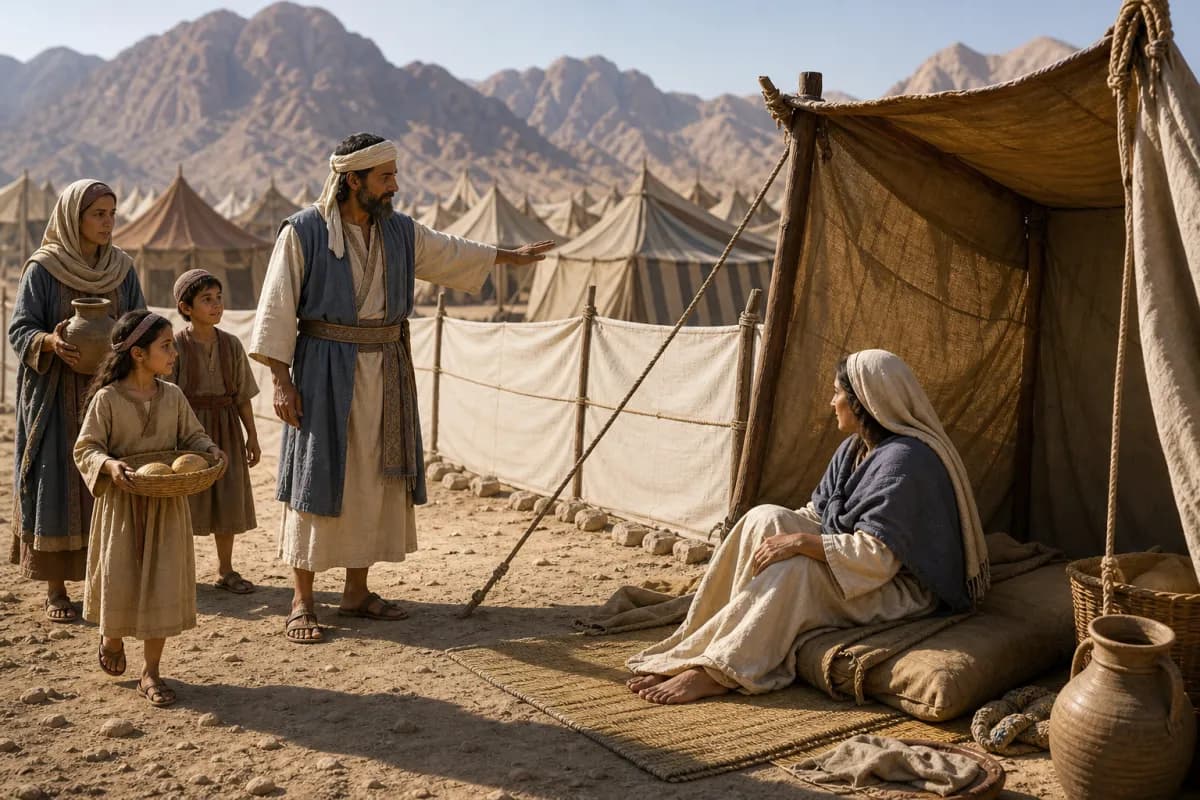
5:2“Command the children of Israel that they put out of the camp every leper, everyone who has a discharge, and whoever is unclean by a corpse.
5:3You shall put both male and female outside of the camp so that they don’t defile their camp, in the midst of which I dwell.”
5:4The children of Israel did so, and put them outside of the camp; as the LORD spoke to Moses, so the children of Israel did.
CONTEXTUAL OVERVIEW
Numbers 5 follows the ordering of Israel around the tabernacle. The Lord now addresses three conditions that make a person ritually unclean: a serious skin disease, certain bodily discharges, and contact with a dead body. Those affected are sent outside the camp so that impurity does not come into the place where God has chosen to dwell among Israel.
The command names both male and female Israelites. It guards the whole community and refuses favoritism. It must also be read carefully: ritual uncleanness is not a simple verdict of personal sin. Contact with a corpse, for example, is part of the human encounter with death, and God later provides prescribed paths of cleansing and return.
HISTORICAL AND LITERARY CONTEXT
Leviticus has already taught Israel to distinguish holy from common and clean from unclean. In Numbers the question becomes mobile and communal: the tabernacle stands in the middle of a camp that will travel through the wilderness. Because the holy God lives among them, the camp cannot treat impurity as a private concern with no bearing on shared worship.
Temporary separation was a form of protection for both the affected person and the community. Leviticus includes examinations, washing, sacrifices, and re-entry procedures. Numbers 5 therefore gives a boundary within a larger system of restoration; it is not a warrant for despising the sick, grieving, or vulnerable.
SECTION-BY-SECTION ANALYSIS
- Outside the camp · Numbers 5:3The separation marks a real boundary while the wider law provides a way for cleansed people to return.
- Male and female · Numbers 5:1The command applies across the community because the Lord’s dwelling concerns the whole people.
- God dwells among them · Numbers 5:4The reason is theological: holiness protects the life of a people living near the God who gives life.
CHRIST IN THIS PASSAGE
Numbers 5 does not identify physical affliction with moral failure, and neither does Jesus. He touches a man with a skin disease and cleanses him; He also encounters death without being conquered by it. Instead of impurity making Him unclean, His holy mercy makes the unclean whole and sends them back into restored fellowship.
Jesus’ saving mission reaches the deeper condition to which ritual impurity points: sin and death have made human life unable to heal itself into God’s presence. By His cross and resurrection, He bears the curse and opens a clean way to the Father. His church should therefore pursue holiness while practicing the restoring compassion of the One who welcomes sufferers and makes outsiders members of His people.
REFLECTION
Modern readers can either ignore holiness or use it as a reason to withdraw from people whose pain makes us uncomfortable. Numbers allows neither response. God’s presence is serious, and those affected by impurity require a real path toward restored participation rather than shame or abandonment.
Bring to Jesus the places where death, sickness, or sin make you feel unfit to draw near. He calls for repentance and faith, yet He is never repelled by a needy person who comes to Him. His mission also sends believers to care for people in isolation, to protect their dignity, and to point them toward the cleansing mercy of Christ.
Original Hebrew Word Study
Numbers 5:2
טָמֵא
tame · H2931
Usually translated: unclean
Tame means unclean. The camp’s purity matters because the Lord dwells within it; exclusion is protective and temporary, preserving the possibility of restored fellowship.
Follow the Scripture trail
Purity in the Camp: A Holy God Among His People in the larger story
The connection: Israel’s camp needed holy boundaries because God chose to dwell in its midst. Jesus fulfills the saving hope of those boundaries: He enters human uncleanness and death, cleanses sinners by His sacrifice, and forms a holy community marked by restoration and compassion.
Respond to the passage
Come honestly to Jesus with the shame, grief, illness, or sin that makes you want to stand at a distance. Ask Him to make you holy without making you hard-hearted, then look for one person whose isolation needs the compassionate presence of Christ’s people.
- Why must ritual uncleanness in this passage be distinguished from an automatic accusation of personal sin?
- How does the reason God gives for the boundary protect the community from fear-driven or cruel exclusion?
- What does Jesus’ treatment of unclean and suffering people teach the church about holiness and restoration?
Prayer
Holy Lord, thank You for coming near in Jesus without turning away from our need. Cleanse me from sin, strengthen me in weakness, and make Your church a community that honors Your holiness while carrying Your restoring mercy to those who feel far off. Amen.