Passage Study
The Nazirite Vow: A Life Set Apart for the Lord
Numbers 6:1–6:21
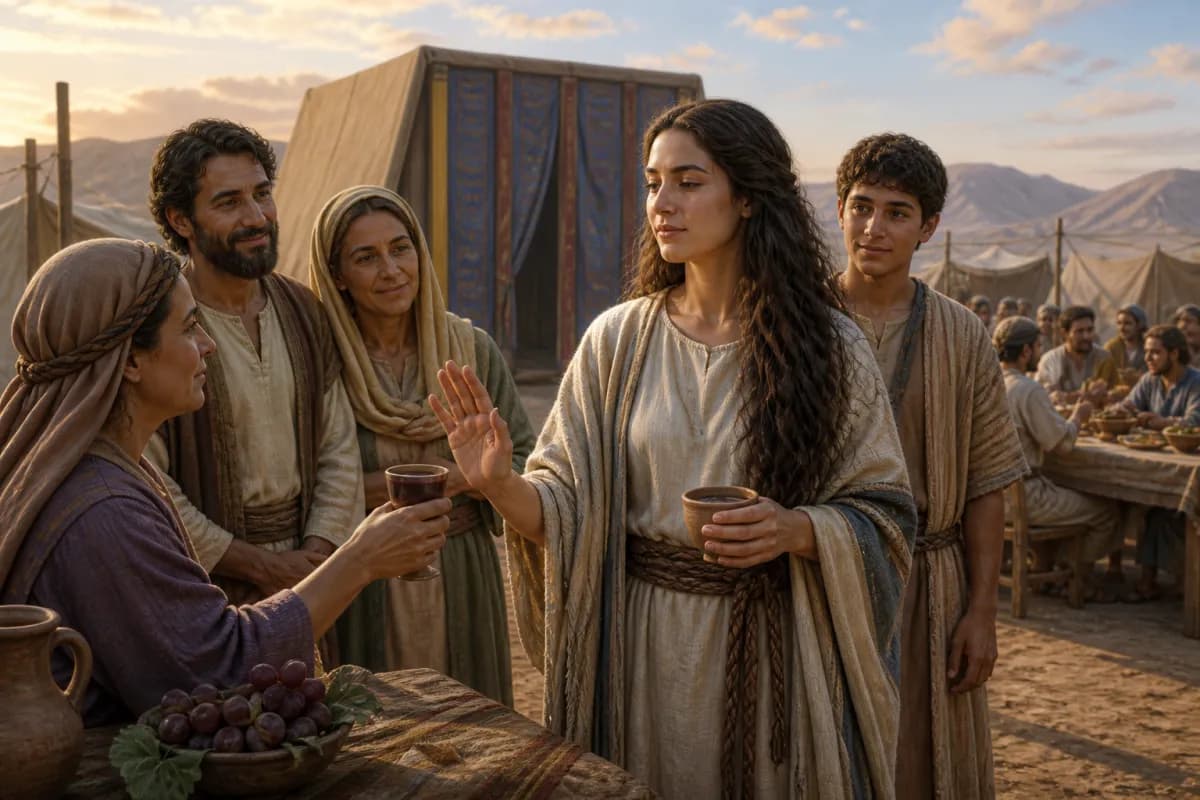
Numbers 6:1–21 provides a voluntary Nazirite vow in which an Israelite abstains from wine and grape products, leaves hair uncut, and avoids corpse impurity for a defined period of special consecration. The vow makes wholehearted devotion visible but also shows its limits when accidental defilement requires renewed cleansing. Jesus, the Holy One, fulfills the deeper hope for a consecrated life and gives His people cleansing and mission-shaped devotion through His saving grace.
- In this study
- 21 verses · 5 movements
Numbers 6
6:1The LORD spoke to Moses, saying,
6:2“Speak to the children of Israel, and tell them: ‘When either man or woman shall make a special vow, the vow of a Nazirite, to separate himself to the LORD,
6:3he shall separate himself from wine and strong drink. He shall drink no vinegar of wine, or vinegar of fermented drink, neither shall he drink any juice of grapes, nor eat fresh grapes or dried.
6:4All the days of his separation he shall eat nothing that is made of the grapevine, from the seeds even to the skins.
6:5“‘All the days of his vow of separation no razor shall come on his head, until the days are fulfilled in which he separates himself to the LORD. He shall be holy. He shall let the locks of the hair of his head grow long.
6:6“‘All the days that he separates himself to the LORD he shall not go near a dead body.
6:7He shall not make himself unclean for his father, or for his mother, for his brother, or for his sister, when they die, because his separation to God is on his head.
6:8All the days of his separation he is holy to the LORD.
6:9“‘If any man dies very suddenly beside him, and he defiles the head of his separation, then he shall shave his head in the day of his cleansing. On the seventh day he shall shave it.
6:10On the eighth day he shall bring two turtledoves or two young pigeons to the priest, to the door of the Tent of Meeting.
6:11The priest shall offer one for a sin offering, and the other for a burnt offering, and make atonement for him, because he sinned by reason of the dead, and shall make his head holy that same day.
6:12He shall separate to the LORD the days of his separation, and shall bring a male lamb a year old for a trespass offering; but the former days shall be void, because his separation was defiled.
6:13“‘This is the law of the Nazirite: when the days of his separation are fulfilled, he shall be brought to the door of the Tent of Meeting,
6:14and he shall offer his offering to the LORD: one male lamb a year old without defect for a burnt offering, one ewe lamb a year old without defect for a sin offering, one ram without defect for peace offerings,
6:15a basket of unleavened bread, cakes of fine flour mixed with oil, and unleavened wafers anointed with oil with their meal offering and their drink offerings.
6:16The priest shall present them before the LORD, and shall offer his sin offering and his burnt offering.
6:17He shall offer the ram for a sacrifice of peace offerings to the LORD, with the basket of unleavened bread. The priest shall offer also its meal offering and its drink offering.
6:18The Nazirite shall shave the head of his separation at the door of the Tent of Meeting, take the hair of the head of his separation, and put it on the fire which is under the sacrifice of peace offerings.
6:19The priest shall take the boiled shoulder of the ram, one unleavened cake out of the basket, and one unleavened wafer, and shall put them on the hands of the Nazirite after he has shaved the head of his separation;
6:20and the priest shall wave them for a wave offering before the LORD. They are holy for the priest, together with the breast that is waved and the thigh that is offered. After that the Nazirite may drink wine.
6:21“‘This is the law of the Nazirite who vows and of his offering to the LORD for his separation, in addition to that which he is able to afford. According to his vow which he vows, so he must do after the law of his separation.’”
CONTEXTUAL OVERVIEW
Numbers 6 opens a voluntary path of special consecration available to either a man or a woman. The Nazirite is not a priest by office; the vow is a chosen period of being set apart to the Lord. Its three visible markers are abstaining from wine and everything produced from the vine, letting the hair grow, and avoiding contact with the dead.
These practices are not a way to earn God’s favor or a declaration that ordinary family life, wine, or burial are evil. They make a temporary and public devotion visible. The breadth of the grape restriction and the careful rules for accidental defilement show that a vow to the Lord is not casual speech but a whole-life commitment for the time promised.
HISTORICAL AND LITERARY CONTEXT
Nazirite comes from a Hebrew word associated with being set apart or consecrated. The vow shares some features with priestly holiness, especially avoidance of corpse impurity, but Numbers expressly opens it beyond the hereditary priesthood. Israel’s ordinary members can publicly devote a season of life to the Lord within the covenant community.
The chapter distinguishes voluntary consecration from permanent figures sometimes described elsewhere as Nazirites. Samson’s calling begins before his birth and carries distinctive features, while Numbers 6 describes a vow with a stated completion ritual. The ending includes burnt, sin, and well-being offerings, followed by the cutting of hair at the tent of meeting, marking a genuine return from the vow rather than contempt for it.
Did you know?
Mishnah Nazir 3:6 later preserves a tradition about Queen Helene: her seven-year Nazirite vow for her son's safe return became, under Beit Hillel's ruling and then ritual impurity, a disputed fourteen- or twenty-one-year period of consecration.
Why it matters: This later primary text shows that Jewish readers could regard a voluntary Nazirite promise as a long, legally consequential commitment; it does not describe the wilderness setting or add requirements to Numbers 6.
SECTION-BY-SECTION ANALYSIS
- No fruit of the vine · Numbers 6:13The wide restriction makes the Nazirite’s temporary separation comprehensive rather than merely symbolic.
- Uncut hair · Numbers 6:5The hair visibly marks the days in which the person is consecrated to the Lord.
- A new beginning after defilement · Numbers 6:19Unexpected contact with death requires cleansing and renewed days, revealing the limits of even sincere human devotion.
CHRIST IN THIS PASSAGE
Jesus is sometimes mistakenly called a Nazirite because He came from Nazareth, but the words and realities are different. The Gospels show Jesus drinking wine and touching the dead to bring life, so He does not take the Numbers 6 vow. He should not be made to fit a vow the text does not assign to Him.
Yet the Nazirite vow points by pattern to the need for a consecrated life wholly belonging to God. Jesus fulfills that need as the truly holy Son, whose devotion is perfect and whose contact with death brings cleansing and resurrection rather than defilement. His saving mission frees believers from proving their worth through exceptional vows and forms them into a holy people who offer their ordinary lives to God in grateful service.
REFLECTION
A voluntary vow can help a person mark a season of prayer, repentance, service, or focused dependence on God. Numbers teaches that a vow should be thoughtful, specific, and kept with integrity. It also warns against using spiritual intensity to appear superior. Consecration belongs to the Lord’s grace, not to a performance that earns admiration.
Jesus gives a deeper freedom: because He has made His people clean, ordinary work, meals, family life, and service can be offered to God. Consider whether a temporary discipline would help you seek Him with clearer attention, but hold every practice beneath the gospel. Let your life point others to Christ’s saving mercy, not to your own spiritual achievement.
Original Hebrew Word Study
Numbers 6:2
נָזִיר
nazir · H5139
Usually translated: one set apart or consecrated
Nazir names one set apart by a vow. The temporary dedication makes visible an intensified devotion to the Lord within the ordinary life of Israel.
Follow the Scripture trail
The Nazirite Vow: A Life Set Apart for the Lord in the larger story
The connection: The Nazirite vow makes special devotion visible while exposing the limits of human consecration in a world touched by death. Jesus fulfills the deeper hope as the holy Son who gives cleansing grace and sends His people to offer their whole lives to God for His saving mission.
Respond to the passage
Consider one honest, temporary discipline that could help you attend to Jesus without becoming a display of spiritual achievement. Ask Him to make your ordinary life—work, relationships, speech, and service—a grateful offering shaped by His grace.
- Why does the text permit both men and women to make the Nazirite vow, and what does that reveal about devotion in Israel?
- What does the restart after accidental contact with death teach about the limits of human resolve?
- Why is it important not to confuse Jesus of Nazareth with a Nazirite under Numbers 6?
Prayer
Lord Jesus, You are holy and wholly devoted to the Father. Thank You for cleansing me and freeing me from spiritual performance. Give me wisdom for any discipline I undertake, faithfulness in ordinary life, and a heart that points others to Your saving grace. Amen.