Passage Study
The Priestly Blessing: The Lord Turns His Face Toward His People
Numbers 6:22–6:27
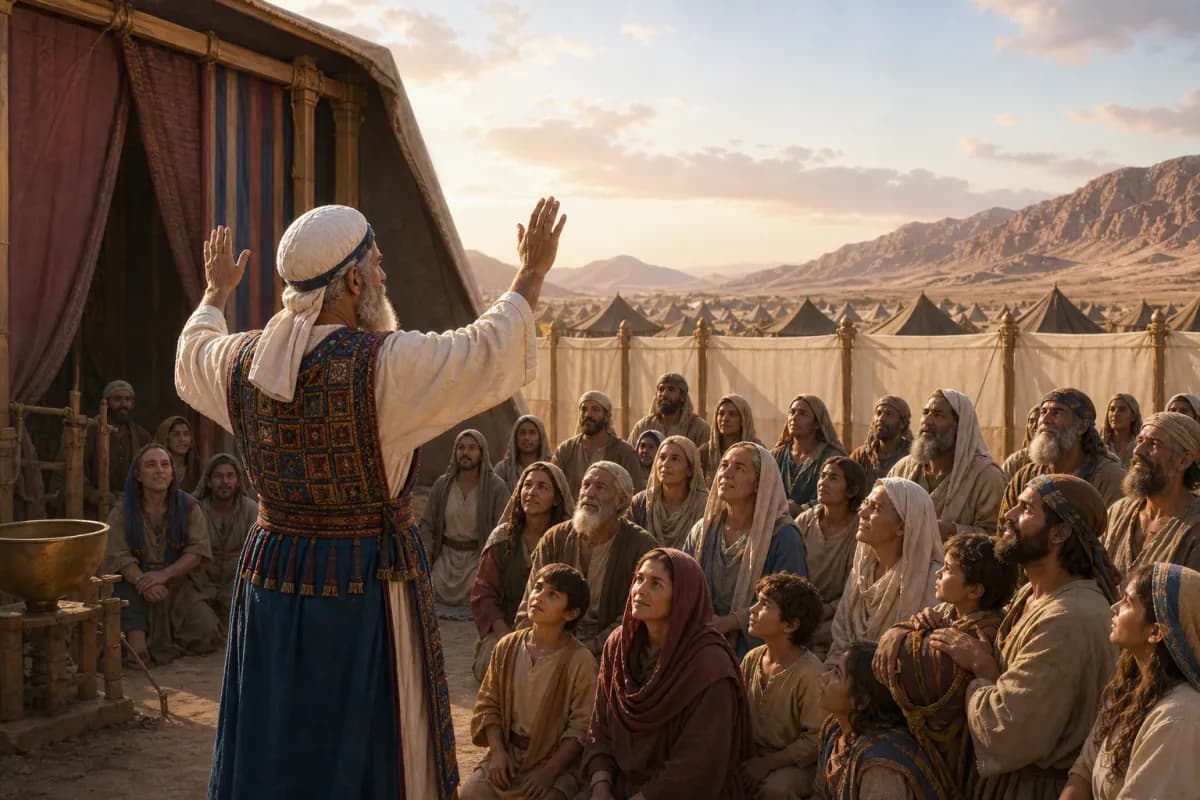
Numbers 6:22–27 gives Aaron and his sons words with which to bless Israel: the Lord keeps them, makes His face shine on them, is gracious to them, lifts His face toward them, and gives them peace. The blessing announces God’s own favor, not priestly optimism. In Jesus, believers receive the grace and peace of the Father through the One who brings us near and sends us in His saving name.
- In this study
- 6 verses · 5 movements
Numbers 6
6:22The LORD spoke to Moses, saying,
6:23“Speak to Aaron and to his sons, saying, ‘This is how you shall bless the children of Israel.’ You shall tell them,
6:24‘The LORD bless you, and keep you.
6:25The LORD make his face to shine on you, and be gracious to you.
6:26The LORD lift up his face toward you, and give you peace.’
6:27“So they shall put my name on the children of Israel; and I will bless them.”
CONTEXTUAL OVERVIEW
The Nazirite regulations immediately precede this short blessing. Whether an Israelite has taken an unusual vow or lives an ordinary covenant life, the final word is the same: the people depend on the Lord’s blessing. Aaron’s sons do not invent words for a religious moment. God gives them the words by which His name will be spoken over Israel.
The blessing moves from protection to radiant favor to peace. “Peace” is shalom, a word broad enough to include wholeness, well-being, and settled life under God’s care. Israel’s deepest good is not simply safety in the wilderness; it is the Lord’s face turned toward them in grace.
HISTORICAL AND LITERARY CONTEXT
Numbers places this blessing while Israel is camped around the tabernacle. Priests guard holy things and offer sacrifices, but their ministry also publicly declares that the Lord has claimed this people for His name. The blessing is therefore covenantal: it identifies Israel as the people upon whom the Lord’s name rests.
The repeated “the Lord” gives the passage its weight. The priests speak, but God keeps, shines, is gracious, lifts His face, and gives peace. The text does not teach that spoken words manipulate God. It gives His appointed servants a way to announce the favor He Himself promises.
Did you know?
Two tiny silver scrolls found in a Jerusalem tomb preserve words from the priestly blessing. Dated to around 600 BCE, they were rolled up and may have been worn as necklaces.
Why it matters: These small personal objects show how people carried the blessing beyond its spoken setting into daily life.
SECTION-BY-SECTION ANALYSIS
- Keep · Numbers 6:24Israel asks for God’s guarding care while living as a dependent people in the wilderness.
- Shine and lift His face · Numbers 6:25These relational images announce God’s gracious attention rather than a distant or merely abstract blessing.
- Put My name · Numbers 6:27The blessing marks Israel as belonging to the Lord whose character and presence define their life.
CHRIST IN THIS PASSAGE
Numbers 6 does not directly name the Messiah, but its promise of God’s gracious face creates a strong biblical horizon. Jesus is the Son through whom the Father’s grace is made known and through whose sacrifice sinners are brought near. The apostolic greeting of grace and peace is not a replacement for this blessing; it announces its fulfillment in the Father and the Lord Jesus Christ.
Christ’s saving mission brings people formerly alienated by sin into the family that bears God’s name. Because He reconciles us to the Father, Christian peace is more than a moment of calm. It is peace with God, received through Christ, and it becomes the church’s testimony as it carries His grace to a world still estranged from Him.
REFLECTION
Many people assume God’s face is turned away whenever they are weak, anxious, or under pressure. This blessing speaks before Israel enters its trials: the Lord’s keeping and grace are their needed foundation. It invites faith that rests in His character rather than in a favorable week.
Receive this blessing through Jesus with gratitude, then become a person whose speech reflects it. Pray for others to know God’s keeping and peace. A church that has received the Father’s grace can speak hope without pretending pain is unreal, because Christ has made reconciliation possible.
Original Hebrew Word Study
Numbers 6:26
שָׁלוֹם
shalom · H7965
Usually translated: peace, wholeness, or well-being
Shalom is wholeness and well-being. The priestly blessing ends with God’s peace, the full flourishing that comes from His face turned toward His people.
Follow the Scripture trail
The Priestly Blessing: The Lord Turns His Face Toward His People in the larger story
The connection: The priests place God’s name on Israel and announce His gracious face and peace. Jesus brings that blessing to its saving fulfillment by reconciling sinners to the Father and forming a people who carry His name and gospel to the nations.
Respond to the passage
Pray this blessing for one person who needs assurance of God’s keeping. Then ask Jesus to make your own words a truthful witness to the grace and peace He gives.
- Why is it significant that the Lord gives the priests the wording of the blessing?
- How do the images of God’s face correct an impersonal understanding of blessing?
- How does peace with God through Christ shape the way Christians speak hope to others?
Prayer
Father, thank You for turning toward Your people in grace through Jesus. Keep me, shine Your light into the places I fear, and give me the peace of reconciliation with You. Make my life and speech a faithful witness to Your saving name. Amen.