Passage Study
The Two Ways and the Word That Gives Life
Psalms 1:1–1:6
Psalm 1 contrasts the rooted life of the person who delights in the Lord’s instruction with the unstable course of the wicked. It calls readers to receive God’s word as the source of a faithful life and points to Jesus, the righteous Son who perfectly delights in the Father and brings His people into lasting life.
- In this study
- 6 verses · 5 movements
Psalms 1
1:1Blessed is the man who doesn’t walk in the counsel of the wicked, nor stand on the path of sinners, nor sit in the seat of scoffers;
1:2but his delight is in the LORD’s law. On his law he meditates day and night.
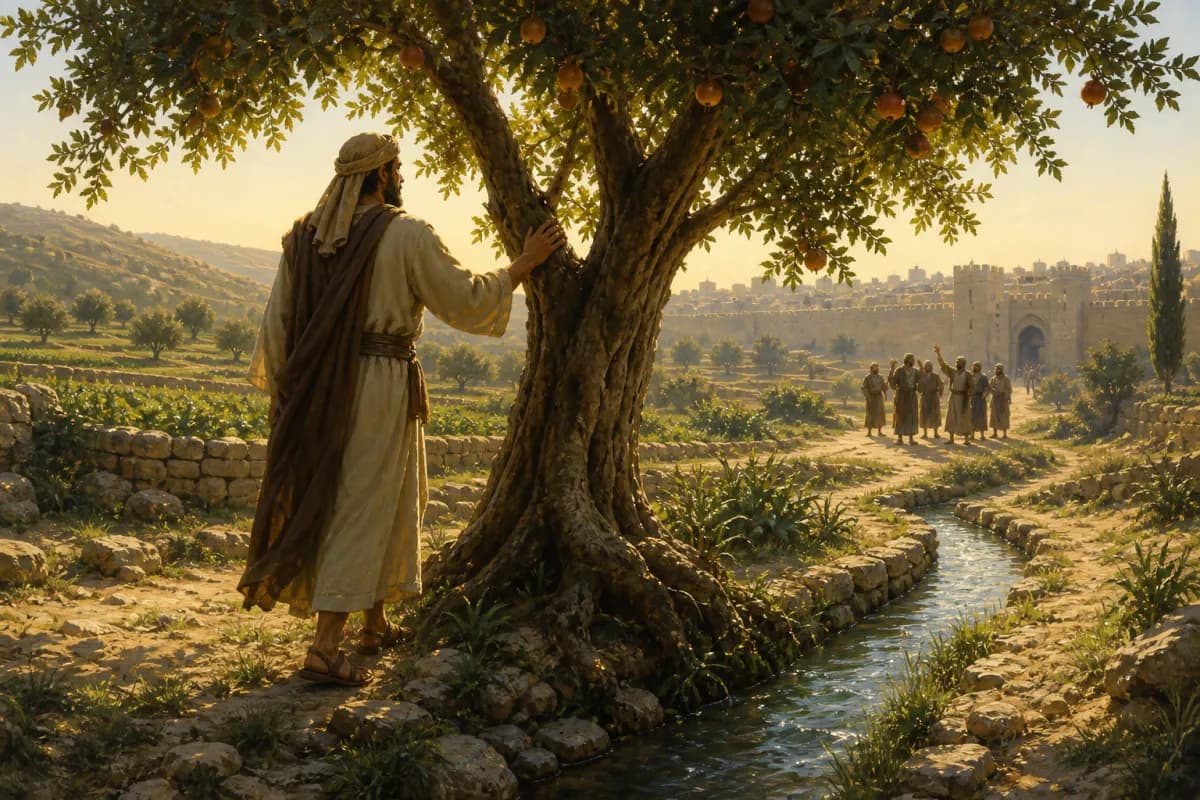
1:3He will be like a tree planted by the streams of water, that produces its fruit in its season, whose leaf also does not wither. Whatever he does shall prosper.
1:4The wicked are not so, but are like the chaff which the wind drives away.
1:5Therefore the wicked shall not stand in the judgment, nor sinners in the congregation of the righteous.
1:6For the LORD knows the way of the righteous, but the way of the wicked shall perish.
CONTEXTUAL OVERVIEW
Psalm 1 stands at the entrance to the Psalter and asks a foundational question: which path will shape a life? The blessed person does not slowly settle into the counsel, habits, and company of those who resist God. Instead, this person delights in the Lord’s instruction and returns to it day and night.
The psalm’s two images make the choice concrete. One life is like a tree planted by streams, bearing fruit in season and retaining its leaf; the other is like chaff, the loose husk carried away by wind. The contrast concerns enduring relation to the Lord, not mere outward success.
HISTORICAL AND LITERARY CONTEXT
Psalm 1 is wisdom poetry. It uses blessing, contrast, and memorable images rather than narrating an event. Its placement before the prayers, laments, royal psalms, and songs of praise gives readers a lens for the whole collection: life before God involves a real division between the way of the righteous and the way of the wicked.
The word translated instruction refers to the Lord’s teaching, especially the covenantal direction given to His people. Meditation here is not emptying the mind; it is repeated, attentive consideration of God’s revealed will until that word redirects desire, speech, and choices.
SECTION-BY-SECTION ANALYSIS
- Does not walk, stand, or sit · Psalms 1:1The sequence warns that repeated participation in rebellious counsel gradually becomes settled belonging.
- Like a tree planted by streams · Psalms 1:3Delight in God’s instruction supplies a durable source for fruitfulness through changing seasons.
- The Lord knows the way · Psalms 1:6God watches over the righteous path with personal care as He brings every way to its true end.
CHRIST IN THIS PASSAGE
Psalm 1 first presents the righteous life God requires. Jesus alone fulfills that portrait without remainder: He resists temptation, delights to do the Father’s will, and never joins the counsel of sin. This is a strong canonical connection, not a claim that the psalm ignores its original wisdom setting. The blessed man shows what faithful humanity looks like, and Jesus embodies it perfectly.
At the cross, the righteous Son bears the judgment sinners deserve; through union with Him, those who were dry and guilty receive forgiveness and new life. His teaching and Spirit draw His people away from destructive counsel and establish them in the word that bears fruit. The final judgment of Psalm 1 therefore makes the gospel urgent as well as comforting.
REFLECTION
Psalm 1 invites honest attention to the voices that are shaping you. The first question is not whether a source feels useful or entertaining, but whether it trains your heart to delight in what God calls good. Jesus meets repentant people with grace and then teaches them to remain in His word.
Choose one regular voice, habit, or setting that has been forming contempt for God’s ways, and bring it under Christ’s care. Replace that pattern with a concrete practice of Scripture meditation: read a short portion, name what it reveals about God, and ask for obedience in the next decision before you.
Original Hebrew Word Study
Psalm 1:2
תּוֹרָה
torah · H8451
Usually translated: instruction or teaching
Torah means instruction. The blessed life is shaped by God’s teaching until it becomes the source of steady delight and durable fruit.
Follow the Scripture trail
The Two Ways and the Word That Gives Life in the larger story
The connection: Psalm 1 sets before Israel the way of covenant faithfulness and the way of ruin. Jesus is the truly righteous Son, who bears judgment for sinners and gives His people the living communion with God from which faithful fruit can grow.
Respond to the passage
Ask Jesus to expose the counsel that is currently discipling you. Turn from one pattern that draws you toward contempt for God’s word, and begin a daily practice of receiving His instruction as the source of life.
- What progression does the psalm trace from listening to wicked counsel to sitting with scoffers?
- Why does the tree image include fruit in season rather than constant visible success?
- How does Jesus fulfill the righteous life Psalm 1 describes and share His life with His people?
Prayer
Lord Jesus, You delighted perfectly in the Father’s will. Turn my heart from counsel that dries out my faith, plant me in Your word, and bear faithful fruit in me by Your Spirit. Amen.