Passage Study
Psalm 102: The Afflicted Cry and the Lord Who Endures
Psalms 102:1–102:28
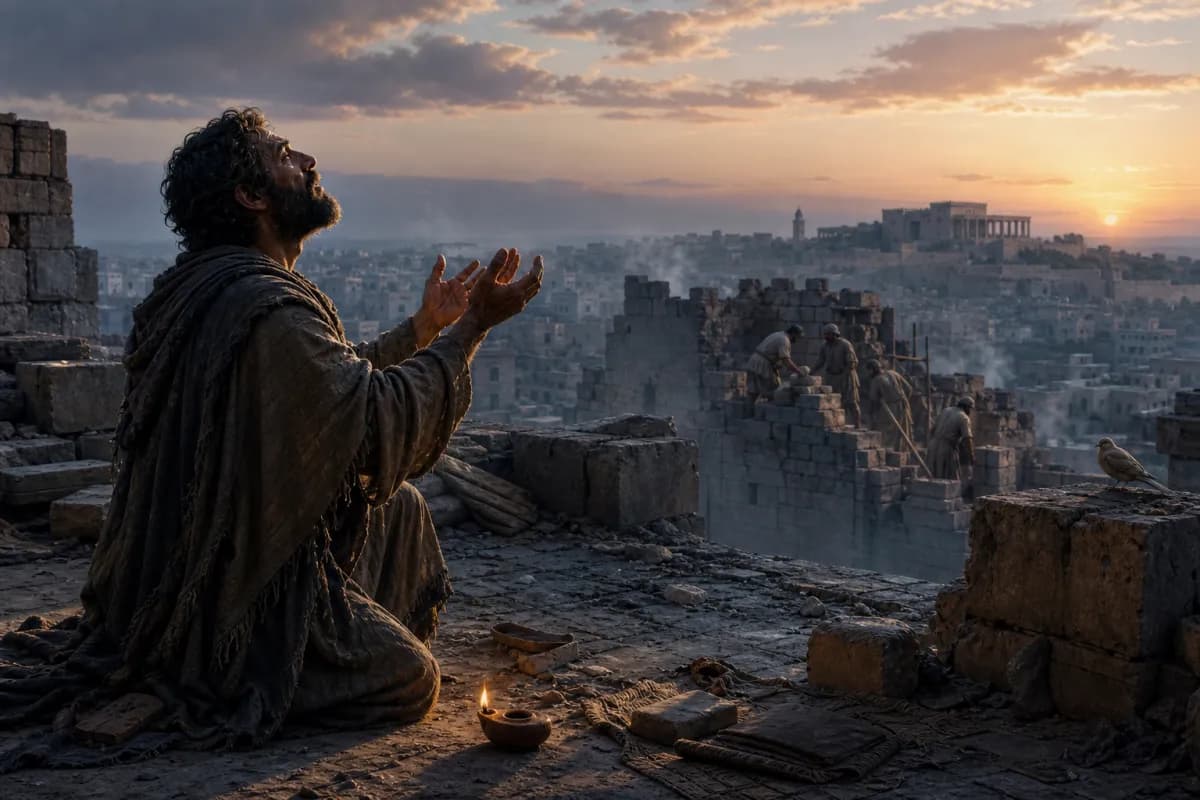
Psalm 102 gives an afflicted person words for days when sorrow consumes strength, enemies mock, and life feels like smoke. The prayer does not end with the sufferer’s frailty: the Lord remains enthroned forever, will arise to show Zion mercy, and will gather nations to worship Him. Jesus shares human suffering and, as the unchanging Son, secures lasting hope for perishing people.
- In this study
- 28 verses · 5 movements
Psalms 102
102:1Hear my prayer, LORD! Let my cry come to you.
102:2Don’t hide your face from me in the day of my distress. Turn your ear to me. Answer me quickly in the day when I call.
102:3For my days consume away like smoke. My bones are burned as a torch.
102:4My heart is blighted like grass, and withered, for I forget to eat my bread.
102:5By reason of the voice of my groaning, my bones stick to my skin.
102:6I am like a pelican of the wilderness. I have become as an owl of the waste places.
102:7I watch, and have become like a sparrow that is alone on the housetop.
102:8My enemies reproach me all day. Those who are mad at me use my name as a curse.
102:9For I have eaten ashes like bread, and mixed my drink with tears,
102:10because of your indignation and your wrath; for you have taken me up and thrown me away.
102:11My days are like a long shadow. I have withered like grass.
102:12But you, LORD, will remain forever; your renown endures to all generations.
102:13You will arise and have mercy on Zion, for it is time to have pity on her. Yes, the set time has come.
102:14For your servants take pleasure in her stones, and have pity on her dust.
102:15So the nations will fear the LORD’s name, all the kings of the earth your glory.
102:16For the LORD has built up Zion. He has appeared in his glory.
102:17He has responded to the prayer of the destitute, and has not despised their prayer.
102:18This will be written for the generation to come. A people which will be created will praise the LORD,
102:19for he has looked down from the height of his sanctuary. From heaven, the LORD saw the earth,
102:20to hear the groans of the prisoner, to free those who are condemned to death,
102:21that men may declare the LORD’s name in Zion, and his praise in Jerusalem,
102:22when the peoples are gathered together, the kingdoms, to serve the LORD.
102:23He weakened my strength along the course. He shortened my days.
102:24I said, “My God, don’t take me away in the middle of my days. Your years are throughout all generations.
102:25Of old, you laid the foundation of the earth. The heavens are the work of your hands.
102:26They will perish, but you will endure. Yes, all of them will wear out like a garment. You will change them like a cloak, and they will be changed.
102:27But you are the same. Your years will have no end.
102:28The children of your servants will continue. Their offspring will be established before you.”
CONTEXTUAL OVERVIEW
Psalm 102 is explicitly a prayer of an afflicted person who pours out his complaint before the Lord. The opening images are physical and unsparing: days vanish like smoke, bones burn, the heart withers like grass, and the singer lies awake like a lonely bird. Scripture gives this believer permission to speak bodily exhaustion and emotional isolation before God without pretending strength.
The supplied note on ani, “afflicted, poor, or humble,” names more than a passing inconvenience. The speaker is brought low and cannot repair his own condition. Yet his complaint is addressed to the Lord, which means suffering has not severed the relationship; his need becomes the place where he asks God to hear and answer.
HISTORICAL AND LITERARY CONTEXT
The psalm moves from individual lament to Zion’s future restoration and then to the nations gathered in worship. References to Zion’s stones and dust suggest a time when the city lies in distress, perhaps after devastation, but the poem does not identify an event precisely enough to settle the date.
Its literary turning point comes in verse 12: “But you, O Lord, are enthroned forever.” The contrast is deliberate. The afflicted person’s days are brief and fragile; God’s name endures through generations. Zion’s rebuilding is therefore not sentimental optimism but confidence in the Lord whose purpose outlasts human collapse.
SECTION-BY-SECTION ANALYSIS
- Verses 1–11 · Psalms 102:23The afflicted singer brings wasting grief, isolation, reproach, and shortened days directly to God.
- Verses 12–17 · Psalms 102:13God’s enduring throne grounds the hope that He will show mercy to ruined Zion and reveal His glory.
- Verses 18–28 · Psalms 102:12Future generations and gathered kingdoms will worship the Lord who hears prisoners and outlasts creation itself.
CHRIST IN THIS PASSAGE
Psalm 102 gives a measured but profound path to Jesus. The afflicted prayer is not a prediction of one episode in His life, yet Jesus knows rejection, tears, and death from within human weakness. He receives the cries of sufferers as the compassionate Son who entered our condition to save rather than merely observe it.
Hebrews applies the psalm’s words about the unchanging Creator to the Son. That apostolic use identifies Jesus as the eternal Lord whose years have no end, even as He took flesh and suffered. Because He rose, the psalm’s hope for Zion, gathered nations, and future generations is not crushed by the brevity of any believer’s days.
REFLECTION
When grief has made prayer feel repetitive or small, Psalm 102 permits you to say so. Tell Jesus how the loss has entered your sleep, appetite, body, and relationships. You need not turn pain into a lesson before bringing it to Him; the first movement of the psalm is simply an urgent request to be heard.
Then let the enduring Lord widen your horizon. Pray for a church, city, or people that needs renewal, and remember that God’s purposes reach future generations and the nations. Your days may feel shortened, but your life is held by the Son whose years do not end.
Original Hebrew Word Study
Psalm 102:1
עָנִי
ani · H6041
Usually translated: afflicted, poor, or humble
Ani names one brought low by affliction. The psalm gives the suffering person a direct way to pour out complaint before the Lord who endures forever.
Follow the Scripture trail
Psalm 102: The Afflicted Cry and the Lord Who Endures in the larger story
The connection: Psalm 102 places mortal affliction before the Lord who endures and will gather nations in worship. Jesus enters human suffering, rises from death, and as the eternal Son guarantees the restoration and lasting hope for which the prayer waits.
Respond to the passage
Bring one specific grief to Jesus without editing its weight. Then pray for one place of broken worship or public suffering, trusting the enduring Son to sustain you and to gather future generations to His praise.
- Which details in the opening complaint show that Scripture takes bodily and emotional suffering seriously?
- Why is the Lord’s enduring throne the decisive turn in the psalm?
- How does Hebrews’ use of this psalm change the way Christians hear its final contrast between frailty and permanence?
Prayer
Lord Jesus, You know our weakness and You remain the same forever. Hear my complaint, sustain those brought low, restore what is desolate, and make Your name known among generations and nations. Amen.