Passage Study
Psalm 11: The Lord Still Sees When Foundations Shake
Psalms 11:1–11:7
Psalm 11 answers fearful advice to flee when the wicked draw the bow in darkness and the foundations of justice seem ruined. David’s confidence is not in a safe hiding place but in the Lord, who is in His holy temple, sees every human being, tests the righteous and wicked, and loves what is just. Jesus endured secret hostility and brings His people before the face of the righteous God.
- In this study
- 7 verses · 5 movements
Psalms 11
11:1In the LORD, I take refuge. How can you say to my soul, “Flee as a bird to your mountain”?
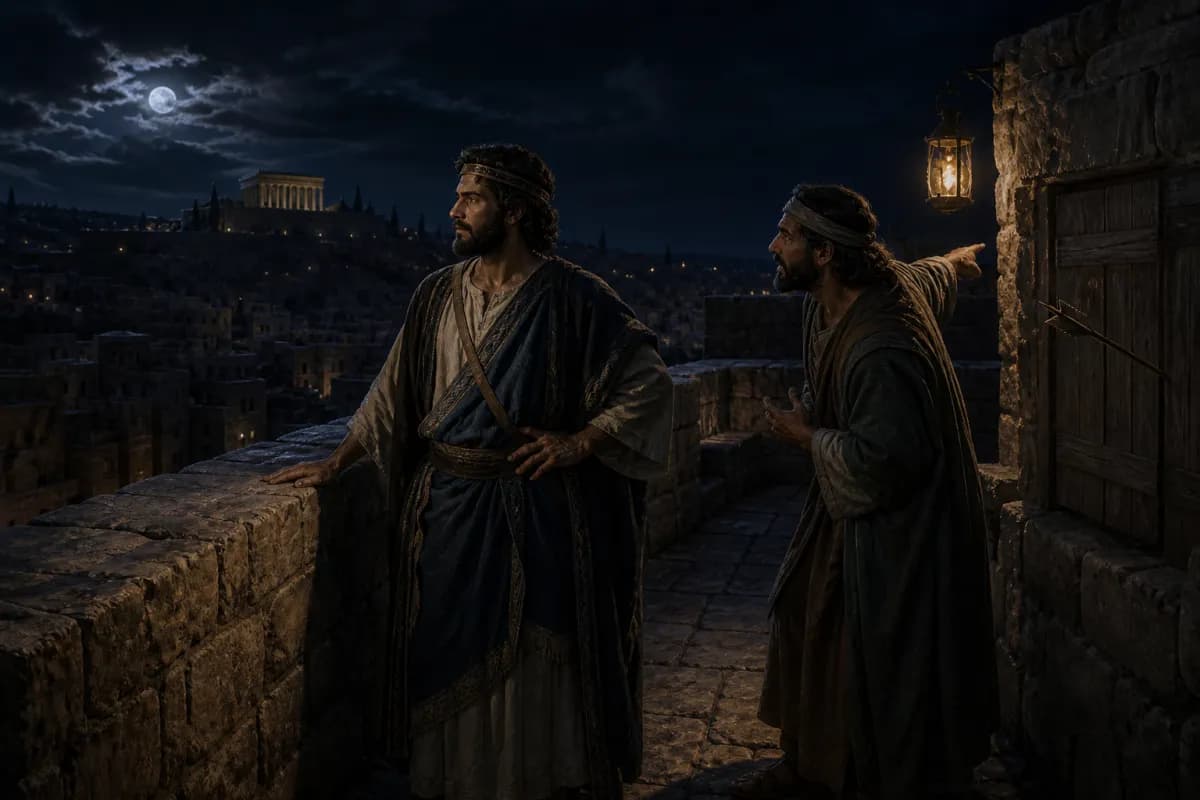
11:2For, behold, the wicked bend their bows. They set their arrows on the strings, that they may shoot in darkness at the upright in heart.
11:3If the foundations are destroyed, what can the righteous do?
11:4The LORD is in his holy temple. The LORD is on his throne in heaven. His eyes observe. His eyes examine the children of men.
11:5The LORD examines the righteous, but his soul hates the wicked and him who loves violence.
11:6On the wicked he will rain blazing coals; fire, sulfur, and scorching wind shall be the portion of their cup.
11:7For the LORD is righteous. He loves righteousness. The upright shall see his face.
CONTEXTUAL OVERVIEW
Psalm 11 begins with a conflict of counsel. Someone tells David to flee “like a bird” because wicked people are drawing their bows in darkness. The danger is real: the arrows are aimed at upright hearts, and public foundations appear to be torn down. David’s first line answers the counsel with a question: if he has taken refuge in the Lord, why should fear dictate his departure?
The psalm does not praise foolish exposure to danger. Its concern is deeper than whether a particular escape is prudent. When justice, truth, and ordered life seem unstable, the faithful person must decide where to locate safety. David refuses to treat unseen attackers or collapsing institutions as the final reality because the Lord still sees and judges.
HISTORICAL AND LITERARY CONTEXT
The psalm is attributed to David, though it does not identify a specific episode from his life. Its compact structure moves from the advice of fearful companions to a confession of God’s temple, throne, sight, testing, judgment, and face. The phrase “foundations” likely refers to the basic supports of justice and social order rather than to literal stones alone.
The language of the Lord in His holy temple and throne in heaven joins worship with rule. God is not shut away from the crisis; His exalted position is the reason His eyes can examine the whole human scene. The psalm makes no claim that every righteous person avoids danger. It grounds courage in the character of the God who loves justice.
SECTION-BY-SECTION ANALYSIS
- Verses 1–3 · Psalms 11:1Fearful counsel points to secret attackers and failing foundations, but David refuses to let those facts define his refuge.
- Verses 4–5 · Psalms 11:4The Lord’s heavenly throne and searching eyes mean that righteous and wicked lives remain under His holy examination.
- Verses 6–7 · Psalms 11:5God opposes those who love violence and promises the upright the joy of beholding His face.
CHRIST IN THIS PASSAGE
Psalm 11’s confidence in God’s sight is fulfilled with special force in Jesus. His enemies act in darkness through betrayal, false testimony, and an unjust hearing, yet none of it lies outside the Father’s knowledge. Jesus does not escape the cross by panic or violence; He entrusts Himself to the One who judges justly and is vindicated in resurrection.
The psalm’s final hope of seeing God’s face is more than survival after a crisis. Through Christ’s atoning death, sinners who deserve judgment are reconciled to God. The New Testament holds out the future vision of God’s face for His servants, a gift made possible because the righteous Son brings His people into the Father’s presence.
REFLECTION
When a family, church, workplace, or civic setting seems unstable, identify the exact foundation that is under strain: truthfulness, protection of the weak, fair judgment, sexual faithfulness, or trust. Psalm 11 does not require you to deny the damage. It calls you to make the Lord, rather than the crisis, the place from which you interpret the damage.
Ask Jesus for courage that is neither reckless nor ruled by dread. Take the wise next step, seek counsel where needed, and refuse the shortcuts of deception or violence. The God who sees more fully than you do will not abandon the work of righteousness or the people who seek His face.
Original Hebrew Word Study
Psalm 11:7
צַדִּיק
tsaddiq · H6662
Usually translated: righteous or just
Tsaddiq means righteous. The upright see God because the Lord Himself loves what is just and straight.
Follow the Scripture trail
Psalm 11: The Lord Still Sees When Foundations Shake in the larger story
The connection: Psalm 11 fixes the faithful person’s hope on the Lord who sees hidden violence and loves justice. Jesus faces darkness without surrendering to it, bears sinners’ judgment, and opens the future in which His redeemed people behold God’s face.
Respond to the passage
Name the foundation that feels shaken, bring the fear to Jesus, and choose one upright action that you can take without resorting to secrecy, manipulation, or retaliation.
- What is the difference between prudent action and allowing fear to determine where refuge is found?
- How does the Lord’s searching gaze change the question, “What can the righteous do?”
- Why is seeing God’s face a greater hope than simply escaping danger?
Prayer
Lord Jesus, when the foundations around me seem to shake, keep my refuge in You. Search my heart, guard me from fearful compromise, and lead me in the righteousness that ends in seeing Your Father’s face. Amen.