Passage Study
Psalm 113: The Exalted Lord Who Raises the Poor
Psalms 113:1–113:9
Psalm 113 calls the servants of the Lord to praise His name from sunrise to sunset. The Lord is high above every nation and heaven itself, yet His greatness is displayed in His attention to the poor, needy, and barren woman. This holy reversal prepares the way for Jesus, who humbles Himself to save the lowly and gathers them into the Father’s praise.
- In this study
- 9 verses · 5 movements
Psalms 113
113:1Praise the LORD! Praise, you servants of the LORD, praise the LORD’s name.
113:2Blessed be the LORD’s name, from this time forward and forever more.
113:3From the rising of the sun to its going down, the LORD’s name is to be praised.
113:4The LORD is high above all nations, his glory above the heavens.
113:5Who is like the LORD, our God, who has his seat on high,
113:6who stoops down to see in heaven and in the earth?
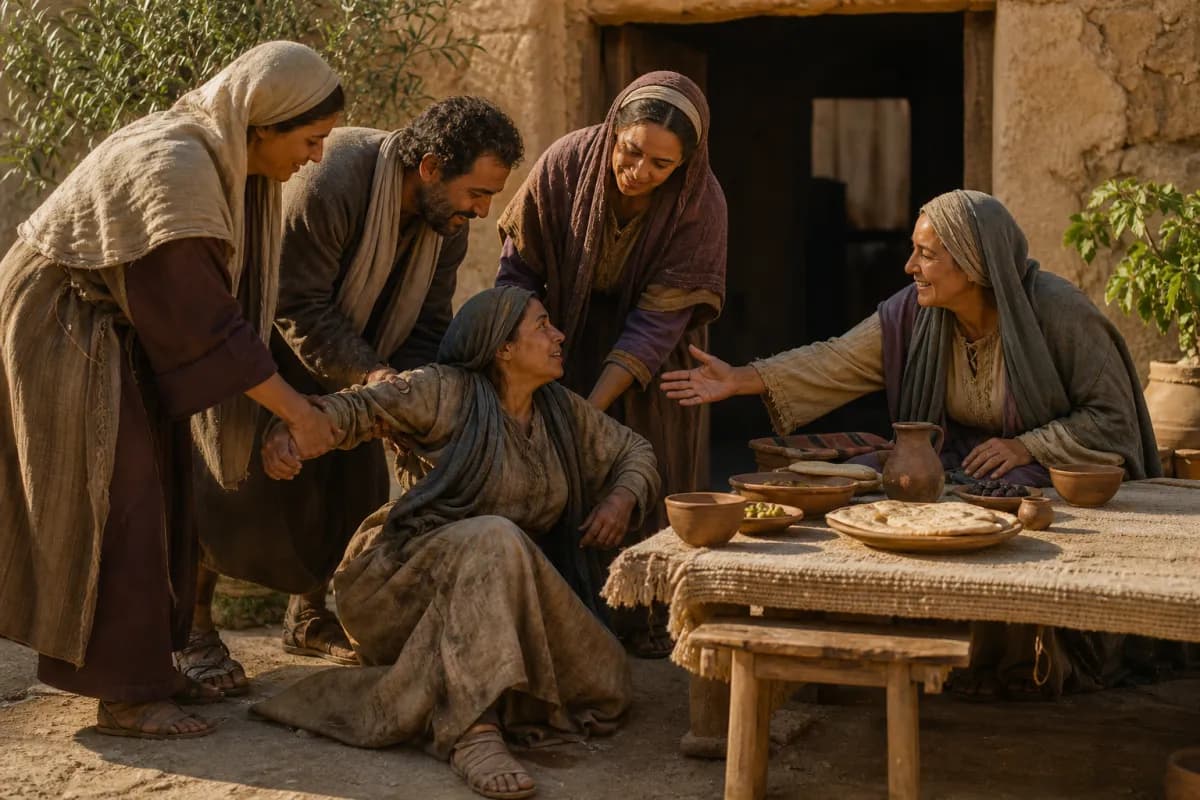
113:7He raises up the poor out of the dust, and lifts up the needy from the ash heap,
113:8that he may set him with princes, even with the princes of his people.
113:9He settles the barren woman in her home as a joyful mother of children. Praise the LORD!
CONTEXTUAL OVERVIEW
Psalm 113 opens the Egyptian Hallel, the group of psalms used in Israel’s festival praise. Its first command is repeated: “Praise the Lord.” The servants are to praise the Lord’s name from the rising of the sun to its setting, because His glory is not confined to Israel’s sanctuary or to one season of relief.
The supplied note on rum, “to be high or exalted,” explains verses 4–6. The Lord is high above all nations and His glory above the heavens, yet He looks down to see. His exaltation does not make Him indifferent. The psalm treats His attention to the dust-bound and needy as evidence of His unmatched majesty.
HISTORICAL AND LITERARY CONTEXT
Psalm 113 belongs to a collection associated with Passover and other major festivals. Its praise is shaped by Israel’s memory that the Lord acts for people who cannot secure their own rescue. The movement from all nations and the heavens to the poor and barren gives the song a deliberate downward sweep.
The final image echoes the stories of women such as Hannah, whose barrenness became a place of painful dependence and God-given joy. The psalm does not promise that every barren woman will receive children in the same earthly way. It praises the God who sees shame and vulnerability and who overturns the social conclusions people draw from them.
SECTION-BY-SECTION ANALYSIS
- Verses 1–3 · Psalms 113:1The Lord’s servants bless His name continually, calling the whole world’s day into praise.
- Verses 4–6 · Psalms 113:4The incomparable Lord is exalted above all yet bends to see heaven and earth.
- Verses 7–9 · Psalms 113:7God’s majesty appears in raising the poor and needy and giving a shamed woman a home of joy.
CHRIST IN THIS PASSAGE
Psalm 113 gives a strong thematic path to Jesus. The exalted Lord acts by lifting those the world treats as insignificant. In His incarnation, Jesus takes the form of a servant; in His ministry, He welcomes the poor, the shamed, and the overlooked; in His death and resurrection, He brings sinners from humiliation and death into reconciliation with God.
Mary’s song explicitly celebrates this same pattern when she praises God for bringing down the powerful and lifting the lowly. Jesus does not merely reverse social rank for a moment. By His saving mission He gives people who were far from God a place in the Father’s household, where their worth rests in His mercy rather than public standing.
REFLECTION
Psalm 113 corrects both pride and despair. If status, achievement, or visibility has become your measure of worth, look to the God who seats the needy with princes. If you feel unseen or assigned to the margins, bring that particular ache to Jesus, who does not overlook the dust and ash heap.
Let this praise reorder how you see others. Make room for someone whose need or shame makes them easy to pass by. The church praises the exalted Lord truthfully when it receives people as Jesus does and points them to the Father who raises the lowly.
Original Hebrew Word Study
Psalm 113:4
רוּם
rum · H7311
Usually translated: to be high or exalted
Rum means to be exalted. The Lord is high above all nations, yet He stoops to raise the poor and needy from the dust.
Follow the Scripture trail
Psalm 113: The Exalted Lord Who Raises the Poor in the larger story
The connection: Psalm 113 praises the high Lord whose greatness is seen in lifting the lowly. Jesus reveals this divine pattern by taking the form of a servant, bearing sinners’ shame, and bringing the overlooked into the Father’s household through His death and resurrection.
Respond to the passage
Bring one place where you feel measured by status, loss, or shame to Jesus. Then notice one person your routines make easy to overlook, and offer attention or practical care that reflects the Lord who raises the needy.
- Why does Psalm 113 treat God’s care for the poor as evidence of His unmatched greatness?
- How do Hannah’s and Mary’s songs deepen the psalm’s picture of divine reversal?
- How does Jesus’ saving humility change the way the church treats people with little status?
Prayer
Lord Jesus, You came as a servant and were exalted by the Father. Lift my eyes from status and shame, make me attentive to the lowly, and gather my praise with all who have received Your mercy. Amen.