Passage Study
Psalm 115: Give Glory to the Living God, Not to Lifeless Idols
Psalms 115:1–115:18
Psalm 115 refuses to give Israel credit for deliverance and calls all glory to God’s steadfast love and faithfulness. Against the nations’ question, it contrasts the Lord in heaven with idols of silver and gold that have mouths, eyes, ears, hands, and feet but cannot speak, see, hear, act, or walk. Jesus reveals the living God and turns idol-bound people to worship and trust Him.
- In this study
- 18 verses · 5 movements
Psalms 115
115:1Not to us, LORD, not to us, but to your name give glory, for your loving kindness, and for your truth’s sake.
115:2Why should the nations say, “Where is their God, now?”
115:3But our God is in the heavens. He does whatever he pleases.
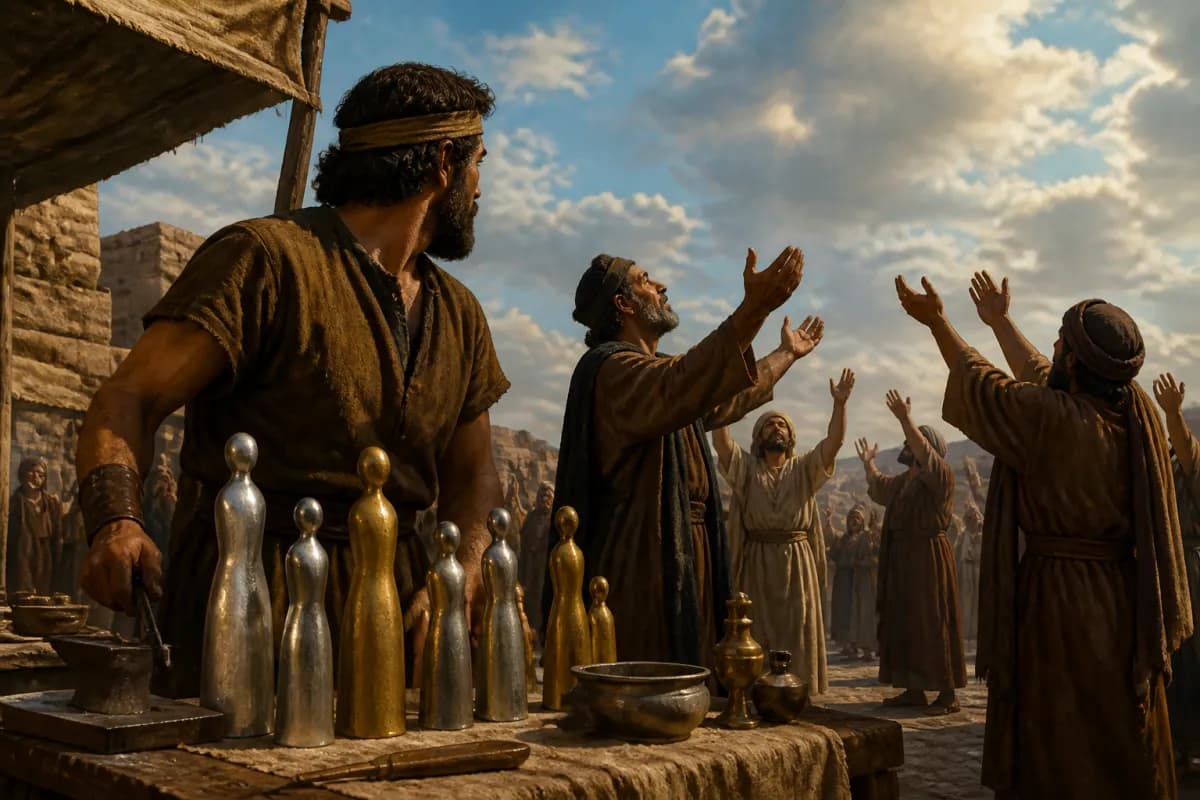
115:4Their idols are silver and gold, the work of men’s hands.
115:5They have mouths, but they don’t speak. They have eyes, but they don’t see.
115:6They have ears, but they don’t hear. They have noses, but they don’t smell.
115:7They have hands, but they don’t feel. They have feet, but they don’t walk, neither do they speak through their throat.
115:8Those who make them will be like them; yes, everyone who trusts in them.
115:9Israel, trust in the LORD! He is their help and their shield.
115:10House of Aaron, trust in the LORD! He is their help and their shield.
115:11You who fear the LORD, trust in the LORD! He is their help and their shield.
115:12The LORD remembers us. He will bless us. He will bless the house of Israel. He will bless the house of Aaron.
115:13He will bless those who fear the LORD, both small and great.
115:14May the LORD increase you more and more, you and your children.
115:15Blessed are you by the LORD, who made heaven and earth.
115:16The heavens are the LORD’s heavens, but he has given the earth to the children of men.
115:17The dead don’t praise the LORD, nor any who go down into silence,
115:18but we will bless the LORD, from this time forward and forever more. Praise the LORD!
CONTEXTUAL OVERVIEW
Psalm 115 begins with an emphatic refusal: “Not to us, O Lord, not to us, but to your name give glory.” The congregation is not asked to deny God’s help; it is asked to name its source. God’s steadfast love and faithfulness, rather than Israel’s strength or deservedness, answer the nations who ask where Israel’s God is.
The supplied note on kavod, “glory, weight, or honor,” clarifies verse 1. Glory belongs to God because He alone has the reality and authority that idols falsely claim. The psalm’s contrast is concrete: idols are made of silver and gold and shaped with features that cannot exercise the functions they display.
HISTORICAL AND LITERARY CONTEXT
Psalm 115 belongs to the Egyptian Hallel and is a communal confession under pressure from surrounding nations. The mockery, “Where is their God?” is answered neither with an image nor with a boast. Israel confesses that its God is in the heavens and does whatever He pleases, meaning that He is free and sovereign rather than manipulable.
The idol catalogue is a familiar biblical form of satire, but its aim is pastoral and moral. Idols have mouths, eyes, ears, noses, hands, feet, and throats, yet they cannot speak, see, hear, smell, feel, walk, or make a sound. Those who trust them become like them: unable to respond faithfully to the living God and unable to give life to others.
SECTION-BY-SECTION ANALYSIS
- Verses 1–3 · Psalms 115:9Israel gives glory to God’s steadfast love and faithfulness, answering the nations with trust in the sovereign Lord.
- Verses 4–8 · Psalms 115:4The detailed anatomy of idols exposes their inability to act and warns that worshipers are shaped by what they trust.
- Verses 9–18 · Psalms 115:10Priests and people alike are called to trust the Lord, receive His blessing, and answer His life-giving rule with praise.
CHRIST IN THIS PASSAGE
Psalm 115’s decisive contrast is between the living God and powerless images. Jesus is not another object to control; He is the visible revelation of the invisible God, the Son who speaks the Father’s word and gives His life for sinners. His cross exposes the emptiness of the false saviors people make, while His resurrection proves that death itself is not lord.
Through Jesus’ saving mission, idolaters are called to turn from lifeless things to serve the living and true God. The church does not answer a skeptical world by manufacturing a more attractive image or by claiming credit for itself. It bears witness to Christ, trusts His help, and gives glory to the Father whose steadfast love has brought it from death into praise.
REFLECTION
Ask the psalm’s question personally: what have you treated as a help and shield that cannot finally speak, see, save, or love? It may be money, approval, control, a political victory, or a religious reputation. Bring the particular attachment to Jesus, who tells the truth about false saviors without abandoning those who have trusted them.
Practice Psalm 115:1 when success, failure, or public scrutiny makes you want to defend your name. Give credit to God for every real mercy, and take one step of trust that depends on His faithfulness rather than on the thing you have been tempted to make ultimate.
Original Hebrew Word Study
Psalm 115:1
כָּבוֹד
kavod · H3519
Usually translated: glory, weight, or honor
Kavod is weighty glory. The psalm refuses to give Israel credit and directs all honor to God’s steadfast love and faithfulness.
Follow the Scripture trail
Psalm 115: Give Glory to the Living God, Not to Lifeless Idols in the larger story
The connection: Psalm 115 calls God’s people away from lifeless objects and into trustful praise of the living Creator. Jesus reveals the invisible God, defeats death through His resurrection, and turns idol-bound sinners into worshipers who live for the Father’s glory.
Respond to the passage
Identify one created thing that has become your imagined shield. Renounce its claim to rule your heart, entrust the fear beneath it to Jesus, and give God specific credit for a mercy you have been tempted to claim as your own.
- Why does Psalm 115 answer the nations’ mockery with God’s steadfast love and faithfulness?
- How does the psalm’s description of idol features expose the danger of trusting created things?
- What does it mean to give glory to God rather than use Jesus as another source of control?
Prayer
Lord Jesus, living image of the Father, expose the false shields I trust. Turn my heart from lifeless idols, teach me to rely on Your faithful help, and make my life give glory to God’s name. Amen.