Passage Study
Psalm 118: The Rejected Stone and the Lord’s Enduring Love
Psalms 118:1–118:29
Psalm 118 surrounds a threatened worshiper with Israel’s repeated confession that the Lord’s steadfast love endures forever. Pressed by hostile nations and abandoned by human help, he trusts the Lord, enters the gates of righteousness with thanksgiving, and celebrates the stone builders rejected becoming the cornerstone. Jesus applies that image to His rejection and vindication, making this psalm a clear witness to His saving kingship.
- In this study
- 29 verses · 5 movements
Psalms 118
118:1Give thanks to the LORD, for he is good, for his loving kindness endures forever.
118:2Let Israel now say that his loving kindness endures forever.
118:3Let the house of Aaron now say that his loving kindness endures forever.
118:4Now let those who fear the LORD say that his loving kindness endures forever.
118:5Out of my distress, I called on the LORD. The LORD answered me with freedom.
118:6The LORD is on my side. I will not be afraid. What can man do to me?
118:7The LORD is on my side among those who help me. Therefore I will look in triumph at those who hate me.
118:8It is better to take refuge in the LORD, than to put confidence in man.
118:9It is better to take refuge in the LORD, than to put confidence in princes.
118:10All the nations surrounded me, but in the LORD’s name I cut them off.
118:11They surrounded me, yes, they surrounded me. In the LORD’s name I indeed cut them off.
118:12They surrounded me like bees. They are quenched like the burning thorns. In the LORD’s name I cut them off.
118:13You pushed me back hard, to make me fall, but the LORD helped me.
118:14The LORD is my strength and song. He has become my salvation.
118:15The voice of rejoicing and salvation is in the tents of the righteous. “The right hand of the LORD does valiantly.
118:16The right hand of the LORD is exalted! The right hand of the LORD does valiantly!”
118:17I will not die, but live, and declare the LORD’s works.
118:18The LORD has punished me severely, but he has not given me over to death.
118:19Open to me the gates of righteousness. I will enter into them. I will give thanks to the LORD.
118:20This is the gate of the LORD; the righteous will enter into it.
118:21I will give thanks to you, for you have answered me, and have become my salvation.
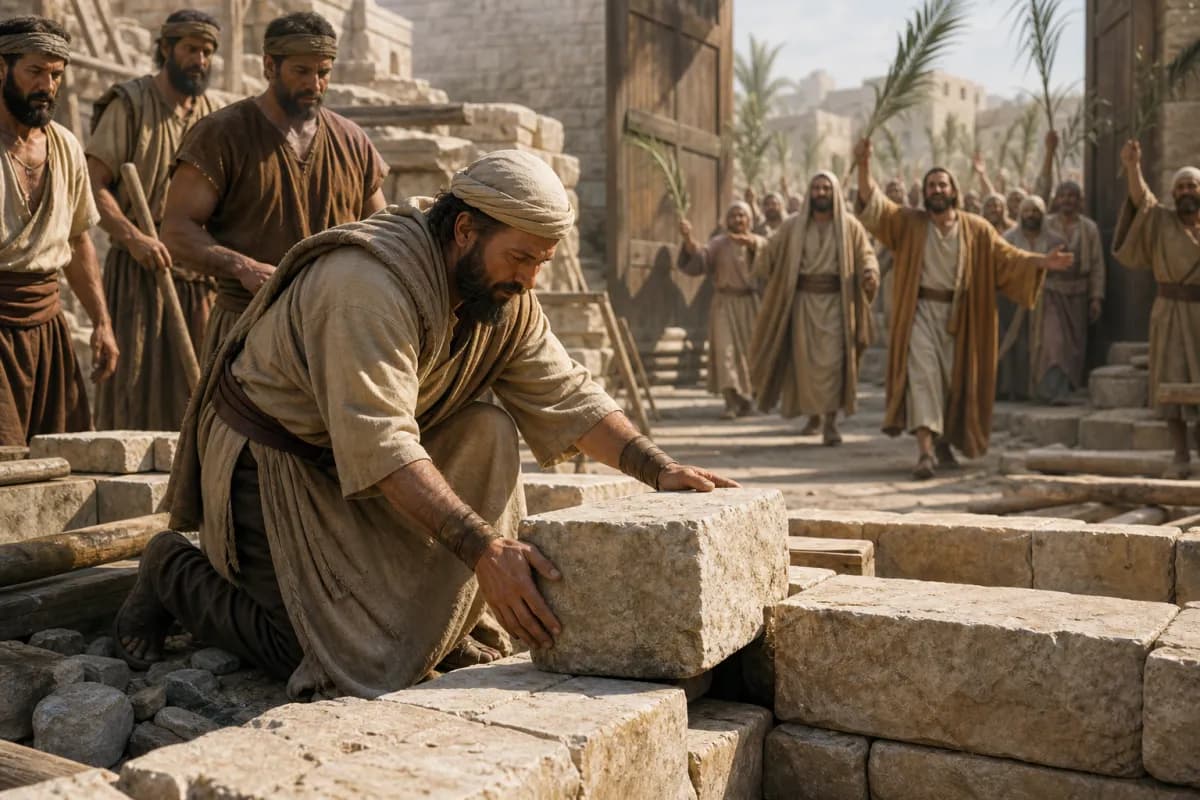
118:22The stone which the builders rejected has become the cornerstone.
118:23This is the LORD’s doing. It is marvelous in our eyes.
118:24This is the day that the LORD has made. We will rejoice and be glad in it!
118:25Save us now, we beg you, LORD! LORD, we beg you, send prosperity now.
118:26Blessed is he who comes in the LORD’s name! We have blessed you out of the LORD’s house.
118:27The LORD is God, and he has given us light. Bind the sacrifice with cords, even to the horns of the altar.
118:28You are my God, and I will give thanks to you. You are my God, I will exalt you.
118:29Oh give thanks to the LORD, for he is good, for his loving kindness endures forever.
CONTEXTUAL OVERVIEW
Psalm 118 opens and closes with the same confession: “His steadfast love endures forever.” Between those lines, a worshiper tells of being surrounded by nations, disciplined but not handed over to death, and welcomed through the gates of righteousness. The psalm does not deny danger; it locates danger inside the Lord’s durable covenant mercy.
The supplied note on hesed, “steadfast covenant love,” governs the repeated refrain. Israel’s praise rests on God’s loyal commitment, not on an easy season. That is why the singer can say it is better to take refuge in the Lord than to trust princes even while enemies press around him.
HISTORICAL AND LITERARY CONTEXT
Psalm 118 concludes the Egyptian Hallel and has long been associated with festival worship. Its calls to Israel, Aaron’s house, and those who fear the Lord, together with the gates, altar procession, and blessing of the one who comes in the Lord’s name, place it naturally in communal worship at the sanctuary.
The identity of the first-person singer is not fixed by the psalm. It may speak for a king, a representative worshiper, or Israel personified. That openness does not weaken the text’s central movement: the Lord rescues the rejected and threatened servant, and the gathered people turn that rescue into public thanksgiving.
SECTION-BY-SECTION ANALYSIS
- Verses 1–9 · Psalms 118:9The congregation confesses enduring covenant love while the singer learns to take refuge in the Lord rather than people or princes.
- Verses 10–18 · Psalms 118:10Surrounded and disciplined, the worshiper credits the Lord alone for rescue and life.
- Verses 19–29 · Psalms 118:26Thanksgiving at the gates celebrates the rejected stone made cornerstone and blesses the one who comes in the Lord’s name.
CHRIST IN THIS PASSAGE
Jesus deliberately applies the rejected-stone image to Himself after confronting leaders who reject God’s Son. The apostles then proclaim that the crucified Jesus, rejected by human builders, has become the cornerstone in His resurrection and exaltation. The connection is explicit in the New Testament and gives the psalm’s image its fullest saving significance.
The crowd’s words in verse 26 are also used at Jesus’ entry into Jerusalem. He comes in the Lord’s name, yet His path to vindication runs through rejection and the cross. In Him, the psalm’s refuge is deeper than escape from immediate enemies: sinners receive reconciliation with God through the rejected and risen King.
REFLECTION
When pressure makes a person chase approval from powerful people, Psalm 118 asks where refuge is actually being sought. Bring the real threat to Jesus, receive ordinary help gratefully, and refuse to treat a person’s favor, a political outcome, or a plan as your final security.
Let the rejected cornerstone also reshape your estimate of faithfulness. God’s work may look dismissed or weak before it is vindicated. Follow Jesus in truthful worship and obedient service, trusting that the Father’s judgment—not a crowd’s response—sets the final meaning of your life.
Original Hebrew Word Study
Psalm 118:1
חֶסֶד
hesed · H2617
Usually translated: steadfast covenant love
Hesed frames Israel’s thanksgiving because the Lord’s faithful love remains when enemies press in and human help proves limited.
Follow the Scripture trail
Psalm 118: The Rejected Stone and the Lord’s Enduring Love in the larger story
The connection: Psalm 118 celebrates the Lord’s rescue of a rejected servant and the stone made cornerstone. Jesus explicitly fulfills that pattern in His rejection, crucifixion, resurrection, and saving reign as the only name by which sinners are saved.
Respond to the passage
Name one place where you are tempted to seek refuge in a person’s approval or power. Bring that fear to the risen Jesus, thank Him for becoming the cornerstone, and take the next faithful step under His rule.
- Why does the refrain about steadfast love frame the psalm’s accounts of danger and rescue?
- What is the difference between accepting human help and making human help your refuge?
- How do Jesus’ rejection and resurrection explain the cornerstone image?
Prayer
Lord Jesus, rejected by people and raised by the Father, be my refuge when pressure surrounds me. Keep me from trusting princes, make my praise truthful, and build my life on Your saving reign. Amen.