Passage Study
Psalm 124: Our Help Is in the Name of the Lord
Psalms 124:1–124:8
Psalm 124 leads Israel to confess that survival came from the Lord alone. Enemies were like floodwaters and a wild animal ready to swallow them, yet God did not hand them over. Their escape becomes praise: their help is in the name of the Lord, Maker of heaven and earth. Jesus secures an even deeper deliverance from sin and death for those who trust Him.
- In this study
- 8 verses · 5 movements
Psalms 124
124:1If it had not been the LORD who was on our side, let Israel now say,
124:2if it had not been the LORD who was on our side, when men rose up against us,
124:3then they would have swallowed us up alive, when their wrath was kindled against us,
124:4then the waters would have overwhelmed us, the stream would have gone over our soul.
124:5Then the proud waters would have gone over our soul.
124:6Blessed be the LORD, who has not given us as a prey to their teeth.
124:7Our soul has escaped like a bird out of the fowler’s snare. The snare is broken, and we have escaped.
124:8Our help is in the LORD’s name, who made heaven and earth.
CONTEXTUAL OVERVIEW
Psalm 124 begins with an unfinished sentence that Israel is invited to complete aloud: “If it had not been the Lord who was on our side.” The congregation remembers a threat great enough to feel like being swallowed alive, drowned by a torrent, or caught in a birdcatcher’s snare. The point is not to relive danger for its own sake but to locate deliverance in the Lord.
The supplied note on ezer, “help,” gives the final confession its force. Israel’s help is “in the name of the Lord,” not in the skill by which it escaped. Naming Him as Maker of heaven and earth rules out every small view of the One who intervenes for His people.
HISTORICAL AND LITERARY CONTEXT
This Song of Ascents bears a Davidic superscription and is framed as communal testimony. The psalm does not name an enemy, battle, or escape, so it should not be tied confidently to one episode in David’s life. Its deliberate openness lets Israel’s gathered worship recall the Lord’s repeated preservation across generations.
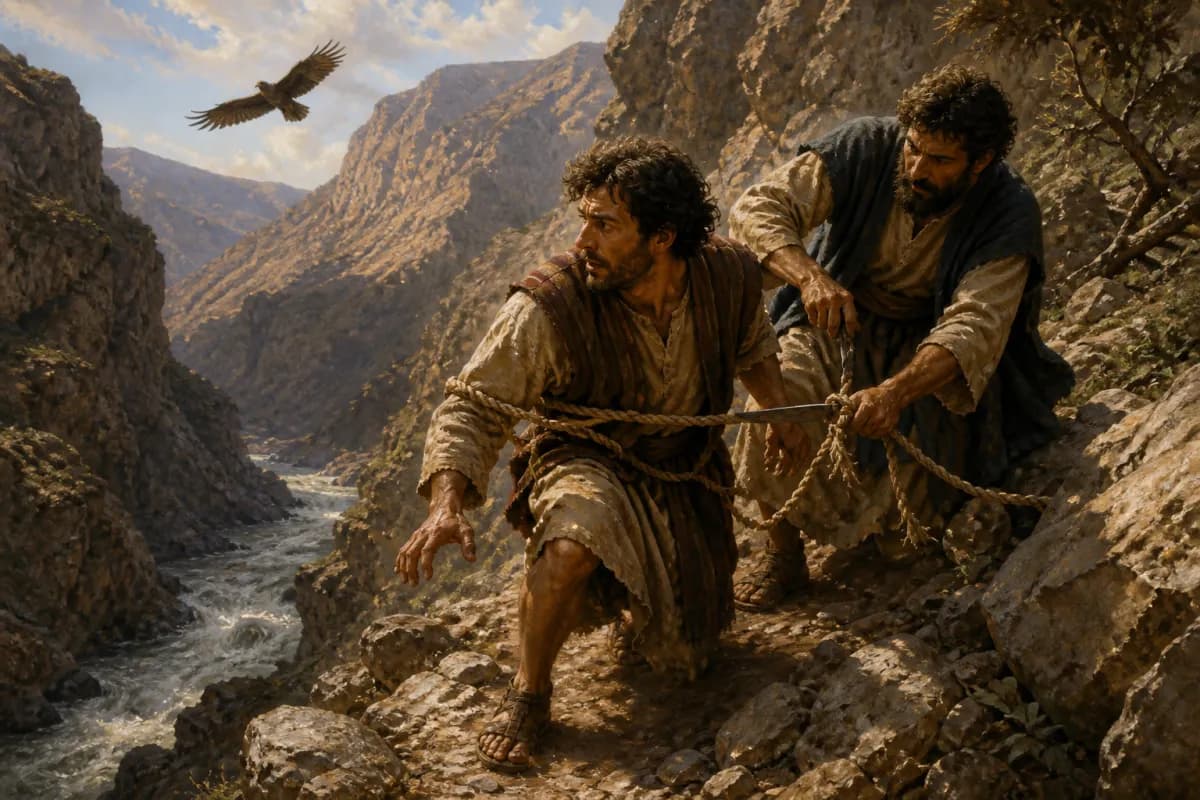
The images move quickly: mouths that swallow, waters that sweep away, teeth that tear, and a snare that breaks. Such language is poetic, not a claim that one literal event contained all four dangers. Together the metaphors make one theological claim: God’s people were genuinely unable to save themselves, and their continued life is a gift of His mercy.
SECTION-BY-SECTION ANALYSIS
- Verses 1–5 · Psalms 124:1Israel remembers that human hostility would have overwhelmed it had the Lord not stood for His people.
- Verses 6–7 · Psalms 124:6The Lord is blessed because He refused to hand Israel over and broke the snare that held it.
- Verse 8 · Psalms 124:8The final confession names the Creator as Israel’s only sufficient help.
CHRIST IN THIS PASSAGE
Psalm 124 is not an invitation to identify every hardship with an enemy whom God must destroy. Its central pattern is deliverance that the endangered people could not achieve. That pattern finds its fullest saving expression in Jesus, who delivers His people from the deeper powers of sin, accusation, and death through His death and resurrection.
Jesus’ rescue comes through apparent weakness rather than triumphal self-protection. At the cross He enters death; in resurrection He breaks its claim. Christians can therefore confess with Psalm 124 that their ultimate help is in the Creator’s name, now made known in the Son who reconciles them to the Father and gives them a hope stronger than every mortal threat.
REFLECTION
Remember a concrete escape for which you are tempted to take full credit: protection in danger, strength in illness, a restored relationship, or preservation through a crisis. Psalm 124 does not deny wise action, but it teaches us to say that every good preservation rests finally on the Lord’s mercy.
If you are still in the flood-like part of the story, this psalm gives no shallow promise that every danger will end as you want. It directs you to Jesus, who has secured your final rescue from death and remains present in present trouble. Ask for help plainly, receive help gratefully, and let deliverance become worship.
Original Hebrew Word Study
Psalm 124:8
עֵזֶר
ezer · H5828
Usually translated: help
Ezer means help. Israel’s help is in the name of the Lord, the Maker of heaven and earth, not in its own ability to escape danger.
Follow the Scripture trail
Psalm 124: Our Help Is in the Name of the Lord in the larger story
The connection: Psalm 124 remembers a people delivered from danger they could not escape by themselves. Jesus accomplishes the decisive rescue from sin and death through His cross and resurrection, so the church can confess that its help is in the Lord’s name.
Respond to the passage
Name one rescue that you have explained mainly by your own strength, and thank Jesus for the mercy beneath it. In a present danger, ask for the specific help you need while anchoring your hope in His victory over death.
- Why does the psalm ask Israel to imagine what would have happened without the Lord?
- How do the flood, prey, and snare images describe different aspects of helplessness?
- What does Jesus’ resurrection add to the confession that our help is in the Lord’s name?
Prayer
Lord Jesus, You are my help when danger is greater than my strength. Thank You for rescuing me from sin and death; teach me to remember Your mercies and to trust You in every present threat. Amen.