Passage Study
Psalm 126: Restored Joy and Tears Sown in Hope
Psalms 126:1–126:6
Psalm 126 remembers a restoration so astonishing that Zion’s people felt as though they were dreaming and the nations recognized the Lord’s greatness. Yet the song also asks God to restore them again and speaks of tears carried into sowing. Their hope rests in the Lord who turns grief toward harvest. Jesus secures the deepest restoration through His resurrection and promises that sorrow will not have the final word.
- In this study
- 6 verses · 5 movements
Psalms 126
126:1When the LORD brought back those who returned to Zion, we were like those who dream.
126:2Then our mouth was filled with laughter, and our tongue with singing. Then they said among the nations, “The LORD has done great things for them.”
126:3The LORD has done great things for us, and we are glad.
126:4Restore our fortunes again, LORD, like the streams in the Negev.
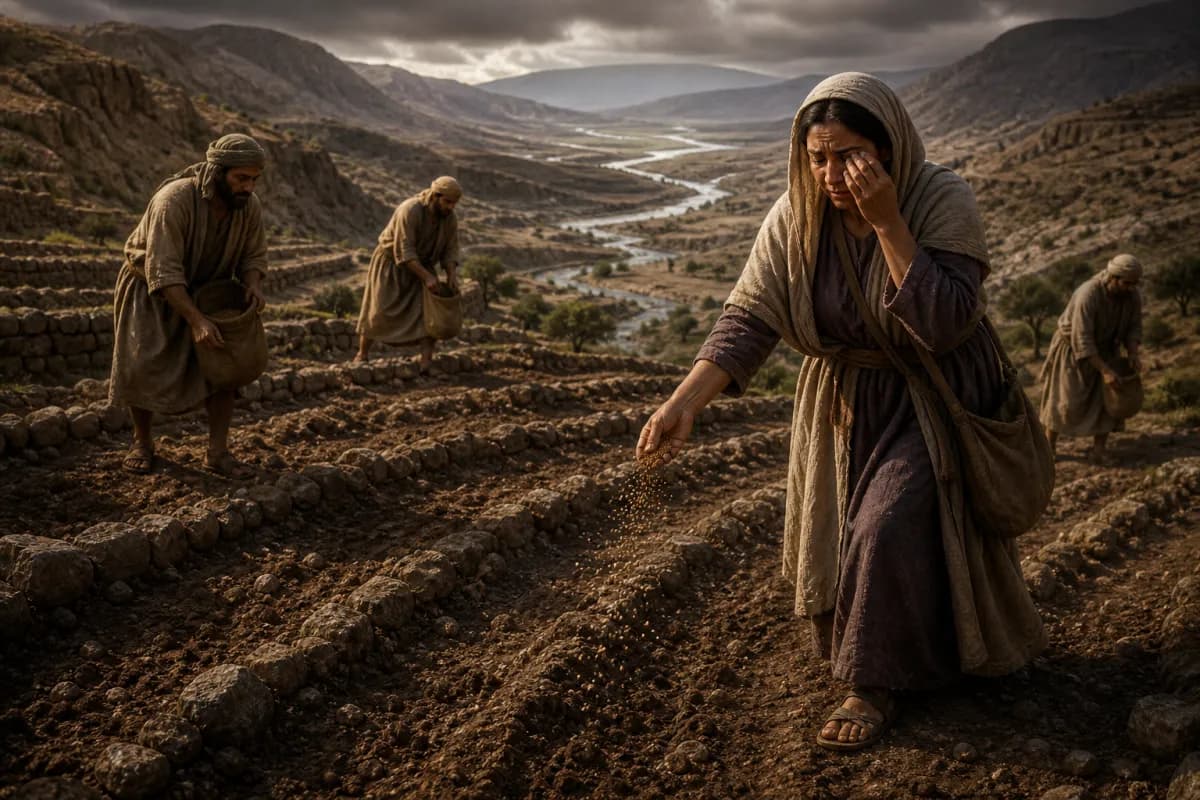
126:5Those who sow in tears will reap in joy.
126:6He who goes out weeping, carrying seed for sowing, will certainly come again with joy, carrying his sheaves.
CONTEXTUAL OVERVIEW
Psalm 126 holds remembrance and unfinished longing together. The first half looks back on a reversal so joyful that Zion felt dreamlike and neighboring nations had to acknowledge the Lord’s greatness. The second half shows that the singers still need restoration; past mercy has become the reason to ask boldly for present renewal.
The supplied note on shuv, “to return or restore,” appears in the psalm’s language of restored fortunes. The word gives the poem its movement: the Lord has brought back His people before, and they ask Him to bring a new return from dryness and tears into joy.
HISTORICAL AND LITERARY CONTEXT
As a Song of Ascents, Psalm 126 belongs to Israel’s worshiping movement toward Zion. Its opening likely resonates with the return from exile, though the psalm itself does not identify an exact date or decree. The language can carry the memory of any great covenant restoration in which God reverses the helplessness of His people.
The Negeb streambeds in verse 4 are normally dry channels that can suddenly run with water after rain. That image prevents the final harvest picture from becoming a vague positive thought. Restoration is as necessary and as God-given as water in a dry place; the psalm’s joy is grounded in the Lord’s intervention rather than human resilience.
SECTION-BY-SECTION ANALYSIS
- Verses 1–3 · Psalms 126:2Past restoration fills Zion with joy and becomes a public witness that the Lord has done great things.
- Verse 4 · Psalms 126:4The community asks for a new restoration as urgently needed as streams in the dry Negeb.
- Verses 5–6 · Psalms 126:1Tearful sowing is joined to a promised joyful harvest because the Lord brings life from costly faithfulness.
CHRIST IN THIS PASSAGE
Psalm 126 is not a promise that every grief will turn quickly into visible prosperity. It does establish a covenant pattern in which God reverses His people’s helplessness and gives joy after sorrow. Jesus fulfills that hope at its deepest point: His death bears the curse of sin, and His resurrection begins the new creation in which God’s restoring work cannot be undone.
Jesus also uses the image of a seed that must die to bear much fruit, giving the psalm’s sowing-and-harvest language a strong connection to His saving mission. Those joined to Him can work, give, and persevere with tears without pretending pain is good, because His risen life guarantees that faithful labor in the Lord is not empty and that final joy is coming.
REFLECTION
Remember one restoration that still makes you say, “The Lord has done great things for us.” Tell it accurately, especially if it came through a season you could not repair yourself. Then bring the present dry place to Jesus without embarrassment; remembered grace is fuel for honest petition, not a reason to silence need.
If you are sowing in tears, do not treat the tears as evidence that you have failed to trust. Keep carrying the seed of faithful obedience: prayer, truthfulness, service, repentance, or generous love. Jesus’ resurrection does not minimize grief; it gives grief a horizon in which harvest and joy are real promises.
Original Hebrew Word Study
Psalm 126:1
שׁוּב
shuv · H7725
Usually translated: to return or restore
Shuv means to restore or bring back. The Lord’s return of Zion’s fortunes is so astonishing that it feels like a dream and becomes a witness among the nations.
Follow the Scripture trail
Psalm 126: Restored Joy and Tears Sown in Hope in the larger story
The connection: Psalm 126 remembers God’s restoration and trusts Him to turn dry places and tears toward harvest. Jesus’ death and resurrection bring the decisive restoration from sin and death, assuring His people that sorrowful faithfulness has a future in His new creation.
Respond to the passage
Write down one past restoration and one present dry place. Thank Jesus for the first, ask Him to renew the second, and keep one seed of faithful obedience in the ground this week even if it is carried with tears.
- Why does the psalm remember past joy and still ask for restoration?
- What does the image of Negeb streambeds add to the prayer for renewal?
- How does Christ’s resurrection keep the harvest promise from becoming shallow optimism?
Prayer
Lord Jesus, You are the risen beginning of God’s restoration. Remember my dry places, receive my tears, and give me courage to sow faithfully until the joy of Your harvest is made complete. Amen.