Passage Study
Psalm 128: The Fear of the Lord at the Family Table
Psalms 128:1–128:6
Psalm 128 calls the person who fears the Lord blessed and traces that blessing through honest labor, a fruitful household, children around the table, Zion’s good, and the hope of seeing grandchildren. Its picture is not a formula that guarantees every family outcome; it names the ordinary goodness that flows from reverent life under God. Jesus brings sinners into God’s household and teaches them to receive every good gift as grace.
- In this study
- 6 verses · 5 movements
Psalms 128
128:1Blessed is everyone who fears the LORD, who walks in his ways.
128:2For you will eat the labor of your hands. You will be happy, and it will be well with you.
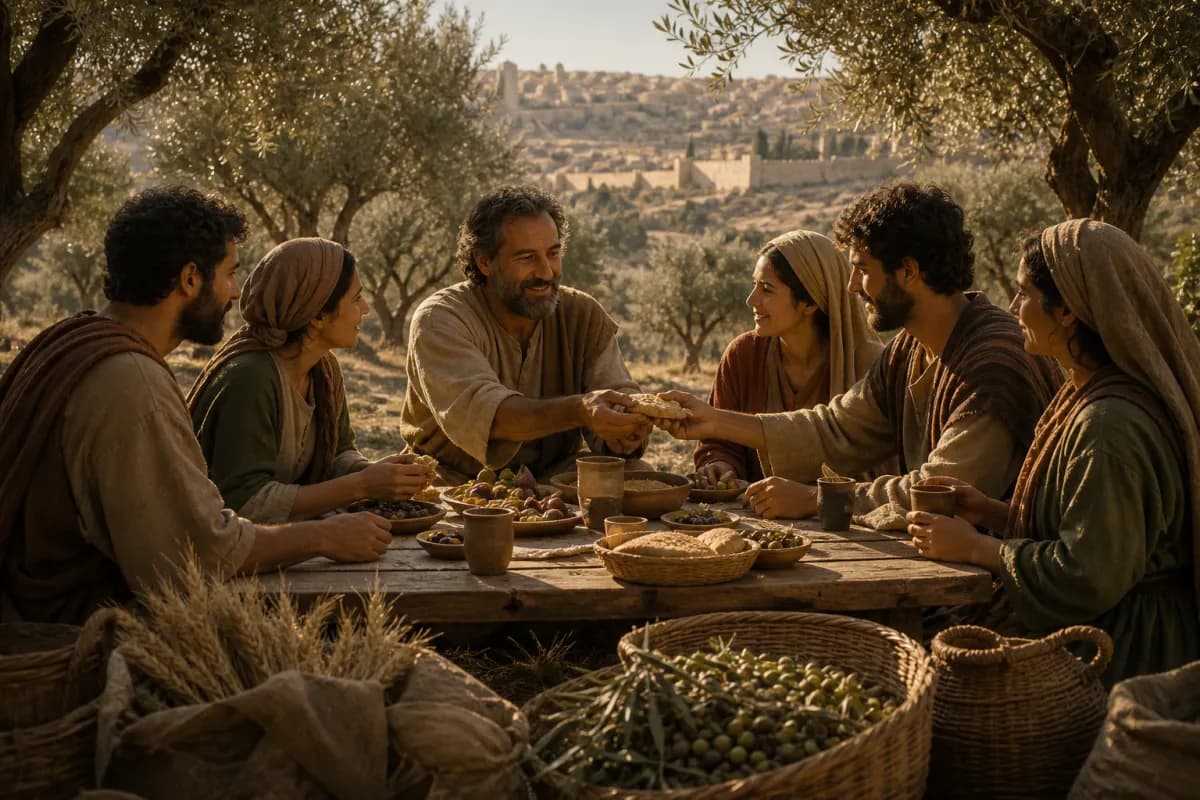
128:3Your wife will be as a fruitful vine in the innermost parts of your house, your children like olive shoots around your table.
128:4Behold, this is how the man who fears the LORD is blessed.
128:5May the LORD bless you out of Zion, and may you see the good of Jerusalem all the days of your life.
128:6Yes, may you see your children’s children. Peace be upon Israel.
CONTEXTUAL OVERVIEW
Psalm 128 takes us into the ordinary places where reverence for the Lord is tested and enjoyed: work, a shared meal, marriage, children, and the well-being of Jerusalem. The opening blessing is for “everyone who fears the Lord,” not merely for a king, priest, or unusually secure household. Awe for God becomes a way of walking, a life ordered by His ways in daily responsibilities.
The supplied note on yare, “to fear or revere,” protects the psalm from being read as anxious religiosity. The fear of the Lord is not terror that makes a person shrink from God; it is a settled recognition that He is holy, good, and worthy of obedience. The blessing that follows is received under His authority rather than manufactured by human control.
HISTORICAL AND LITERARY CONTEXT
Psalm 128 is a Song of Ascents, a collection used by worshipers traveling toward Jerusalem. Its home-centered language is therefore joined to Zion in verses 5–6. A faithful household is not imagined as a private fortress; its welfare is bound to the good God gives from His dwelling place and to the peace of the city where His people gather.
The wife is compared to a fruitful vine within the house and children to olive shoots around the table. These are agricultural images of life, fruitfulness, and continuity in ancient Israel. They honor God’s gifts without giving permission to judge the childless, unmarried, bereaved, or suffering as though the psalm had supplied a simple explanation for their pain. Scripture itself gives faithful voices to those very forms of grief.
SECTION-BY-SECTION ANALYSIS
- Verses 1–2 · Psalms 128:1Reverence for the Lord shapes a walk of obedience and receives the fruit of honest labor as His gift.
- Verses 3–4 · Psalms 128:3Vine and olive-shoot imagery celebrates household life as a gracious sign of fruitfulness and future.
- Verses 5–6 · Psalms 128:5Blessing comes from Zion and seeks Jerusalem’s peace, joining the home’s good to the good of God’s people.
CHRIST IN THIS PASSAGE
Psalm 128 does not promise that every Christian household will receive the exact visible outcomes it names. Its covenant picture of fruitful life finds its deepest fulfillment in Jesus, who brings those alienated by sin into the Father’s family. Through His death and resurrection, belonging to God is no longer secured by ancestry, productivity, or a flawless home but by faith in the Son.
Jesus also reorders the meaning of kinship. He honors marriage, children, work, and the home, yet He identifies those who do the Father’s will as His brothers and sisters. In Him, the church becomes a household where those without earthly family or security receive a real people, and where every table is meant to anticipate the peace of His kingdom.
REFLECTION
Receive Psalm 128 as an invitation to fear the Lord in the places closest to you: the work you do, the words spoken at home, the way you welcome people to your table, and the way you seek your city’s good. Thank Him for particular gifts without treating them as proof that you have earned His favor.
If this psalm exposes a grief you carry about work or family, bring that grief to Jesus without pretending it is small. He knows the cost of a broken world and has secured a family and future that loss cannot erase. Ask Him to make your present home, however simple or complicated, a place shaped by His peace.
Original Hebrew Word Study
Psalm 128:1
יָרֵא
yare · H3372
Usually translated: to fear or revere
Yare means reverent fear. The blessed household is shaped by awe for the Lord that becomes ordinary faithfulness in work and family.
Follow the Scripture trail
Psalm 128: The Fear of the Lord at the Family Table in the larger story
The connection: Psalm 128 celebrates reverent life as a gift flowing from Zion into work, home, and communal peace. Jesus brings sinners into the Father’s household through His saving death and resurrection, creating a people whose truest blessing rests in belonging to Him rather than in controllable circumstances.
Respond to the passage
Name one ordinary responsibility where you have been living mainly for control or approval. Offer it to Jesus with reverence, thank Him for one concrete gift in your home or work, and seek one small action that contributes to the peace of the people around you.
- Why does the psalm join the fear of the Lord to both work and the family table?
- How do the vine and olive-shoot images describe gift rather than a guarantee of effortless life?
- How does Jesus’ creation of a new family bring hope to people whose homes are marked by loss or longing?
Prayer
Lord Jesus, teach me to fear the Father with glad reverence in my work and home. Thank You for every good gift, meet the grief I cannot fix, and make my life serve the peace of Your household. Amen.