Passage Study
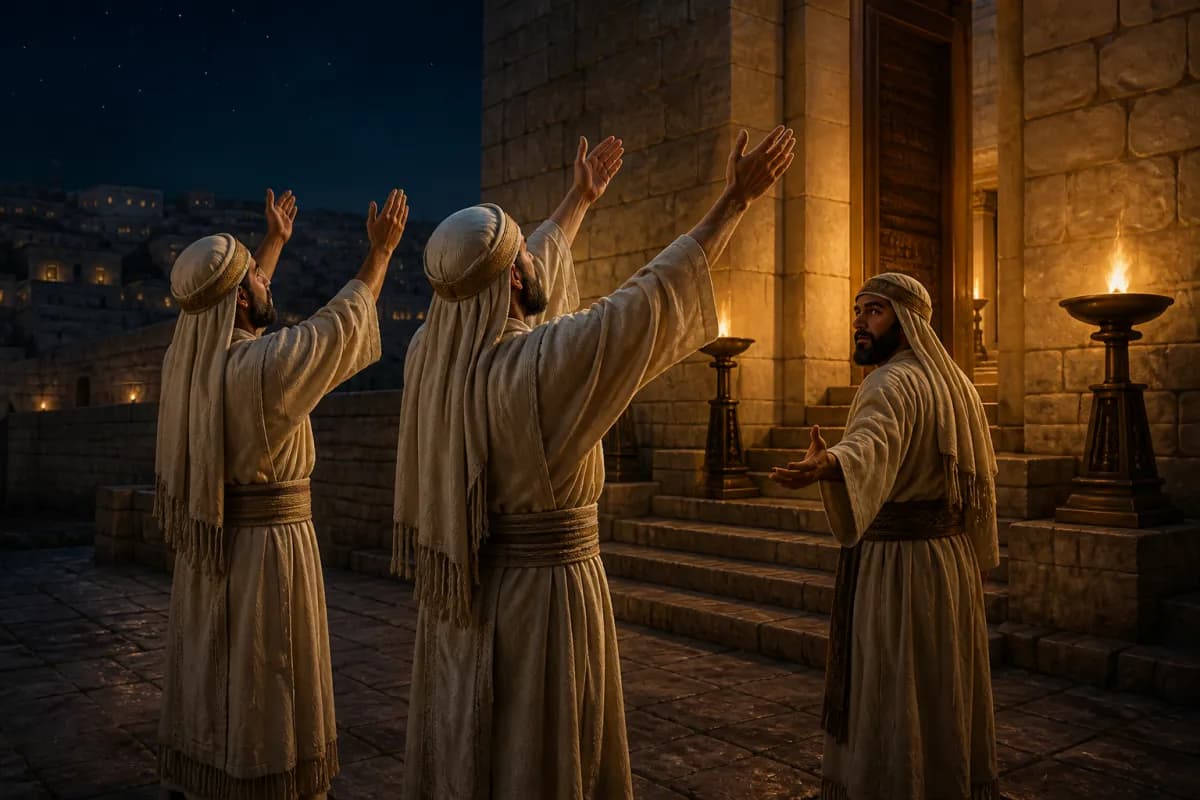
Psalm 134: Blessing the Lord in the Night
Psalms 134:1–134:3
Psalm 134 closes the Songs of Ascents by calling the Lord’s servants to bless Him through the night in His house. A second voice blesses the worshipers from Zion in the name of the Creator. The brief exchange shows that worship begins with God’s people blessing Him and ends with His life-giving blessing resting on them. Jesus brings His people into that lasting worship through His priestly saving work.
- In this study
- 3 verses · 5 movements
CONTEXTUAL OVERVIEW
Psalm 134 is the final Song of Ascents. After the pilgrim songs have spoken of Zion, protection, restoration, household life, and unity, this closing psalm turns toward the servants who remain in the Lord’s house at night. Its first command is not to seek a private experience but to bless the Lord whose presence makes Zion a place of worship.
The supplied note on barakh, “to bless,” clarifies the two-way movement of the poem. The servants bless the Lord by praise and lifted hands; the Lord blesses His people from Zion. Human praise does not add anything God lacks, but it is the fitting response of people who live by His generosity.
HISTORICAL AND LITERARY CONTEXT
The psalm’s direct address to servants standing in the house of the Lord likely concerns temple personnel or worshipers serving during the night. The exact liturgical setting is not identified, so the text should not be made to describe a particular festival ritual with certainty. What is clear is that worship continues when most of the city is at rest.
The short form reads like an antiphonal exchange: a call to temple servants in verses 1–2 and a spoken blessing in verse 3. The final title, “Maker of heaven and earth,” keeps the blessing from becoming a local religious wish. The God who blesses from Zion is the Creator of everything.
SECTION-BY-SECTION ANALYSIS
- Verse 1 · Psalms 134:1Those serving in the Lord’s house through the night are summoned to bless Him.
- Verse 2 · Psalms 134:2Lifted hands toward the holy place embody dependent praise before the Lord.
- Verse 3 · Psalms 134:3The Creator blesses His worshipers from Zion, answering their praise with covenant favor.
CHRIST IN THIS PASSAGE
Psalm 134 does not predict a particular event in Jesus’ ministry, but its temple worship and blessing belong to the biblical pattern fulfilled in Him. Jesus is the true high priest who brings His people to God, not through an endlessly repeated temple service, but through His once-for-all self-offering. In Him, access to the Father is secured by grace.
The psalm’s night setting also resonates carefully with Jesus’ watchfulness in Gethsemane and His call for disciples to remain awake in faith. The stronger connection is priestly: the risen Christ intercedes for His people, and He makes their praise acceptable. His saving mission turns worshipers from strangers into a people who bless God because they have first been blessed in His Son.
REFLECTION
Psalm 134 dignifies the hidden hours. If your labor, caregiving, prayer, or grief keeps you awake while others sleep, bring that hour before Jesus. You may bless the Lord there without pretending the night is easy, because His presence is not confined to the visible or celebrated parts of life.
Let the psalm reshape the order of your worship. Praise is not a way to force God’s hand; it is the answer to the God who has already given you life, mercy, and access through Christ. Lift your heart to Him, then receive His blessing with gratitude rather than trying to manufacture spiritual security.
Original Hebrew Word Study
Psalm 134:1
בָּרַךְ
barakh · H1288
Usually translated: to bless
Barakh means to bless. Temple servants bless the Lord through the night, then receive the Lord’s blessing from Zion.
Follow the Scripture trail
Psalm 134: Blessing the Lord in the Night in the larger story
The connection: Psalm 134 gathers temple servants into praise and sends them out under the Creator’s blessing. Jesus, the risen high priest, brings sinners near through His saving sacrifice and makes the church a worshiping people who bless God because they are blessed in Him.
Respond to the passage
Offer one hidden or weary hour to Jesus this week. Name His faithfulness, then receive your work, rest, and need for mercy as gifts held under His priestly care.
- Why does the final Song of Ascents turn to servants standing in the Lord’s house at night?
- How does verse 3 answer the command to bless the Lord in verses 1–2?
- How does Jesus’ priestly work change the way you approach God in worship?
Prayer
Lord Jesus, You bring me near to the Father by Your saving work. Teach me to bless God in hidden hours, receive His mercy with gratitude, and worship with the confidence of one whom You intercede for. Amen.