Passage Study
Psalm 140: The Lord Hears the Cause of the Afflicted
Psalms 140:1–140:13
Psalm 140 asks the Lord to rescue David from violent people whose hearts plan evil and whose tongues wound like a serpent’s. David refuses to let their schemes prevail, entrusts their judgment to God, and ends with confidence that the Lord upholds the afflicted and needy. Jesus bears violent hostility without surrendering to it and will finally establish justice for all who trust Him.
- In this study
- 13 verses · 5 movements
Psalms 140
140:1Deliver me, LORD, from evil men. Preserve me from violent men:
140:2those who devise mischief in their hearts. They continually gather themselves together for war.
140:3They have sharpened their tongues like a serpent. Viper’s poison is under their lips. Selah.
140:4LORD, keep me from the hands of the wicked. Preserve me from the violent men who have determined to trip my feet.
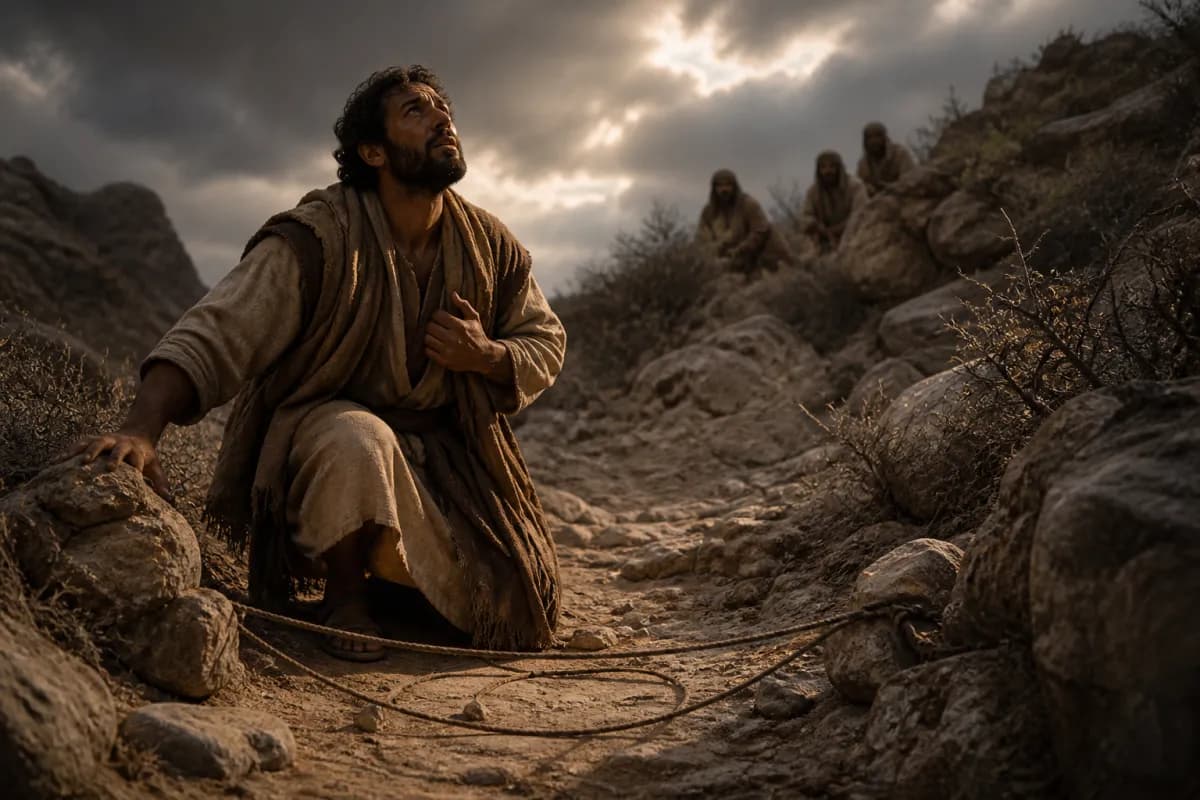
140:5The proud have hidden a snare for me, they have spread the cords of a net by the path. They have set traps for me. Selah.
140:6I said to the LORD, “You are my God.” Listen to the cry of my petitions, LORD.
140:7LORD, the Lord, the strength of my salvation, you have covered my head in the day of battle.
140:8LORD, don’t grant the desires of the wicked. Don’t let their evil plans succeed, or they will become proud. Selah.
140:9As for the head of those who surround me, let the mischief of their own lips cover them.
140:10Let burning coals fall on them. Let them be thrown into the fire, into miry pits, from where they never rise.
140:11An evil speaker won’t be established in the earth. Evil will hunt the violent man to overthrow him.
140:12I know that the LORD will maintain the cause of the afflicted, and justice for the needy.
140:13Surely the righteous will give thanks to your name. The upright will dwell in your presence.
CONTEXTUAL OVERVIEW
Psalm 140 is a prayer from inside a campaign of calculated harm. David does not describe an ordinary disagreement. Violent people “plan evil things in their minds,” stir up wars, sharpen their tongues like a serpent, and conceal traps for his feet. The psalm gives faithful language to a person who can see both public aggression and the quieter machinery of a plot.
The supplied note on ra, “evil or harm,” names the character of the danger in verse 1. David seeks protection because the opponents’ aims are morally destructive, not because every inconvenience is persecution. His prayer keeps the distinction clear: real evil can be named honestly before God without the sufferer taking judgment into his own hands.
HISTORICAL AND LITERARY CONTEXT
The superscription attributes Psalm 140 to David, but the psalm does not identify the particular conflict behind its images of war, serpents, snares, and arrogant attackers. It should therefore not be attached with certainty to Saul, Absalom, or any other named episode. Its language gathers several forms of violence into one urgent appeal to the Lord.
The poem alternates between petition and confession. David asks repeatedly, “Guard me,” “Do not grant,” and “Do not let,” then calls the Lord “my God,” “my Lord,” and the strength of his salvation. The closing shift to the afflicted, needy, righteous, and upright widens his personal danger into a confidence about God’s settled concern for those crushed by violent power.
SECTION-BY-SECTION ANALYSIS
- Verses 1–5 · Psalms 140:5David asks to be guarded from violent planners, venomous speech, and traps hidden along his path.
- Verses 6–8 · Psalms 140:6Calling the Lord his God and saving strength, David asks that arrogant violence not be allowed to prosper.
- Verses 9–13 · Psalms 140:12Judgment is entrusted to God, while the conclusion affirms His justice for afflicted and needy people.
CHRIST IN THIS PASSAGE
Psalm 140 does not directly predict a scene in Jesus’ passion, yet its righteous sufferer surrounded by violent words and hostile schemes has a strong canonical echo there. Jesus endured false testimony, betrayal, and public mockery, but He did not answer violence with deceit or seize judgment for Himself. He entrusted Himself to the Father who judges justly.
At the cross, Jesus bears the violence produced by human sin so that guilty people can be reconciled to God rather than remain under judgment. That mercy does not make oppression harmless or erase God’s justice. The risen Christ is the King before whom violent power will answer, and He welcomes afflicted people who come to Him for refuge and forgiveness.
REFLECTION
When another person’s words, threats, or manipulation make the path feel unsafe, Psalm 140 teaches you to bring the exact danger to God. Seek wise protection and truthful help where it is needed, but resist the temptation to become shaped by the methods that have wounded you. Jesus can keep a guarded heart from becoming a vengeful one.
The last two verses also direct attention beyond personal survival. Ask where an afflicted or needy person near you is bearing the cost of someone else’s power. Pray for justice in Christ’s name and take one truthful, lawful action that supports the vulnerable rather than merely rehearsing anger.
Original Hebrew Word Study
Psalm 140:1
רַע
ra · H7451
Usually translated: evil or harm
Ra means evil or harm. David asks for protection from people whose plans and words are organized toward violence.
Follow the Scripture trail
Psalm 140: The Lord Hears the Cause of the Afflicted in the larger story
The connection: Psalm 140 entrusts violent speech, hidden plots, and the cause of the afflicted to the Lord’s justice. Jesus endures hostile schemes without sin, bears judgment at the cross for sinners, and will establish the justice for which the needy wait.
Respond to the passage
Name the concrete harm or threat that has made you fearful, and bring it to Jesus without disguising it. Ask Him to guard your speech and actions, then seek one wise form of protection or advocacy that refuses retaliation.
- Which details in the psalm show that David is facing deliberate violence rather than ordinary conflict?
- Why does David place judgment in God’s hands instead of making himself the judge?
- How does Jesus’ response to violent hostility reshape a Christian response to real harm?
Prayer
Lord Jesus, You know the cruelty of false words and violent plans. Guard those who are threatened, keep me from returning evil for evil, and make Your justice and mercy visible through my faithful response. Amen.