Passage Study
Psalm 142: Refuge When No One Takes Notice
Psalms 142:1–142:7
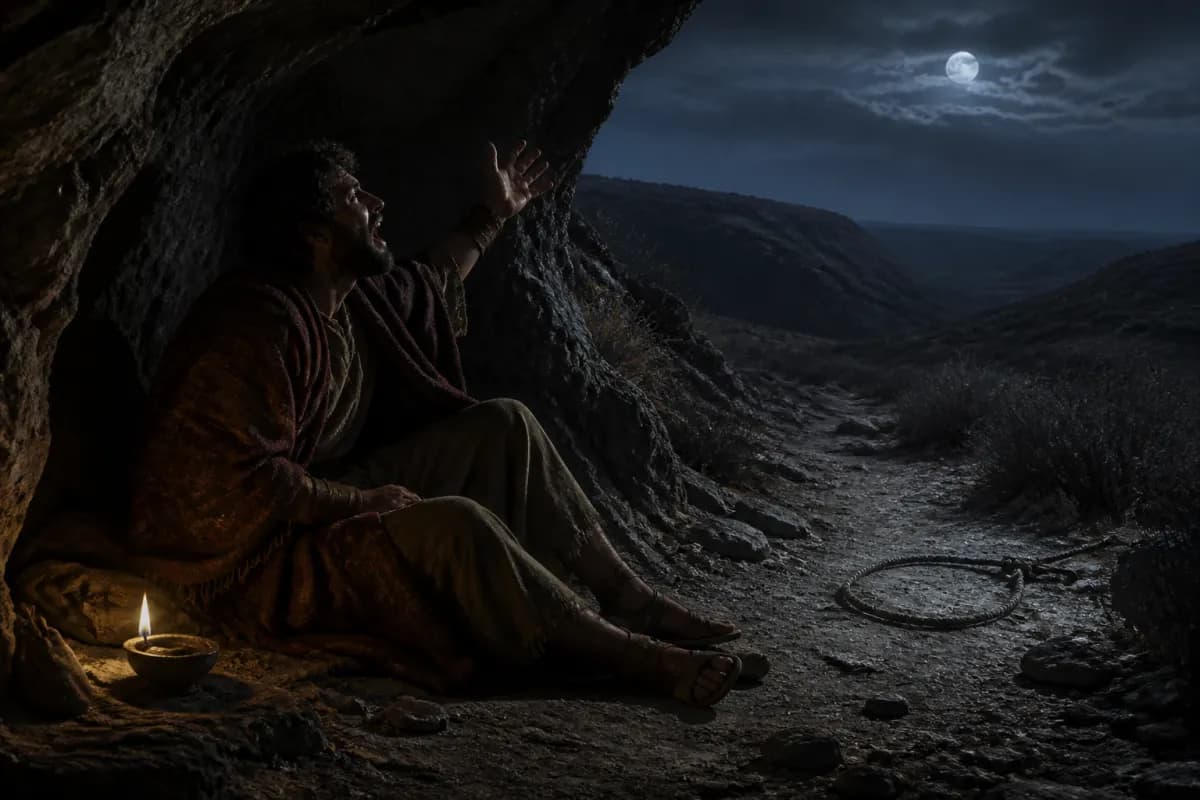
Psalm 142 records David’s loud cry from a place where no human refuge remains. He pours out his complaint, sees a trap in his path, and finds no one at his right hand who will acknowledge him. Calling the Lord his refuge and portion, he asks to be brought out of confinement so the righteous can gather in thanksgiving. Jesus enters abandonment and brings the forsaken into God’s family.
- In this study
- 7 verses · 5 movements
Psalms 142
142:1I cry with my voice to the LORD. With my voice, I ask the LORD for mercy.
142:2I pour out my complaint before him. I tell him my troubles.
142:3When my spirit was overwhelmed within me, you knew my route. On the path in which I walk, they have hidden a snare for me.
142:4Look on my right, and see; for there is no one who is concerned for me. Refuge has fled from me. No one cares for my soul.
142:5I cried to you, LORD. I said, “You are my refuge, my portion in the land of the living.”
142:6Listen to my cry, for I am in desperate need. Deliver me from my persecutors, for they are too strong for me.
142:7Bring my soul out of prison, that I may give thanks to your name. The righteous will surround me, for you will be good to me.
CONTEXTUAL OVERVIEW
Psalm 142 gives words to someone who has reached the end of visible human help. David cries aloud rather than composing a calm report. He pours out complaint, sees a trap along the path, looks to his right hand, and finds no one who knows him or cares for his soul. The psalm refuses the fiction that faith requires loneliness to be denied.
The supplied note on machaseh, “refuge or shelter,” explains David’s turning point in verse 5. He calls the Lord his refuge and his portion in the land of the living. This is not an escape from ordinary life into private spirituality; it is a confession that when no human shelter remains, the living God Himself is David’s true security and allotted good.
HISTORICAL AND LITERARY CONTEXT
The superscription calls Psalm 142 a Maskil of David, “when he was in the cave.” David’s life includes more than one cave episode, so the heading does not allow a certain identification with a single event. Its setting nevertheless suits the poem’s constricted language: a hidden place, an overwhelmed spirit, a path watched by enemies, and a prayer for release from prison.
The psalm is a personal lament that ends with a communal horizon. David’s complaint is directed to the Lord, not performed for an audience that can rescue him. Yet his desired outcome is not isolation. When God deals bountifully with him, the righteous will gather around him and give thanks, turning private deliverance into shared worship.
SECTION-BY-SECTION ANALYSIS
- Verses 1–2 · Psalms 142:2David cries aloud and pours his complaint before the Lord rather than hiding his trouble.
- Verses 3–4 · Psalms 142:3A trap lies in his path, and no human defender or companion appears at his right hand.
- Verses 5–7 · Psalms 142:5The Lord becomes David’s refuge and portion as he asks release and anticipates shared thanksgiving.
CHRIST IN THIS PASSAGE
Psalm 142 does not state that David’s cave is a direct prophecy of Jesus, but its abandonment and cry for rescue genuinely echo Jesus’ suffering. Jesus is deserted by disciples and treated as one without a defender, yet He entrusts Himself to the Father. He enters the depth of human alienation without sin so that those who feel forgotten may come to God through Him.
The psalm’s movement from confinement toward a gathered righteous community reaches its saving fulfillment in Christ. By His death and resurrection, Jesus frees people from sin’s captivity and brings them into the family of God. He does not promise that every lonely season ends immediately, but He is a present refuge and creates a people who are called to notice and bear one another’s burdens.
REFLECTION
If you feel unseen, do not reduce your prayer to vague religious language. Psalm 142 permits you to tell Jesus where the path feels trapped, who has failed to stand beside you, and how your spirit has become overwhelmed. Calling God your refuge is an act of faith precisely when other refuges have failed.
The closing vision also challenges the church. Look for the person who seems to have no one at the right hand: the grieving, isolated, displaced, or quietly overwhelmed. In the name of Christ, offer presence, practical help, and truthful prayer so that God’s refuge becomes visible through His people.
Original Hebrew Word Study
Psalm 142:5
מַחֲסֶה
machaseh · H4268
Usually translated: refuge or shelter
Machaseh means refuge. With no human helper in sight, David calls the Lord his safe portion in the land of the living.
Follow the Scripture trail
Psalm 142: Refuge When No One Takes Notice in the larger story
The connection: Psalm 142 calls the Lord refuge when no human defender remains and asks to be brought from confinement into thankful community. Jesus enters abandonment, defeats sin and death through His resurrection, and brings forsaken people into the Father’s family.
Respond to the passage
Tell Jesus one part of your trouble that you have been carrying without words. Then contact one trustworthy believer or helper with a specific request, and look for one lonely person to whom you can offer Christ-shaped presence.
- What does David’s loud complaint show about honest prayer?
- Why is the failure of refuge at David’s right hand so painful?
- How does Jesus’ abandonment and resurrection give hope without minimizing loneliness?
Prayer
Lord Jesus, when I feel unseen and trapped, be my refuge and portion. Hear my honest cry, bring me into the care of Your people, and make me attentive to those who are carrying their trouble alone. Amen.