Passage Study
Psalm 146: The God of Jacob Is Help for the Helpless
Psalms 146:1–146:10
Psalm 146 begins and ends with praise while warning against trust in princes whose plans perish with their breath. The psalm names the God of Jacob as faithful Creator, defender of the oppressed, provider for the hungry, liberator of prisoners, healer of the bowed down, guardian of strangers, and judge of the wicked. Jesus brings this kingly mercy to its saving fulfillment and reigns forever.
- In this study
- 10 verses · 5 movements
Psalms 146
146:1Praise the LORD! Praise the LORD, my soul.
146:2While I live, I will praise the LORD. I will sing praises to my God as long as I exist.
146:3Don’t put your trust in princes, in a son of man in whom there is no help.
146:4His spirit departs, and he returns to the earth. In that very day, his thoughts perish.
146:5Happy is he who has the God of Jacob for his help, whose hope is in the LORD, his God,
146:6who made heaven and earth, the sea, and all that is in them; who keeps truth forever;
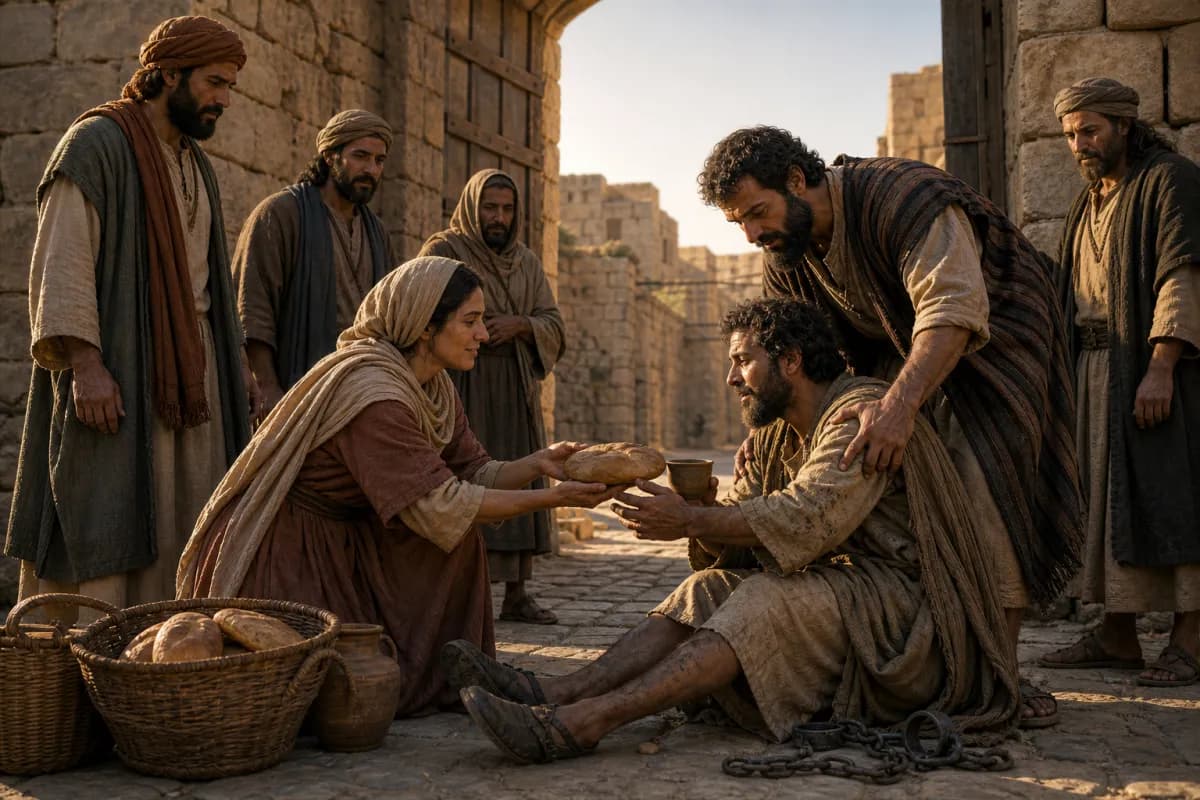
146:7who executes justice for the oppressed; who gives food to the hungry. The LORD frees the prisoners.
146:8The LORD opens the eyes of the blind. The LORD raises up those who are bowed down. The LORD loves the righteous.
146:9The LORD preserves the foreigners. He upholds the fatherless and widow, but he turns the way of the wicked upside down.
146:10The LORD will reign forever; your God, O Zion, to all generations. Praise the LORD!
CONTEXTUAL OVERVIEW
Psalm 146 opens the final hallelujah collection by turning a personal vow into a public correction of misplaced confidence. The singer will praise the Lord “all my life,” then immediately says not to put trust in princes. A ruler may look decisive, but he is human: his breath departs, he returns to the ground, and his plans perish with him.
The supplied note on ezer, “help,” locates the blessing of verse 5. The happy person is not the person who has secured the strongest patron, but the one whose help is the God of Jacob. The following lines make that claim concrete by naming people whom earthly systems often neglect: the oppressed, hungry, imprisoned, blind, bowed down, strangers, orphans, and widows.
HISTORICAL AND LITERARY CONTEXT
Psalm 146 has no superscription and stands at the beginning of Psalms 146–150, each marked by praise. Its contrast between princes and the Lord speaks into Israel’s long experience of kings, officials, foreign powers, and political vulnerability. It does not forbid responsible civic life; it exposes the religious weight people place on leaders who cannot finally save or remain.
The catalogue of God’s actions echoes Israel’s covenant memory. The God who made heaven, earth, sea, and all within them also keeps faith, executes justice, gives food, and protects those without social leverage. Creation and compassion are not separate departments in this psalm. The Creator’s permanence is precisely why His care for the vulnerable can be trusted.
SECTION-BY-SECTION ANALYSIS
- Verses 1–2 · Psalms 146:1The psalmist binds his own life to praise of the Lord.
- Verses 3–4 · Psalms 146:3Mortal princes cannot provide ultimate security because their breath and plans come to an end.
- Verses 5–10 · Psalms 146:10The God of Jacob faithfully helps vulnerable people and reigns over Zion forever.
CHRIST IN THIS PASSAGE
Psalm 146 does not identify the Messiah by name, but its portrait of the Lord’s reign strongly frames Jesus’ mission. In the synagogue at Nazareth, Jesus announces good news to the poor, release to captives, and sight to the blind as the work of God’s promised salvation. His healings and welcome of the burdened are not merely displays of kindness; they reveal that the kingdom is arriving in Him.
Jesus also surpasses the princes Psalm 146 warns against trusting. He truly dies, yet He rises and lives forever, so His saving purpose does not perish with His breath. At the cross He bears sin’s judgment; as the risen King He gathers people who have no claim on God and makes them His own. His reign gives durable hope where human power repeatedly fails.
REFLECTION
Psalm 146 asks where your hope is becoming captive to a leader, election, employer, institution, or social influence. Pray for those authorities and act responsibly within their limits, but do not ask them to do what only the God of Jacob can do. Bring the fear beneath your political or personal anxiety to Jesus, the living King.
Let the psalm also direct your attention toward a particular vulnerable neighbor. The Lord’s care for the hungry, displaced, grieving, and bowed down is not a slogan. Ask Christ to make you trustworthy in one small act of food, welcome, advocacy, presence, or prayer that reflects His reign.
Original Hebrew Word Study
Psalm 146:5
עֵזֶר
ezer · H5828
Usually translated: help
Ezer means help. Blessedness belongs to the person whose help is the God of Jacob, not rulers whose breath quickly returns to the ground.
Follow the Scripture trail
Psalm 146: The God of Jacob Is Help for the Helpless in the larger story
The connection: Psalm 146 blesses the person whose help is the God of Jacob rather than a dying prince, and it celebrates the Lord’s care for people with little earthly protection. Jesus enacts that mercy, dies for sinners, rises never to die again, and reigns as the dependable King whom the helpless may trust.
Respond to the passage
Name one human source of security that has begun to carry your deepest hope, and place it beneath Jesus’ reign. Then identify one person who is hungry, burdened, isolated, or overlooked and take a concrete step of mercy in His name.
- Why does the psalm connect a prince’s breath with the collapse of his plans?
- Which vulnerable groups does Psalm 146 name, and what does that reveal about God’s reign?
- How does the resurrection of Jesus change the psalm’s warning about relying on mortal leaders?
Prayer
Lord Jesus, forgive me for seeking ultimate security in people who cannot save. Be my help, teach me to praise You with my whole life, and make me attentive to those whom Your kingdom lifts up. Amen.