Passage Study
Psalm 147: The God Who Numbers Stars Heals Broken Hearts
Psalms 147:1–147:20
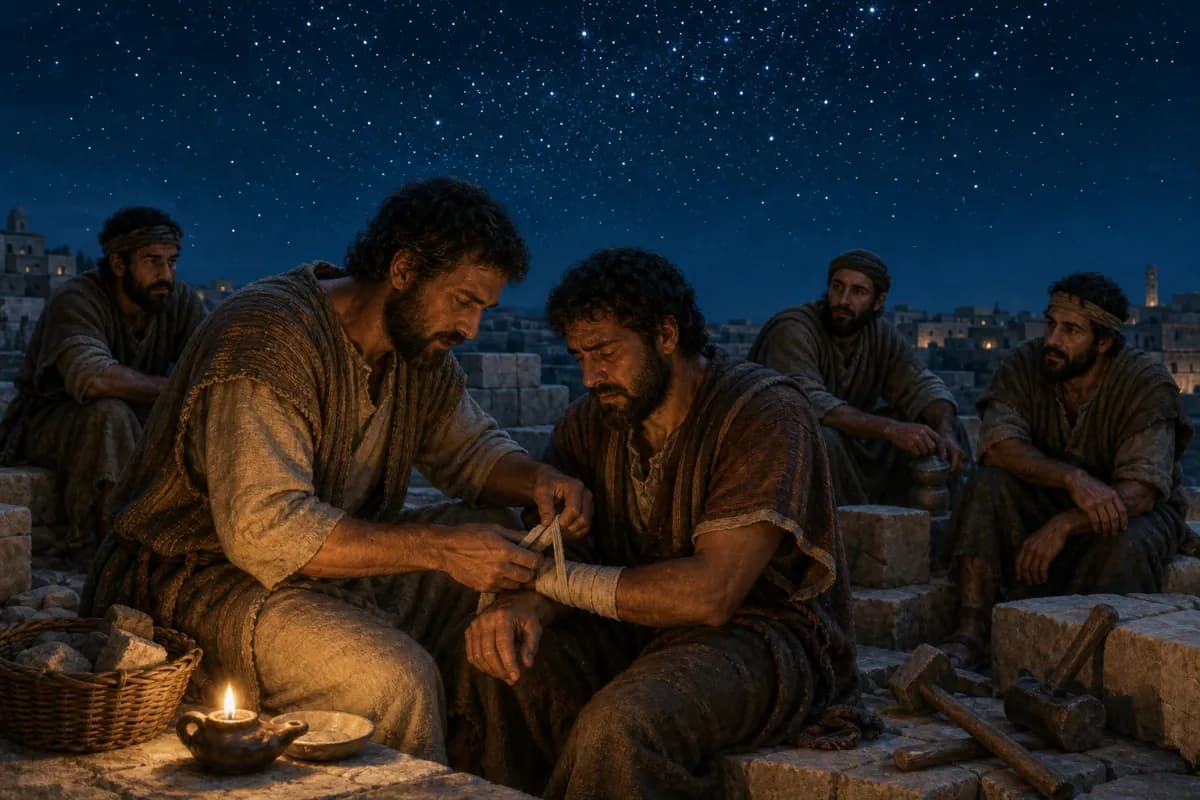
Psalm 147 calls Jerusalem to praise the Lord who rebuilds the city, gathers the outcasts, heals broken hearts, and binds their wounds. His knowledge reaches to every star, yet He delights not in military strength but in those who fear Him and hope in His steadfast love. The God who gives snow, wind, and rain also gives His word to Jacob; in Jesus, that healing and reconciling word comes near.
- In this study
- 20 verses · 5 movements
Psalms 147
147:1Praise the LORD, for it is good to sing praises to our God; for it is pleasant and fitting to praise him.
147:2The LORD builds up Jerusalem. He gathers together the outcasts of Israel.
147:3He heals the broken in heart, and binds up their wounds.
147:4He counts the number of the stars. He calls them all by their names.
147:5Great is our Lord, and mighty in power. His understanding is infinite.
147:6The LORD upholds the humble. He brings the wicked down to the ground.
147:7Sing to the LORD with thanksgiving. Sing praises on the harp to our God,
147:8who covers the sky with clouds, who prepares rain for the earth, who makes grass grow on the mountains.
147:9He provides food for the livestock, and for the young ravens when they call.
147:10He doesn’t delight in the strength of the horse. He takes no pleasure in the legs of a man.
147:11The LORD takes pleasure in those who fear him, in those who hope in his loving kindness.
147:12Praise the LORD, Jerusalem! Praise your God, Zion!
147:13For he has strengthened the bars of your gates. He has blessed your children within you.
147:14He makes peace in your borders. He fills you with the finest of the wheat.
147:15He sends out his commandment to the earth. His word runs very swiftly.
147:16He gives snow like wool, and scatters frost like ashes.
147:17He hurls down his hail like pebbles. Who can stand before his cold?
147:18He sends out his word, and melts them. He causes his wind to blow, and the waters flow.
147:19He shows his word to Jacob, his statutes and his ordinances to Israel.
147:20He has not done this for just any nation. They don’t know his ordinances. Praise the LORD!
CONTEXTUAL OVERVIEW
Psalm 147 holds together a repaired city and a wounded heart. The Lord builds up Jerusalem and gathers the outcasts of Israel, but He also heals the brokenhearted and binds their wounds. The psalm refuses a choice between public restoration and personal grief: the same God attends to both.
The supplied note on rapha, “to heal or restore,” illuminates verse 3. The healing named here is not a promise that every sorrow disappears immediately. It declares that wounds are within the Lord’s faithful attention. The next verse intensifies the claim: the God who binds human wounds also counts the stars and gives each one a name.
HISTORICAL AND LITERARY CONTEXT
Jerusalem, its gates, and the gathering of Israel’s outcasts make a post-exilic setting plausible, though the psalm itself does not name a date or ruler. Whether sung after return from exile or in another season of restoration, its language gives worshipers a way to praise God for rebuilding communal life without pretending that the people carry no wounds.
The poem moves through three praise sections, each beginning with a summons. It joins restoration, weather, food for animals, the weakness of military power, Zion’s gates and children, and the gift of God’s statutes. The range is deliberate: Israel’s God is not a local deity of one shrine but Lord over the created world and covenant teacher of His people.
SECTION-BY-SECTION ANALYSIS
- Verses 1–6 · Psalms 147:2The Lord restores Jerusalem, gathers outcasts, heals wounded hearts, and knows every star.
- Verses 7–11 · Psalms 147:5He feeds creation and values reverent hope over military power.
- Verses 12–20 · Psalms 147:1Zion praises the Lord for protection, provision, sovereign weather, and His covenant word.
CHRIST IN THIS PASSAGE
Psalm 147’s restoration themes find their clearest fulfillment in Jesus’ saving work. He comes to seek the lost, gathers people who had been far from God, and restores them to the Father. His healing ministry gives visible signs of the kingdom’s nearness, while His death addresses the deeper wound of sin that separates human beings from God and one another.
The psalm’s gift of God’s word to Jacob also points forward to the Word made flesh. Jesus does not abolish God’s faithful instruction; He fulfills it and brings its covenant purpose to completion. Through His resurrection He gathers a people from the nations into God’s household, giving them hope that reaches beyond a rebuilt city to the final renewal He will accomplish.
REFLECTION
Bring a wound to Jesus with the candor Psalm 147 permits. Do not measure His care by whether you can quickly explain the pain. The God who knows each star is not overwhelmed by the details of a fractured relationship, loss, fear, or displacement. Ask for His healing, and receive appropriate care from the people He has placed around you.
The psalm also exposes the habit of trusting visible strength. When resources, skill, or influence become the reason you feel secure, return to verse 11: the Lord delights in those who hope in His steadfast love. Let that hope shape one obedient response to His word today.
Original Hebrew Word Study
Psalm 147:3
רָפָא
rapha · H7495
Usually translated: to heal or restore
Rapha means to heal. The God who numbers the stars also heals broken hearts, joining cosmic power to personal tenderness.
Follow the Scripture trail
Psalm 147: The God Who Numbers Stars Heals Broken Hearts in the larger story
The connection: Psalm 147 praises the Creator who heals hearts, gathers the scattered, feeds His world, and gives His covenant word to Jacob. Jesus comes as God’s reconciling Word, bears sin’s deepest wound at the cross, and gathers a healed people for the coming new creation.
Respond to the passage
Tell Jesus where you are wounded or scattered, without reducing the need to a slogan. Ask Him to meet you through His word and His people, and resist one place where visible strength has displaced your hope in His steadfast love.
- Why does the psalm place the healing of broken hearts beside the numbering of stars?
- What does the Lord’s pleasure in reverent hope say about military or personal strength?
- How does Jesus gather people who were far from God?
Prayer
Lord Jesus, You know every wound I carry and every person who feels scattered. Heal what sin and sorrow have broken, turn my hope from visible strength to Your steadfast love, and gather me more deeply into Your people. Amen.