Passage Study
Psalm 150: Let Everything That Breathes Praise the Lord
Psalms 150:1–150:6
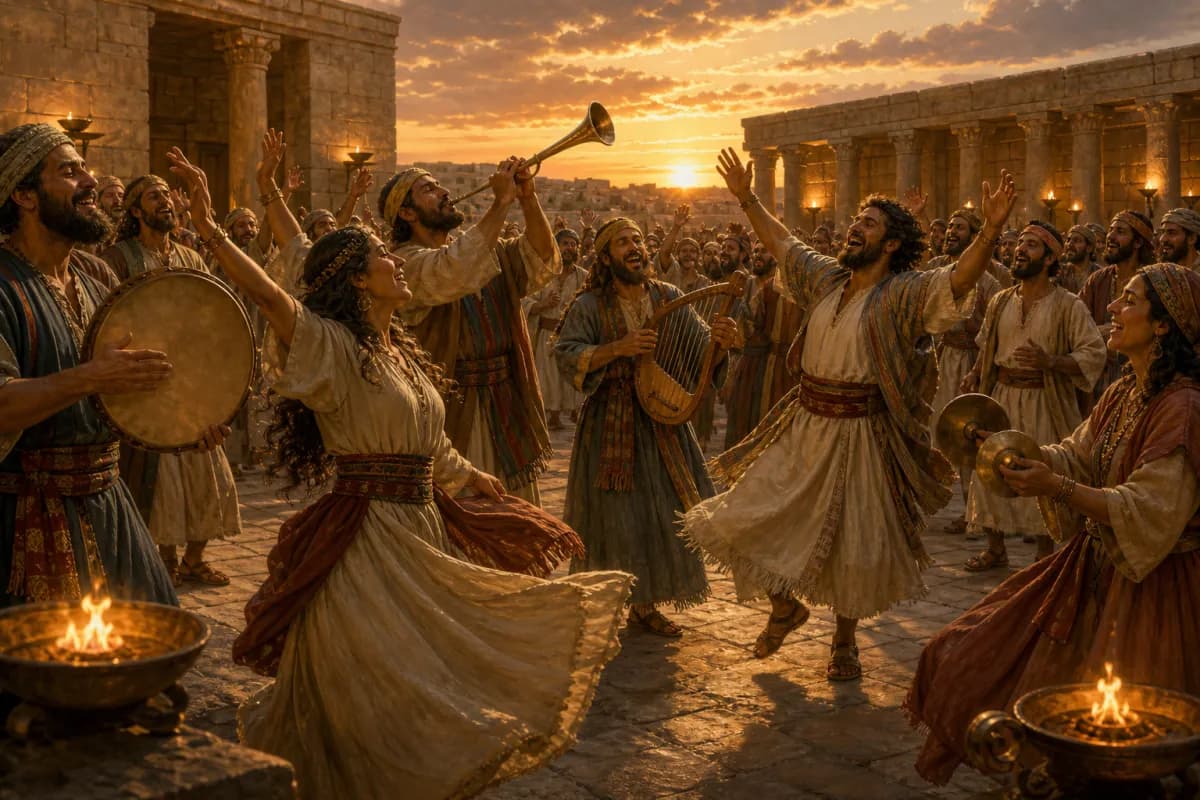
Psalm 150 closes the Psalter with ten urgent calls to praise the Lord: praise Him in His sanctuary and mighty firmament, for His mighty deeds and surpassing greatness, with trumpet, strings, dance, cymbals, and every form of embodied music. The final command gathers every breathing creature into worship. Jesus, whose saving work reveals God’s mighty deeds, brings redeemed people into the praise that will fill the new creation.
- In this study
- 6 verses · 5 movements
Psalms 150
150:1Praise the LORD! Praise God in his sanctuary! Praise him in his heavens for his acts of power!
150:2Praise him for his mighty acts! Praise him according to his excellent greatness!
150:3Praise him with the sounding of the trumpet! Praise him with harp and lyre!
150:4Praise him with tambourine and dancing! Praise him with stringed instruments and flute!
150:5Praise him with loud cymbals! Praise him with resounding cymbals!
150:6Let everything that has breath praise the LORD! Praise the LORD!
CONTEXTUAL OVERVIEW
Psalm 150 is the last word of the Psalter, and it is all imperative: “Praise the Lord.” It does not retell one crisis, confess one sin, or ask one question. After psalms of lament, kingship, instruction, exile, thanksgiving, and hope, the book concludes by gathering worshipers into a final answer to God’s greatness and deeds.
The supplied note on halal, “to praise openly and joyfully,” fits the psalm’s repeated command. The closing song is not quiet about God’s worth. Trumpet, lute, harp, tambourine, dance, strings, pipe, loud cymbals, and clashing cymbals involve breath, body, skill, noise, and shared celebration. The command aims at worship, not a demand that every church reproduce one fixed musical arrangement.
HISTORICAL AND LITERARY CONTEXT
Psalm 150 is an anonymous praise hymn and the conclusion of the five-book Psalter. Its opening pair, “in his sanctuary” and “in his mighty firmament,” joins the earthly place of gathered worship to the wide realm of God’s rule. Israel praises the Lord near the sanctuary while confessing that His greatness cannot be confined to it.
The instruments named belong to ancient Israel’s worshiping world, including a ram’s-horn trumpet, strings, percussion, and pipe. The list is expansive rather than technical. Its movement from sanctuary to firmament and from instruments to “everything that breathes” pushes praise beyond a narrow class of specialists without erasing the ordered, communal character of worship.
SECTION-BY-SECTION ANALYSIS
- Verse 1 · Psalms 150:1Praise belongs in the gathered sanctuary and beneath the Lord’s vast heavenly rule.
- Verse 2 · Psalms 150:2God is praised for His saving deeds and for greatness beyond all measurement.
- Verses 3–6 · Psalms 150:6Many instruments and embodied voices lead to the universal summons for everything with breath to praise.
CHRIST IN THIS PASSAGE
Psalm 150 does not name Jesus, yet its praise for God’s mighty deeds reaches its center in His saving work. The death and resurrection of Christ reveal both God’s holiness against sin and His mercy toward sinners. Because Jesus lives, praise is not denial of suffering; it is the church’s response to the decisive act by which God conquers death and opens access to Himself.
The final summons to everything with breath also reaches toward the new creation. The risen Jesus gathers worshipers from every people and gives them the Spirit by whom they call God Father. Scripture’s final vision shows every creature praising God and the Lamb. Psalm 150 therefore gives the church a foretaste of the worship that Christ will bring to completion.
REFLECTION
Do not let Psalm 150 turn worship into a performance test. Its question is not whether you possess a particular instrument, volume, or emotional intensity. Its question is whether the breath, abilities, and circumstances God has given you are being turned toward His praise for His mighty deeds in Christ.
When praise feels difficult, begin with one specific work of God: creation, provision, forgiveness, the cross, resurrection, or a mercy you can name. Bring that truth into the gathered worship of the church. The final word of the Psalter invites every believer, including the weary and quiet, to join the praise of the living Lord.
Original Hebrew Word Study
Psalm 150:1
הָלַל
halal · H1984
Usually translated: to praise
Halal means to praise openly and joyfully. The final psalm gathers sanctuary, instruments, breath, and every living creature into one command: praise the Lord.
Follow the Scripture trail
Psalm 150: Let Everything That Breathes Praise the Lord in the larger story
The connection: Psalm 150 concludes Israel’s prayers with praise for God’s mighty deeds and a summons to everything with breath. Jesus accomplishes the decisive saving deed in His death and resurrection, gives His Spirit to a redeemed people, and will bring creation’s praise of God and the Lamb to its full completion.
Respond to the passage
Choose one mighty deed of God in Christ that you can name without vagueness, and thank Him for it aloud. Bring the abilities and breath you have today into the gathered praise and witness of His people rather than treating them as your possession.
- Why does Psalm 150 praise God both for His deeds and for His surpassing greatness?
- What do the many instruments communicate without requiring one fixed worship style?
- How does the resurrection make praise more than a response to favorable circumstances?
Prayer
Lord Jesus, You have defeated death and opened the way to the Father. Receive the breath, gifts, and ordinary life You have given me as praise, and join my voice to the worship that will fill Your renewed creation. Amen.