Passage Study
The Lord as Portion and the Path of Life
Psalms 16:1–16:11
Psalm 16 confesses that the Lord Himself is the faithful worshiper’s security, inheritance, and joy amid rival gods and the threat of death. Its hope that God will not abandon His faithful one to the grave finds explicit fulfillment in Jesus’ resurrection, which gives believers durable hope and the path of life in Him.
- In this study
- 11 verses · 5 movements
Psalms 16
16:1Preserve me, God, for I take refuge in you.
16:2My soul, you have said to the LORD, “You are my Lord. Apart from you I have no good thing.”
16:3As for the saints who are in the earth, they are the excellent ones in whom is all my delight.
16:4Their sorrows shall be multiplied who give gifts to another god. Their drink offerings of blood I will not offer, nor take their names on my lips.
16:5The LORD assigned my portion and my cup. You made my lot secure.
16:6The lines have fallen to me in pleasant places. Yes, I have a good inheritance.
16:7I will bless the LORD, who has given me counsel. Yes, my heart instructs me in the night seasons.
16:8I have set the LORD always before me. Because he is at my right hand, I shall not be moved.
16:9Therefore my heart is glad, and my tongue rejoices. My body shall also dwell in safety.
16:10For you will not leave my soul in Sheol, neither will you allow your holy one to see corruption.
16:11You will show me the path of life. In your presence is fullness of joy. In your right hand there are pleasures forever more.
CONTEXTUAL OVERVIEW
Psalm 16 is a prayer of settled trust. The speaker begins with danger—“Protect me”—yet quickly names the deeper ground of safety: “I have no good apart from you.” The Lord is not merely one help among many. He is the worshiper’s chosen refuge, portion, and inheritance.
The psalm sharply contrasts this confidence with those who run after other gods. Their sorrows multiply, and the singer refuses to join their offerings or even place their names on his lips. The choice of God is presented as a whole-person allegiance that reaches worship, desire, counsel, sleep, and hope before death.
HISTORICAL AND LITERARY CONTEXT
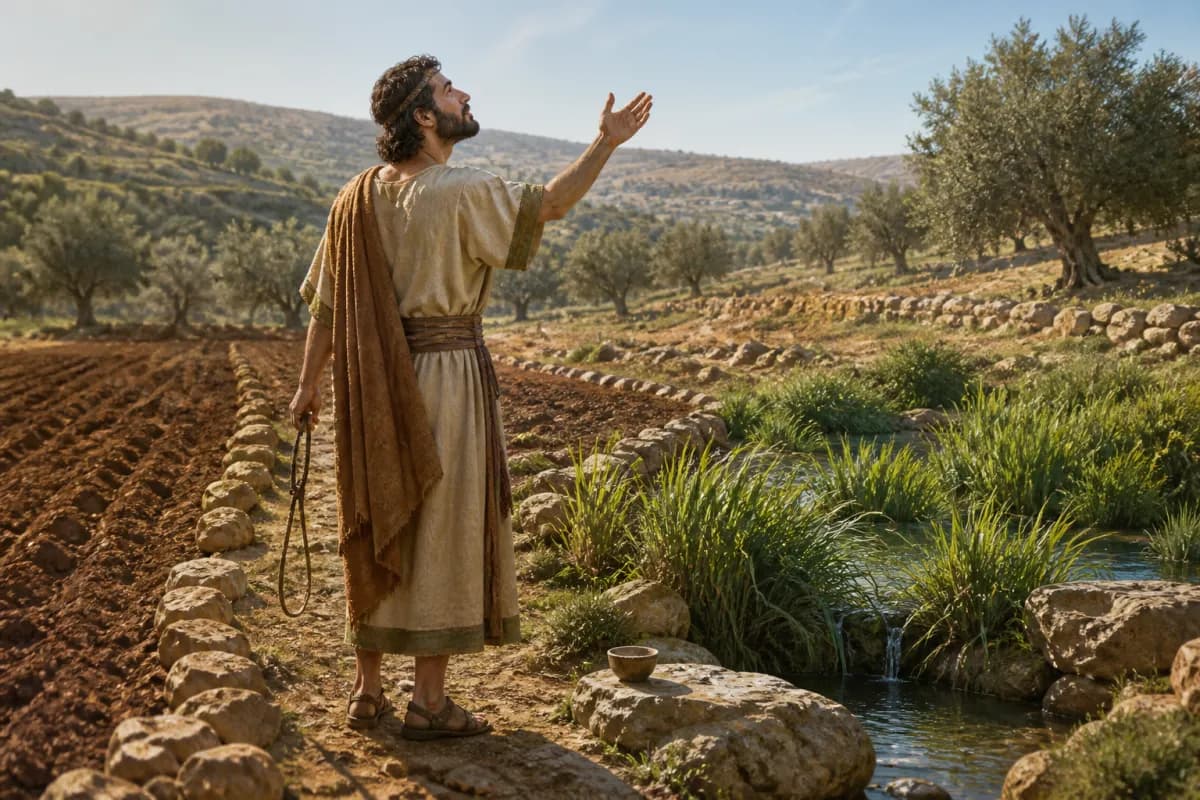
Psalm 16 uses inheritance language drawn from Israel’s land and tribal life. A portion, cup, boundary lines, and inheritance describe secure possession. Here the striking claim is that the Lord Himself is the speaker’s allotted portion. Material security may be present in the imagery, but communion with God is its deepest treasure.
The psalm is often associated with David in its superscription. Its immediate voice is a faithful Israelite who trusts God. The final confidence about not being abandoned to Sheol creates a hope that later biblical writers recognize as reaching beyond David’s ordinary death and burial.
SECTION-BY-SECTION ANALYSIS
- I have no good apart from you · Psalms 16:2The psalmist locates every true good in relationship with the Lord rather than in an independent source of security.
- The Lord is my chosen portion · Psalms 16:5Inheritance language becomes a confession that God Himself is the believer’s lasting possession.
- You do not give me up to Sheol · Psalms 16:4Trust reaches into the realm of death with confidence that God will preserve His faithful one for life in His presence.
CHRIST IN THIS PASSAGE
Peter and Paul explicitly use Psalm 16:8–11 to proclaim Jesus’ resurrection. David died and was buried, so the apostles argue that the psalm’s confidence receives its fullest fulfillment in the Holy One whom God raised without decay. This is more than a loose thematic echo; it is a direct apostolic reading of the psalm.
Jesus entered death for sinners and rose to open the path of life. Those who belong to Him can therefore confess the Lord as their portion even when earthly securities fail, because His resurrection guarantees that death will not have the final claim. The joy Psalm 16 seeks is finally secure in the risen Christ’s presence.
REFLECTION
Psalm 16 invites a searching question: what am I treating as my portion? A career, relationship, health, or possession can be received with gratitude, yet each becomes a rival god when it must guarantee our identity or future. Jesus does not shame us for feeling vulnerable; He calls us to receive Him as the treasure no loss can finally remove.
Bring one fear about loss or death to the risen Christ. Thank Him for a real good He has given, then surrender it as a gift rather than a god. Practice the psalm’s trust by naming the Lord as your portion before you seek control over tomorrow.
Original Hebrew Word Study
Psalm 16:10
שְׁאוֹל
sheol · H7585
Usually translated: the grave or realm of the dead
Sheol names the realm of death. David trusts that God will not abandon His faithful one to the grave, a hope the New Testament sees fulfilled in Christ.
Follow the Scripture trail
The Lord as Portion and the Path of Life in the larger story
The connection: Psalm 16 finds its security in the Lord as portion and its hope in God’s power over the grave. The apostles proclaim that this hope is fulfilled decisively in Jesus, whose resurrection opens the path of life for all who belong to Him.
Respond to the passage
Tell Jesus where another good has become your portion. Receive that good again as a gift, confess Christ as your lasting inheritance, and face one fear about the future in the light of His resurrection.
- How does the psalm connect rejecting other gods with receiving the Lord as its portion?
- Why does the language of portion and inheritance deepen the prayer’s confidence?
- How do Peter and Paul explain the resurrection hope of Psalm 16?
Prayer
Risen Lord Jesus, You did not remain in the grave and You have opened the path of life. Be my portion above every passing good, steady me in loss, and fill me with joy in Your presence. Amen.