Passage Study
The Forsaken Cry, the Rescued Sufferer, and Praise Among the Nations
Psalms 22:1–22:31
Psalm 22 moves from the anguished cry of one who feels forsaken, through public mockery and mortal danger, to answered prayer and worldwide praise. Jesus explicitly takes its opening words on the cross, and the psalm helps readers see His suffering, vindication, and mission to gather the nations into worship of the God who hears the afflicted.
- In this study
- 31 verses · 5 movements
Psalms 22
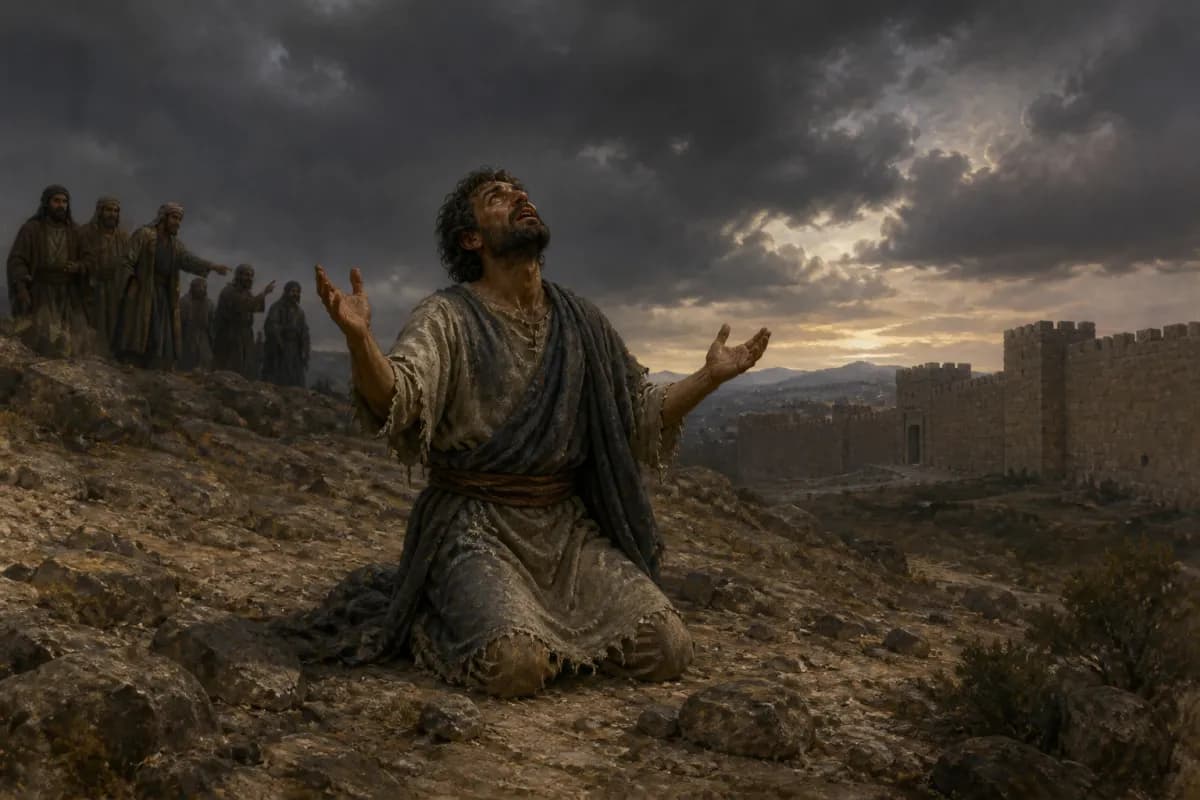
22:1My God, my God, why have you forsaken me? Why are you so far from helping me, and from the words of my groaning?
22:2My God, I cry in the daytime, but you don’t answer; in the night season, and am not silent.
22:3But you are holy, you who inhabit the praises of Israel.
22:4Our fathers trusted in you. They trusted, and you delivered them.
22:5They cried to you, and were delivered. They trusted in you, and were not disappointed.
22:6But I am a worm, and no man; a reproach of men, and despised by the people.
22:7All those who see me mock me. They insult me with their lips. They shake their heads, saying,
22:8“He trusts in the LORD. Let him deliver him. Let him rescue him, since he delights in him.”
22:9But you brought me out of the womb. You made me trust while at my mother’s breasts.
22:10I was thrown on you from my mother’s womb. You are my God since my mother bore me.
22:11Don’t be far from me, for trouble is near. For there is no one to help.
22:12Many bulls have surrounded me. Strong bulls of Bashan have encircled me.
22:13They open their mouths wide against me, lions tearing prey and roaring.
22:14I am poured out like water. All my bones are out of joint. My heart is like wax. It is melted within me.
22:15My strength is dried up like a potsherd. My tongue sticks to the roof of my mouth. You have brought me into the dust of death.
22:16For dogs have surrounded me. A company of evildoers have enclosed me. They have pierced my hands and feet.
22:17I can count all of my bones. They look and stare at me.
22:18They divide my garments among them. They cast lots for my clothing.
22:19But don’t be far off, LORD. You are my help. Hurry to help me!
22:20Deliver my soul from the sword, my precious life from the power of the dog.
22:21Save me from the lion’s mouth! Yes, you have rescued me from the horns of the wild oxen.
22:22I will declare your name to my brothers. Among the assembly, I will praise you.
22:23You who fear the LORD, praise him! All you descendants of Jacob, glorify him! Stand in awe of him, all you descendants of Israel!
22:24For he has not despised nor abhorred the affliction of the afflicted, neither has he hidden his face from him; but when he cried to him, he heard.
22:25My praise of you comes in the great assembly. I will pay my vows before those who fear him.
22:26The humble shall eat and be satisfied. They shall praise the LORD who seek after him. Let your hearts live forever.
22:27All the ends of the earth shall remember and turn to the LORD. All the relatives of the nations shall worship before you.
22:28For the kingdom is the LORD’s. He is the ruler over the nations.
22:29All the rich ones of the earth shall eat and worship. All those who go down to the dust shall bow before him, even he who can’t keep his soul alive.
22:30Posterity shall serve him. Future generations shall be told about the Lord.
22:31They shall come and shall declare his righteousness to a people that shall be born, for he has done it.
CONTEXTUAL OVERVIEW
Psalm 22 begins with the unbearable experience of abandonment: “My God, my God, why have you forsaken me?” The speaker still addresses God as “my God,” but cannot reconcile that covenant bond with the silence and danger he feels. The poem makes room for faith that tells God the truth about suffering rather than masking it with easy confidence.
The psalm’s movement is crucial. It does not remain at mockery, bodily weakness, and encircling enemies. After desperate pleas for help, the speaker announces that God has answered him, then calls the congregation, Israel, and finally all the families of the nations to praise the Lord. Deliverance becomes public testimony and mission.
HISTORICAL AND LITERARY CONTEXT
Psalm 22 is an individual lament associated with David. Its intense poetic images describe a righteous sufferer surrounded by enemies, while its latter half gives thanks for rescue. The text should be heard first as a real prayer from within Israel’s worship, not treated as though its only purpose were to supply isolated lines for later events.
Several details later resonate strikingly with Jesus’ crucifixion: mockers challenge the sufferer’s trust, clothing is divided, and the opening cry is spoken from the cross. The psalm does not narrate a crucifixion scene in modern prose. Its force comes from the way Jesus’ suffering enters and fulfills this whole movement from anguish through vindication to praise among the nations.
SECTION-BY-SECTION ANALYSIS
- My God, my God, why have you forsaken me? · Psalms 22:1The opening cry holds anguish and covenant address together, refusing both despair and false composure.
- They divide my clothes among themselves · Psalms 22:18The stripping of the sufferer’s possessions portrays public contempt and later closely echoes the treatment of Jesus at His crucifixion.
- All the ends of the earth shall remember · Psalms 22:27God’s rescue of the afflicted becomes the occasion for worldwide worship and testimony.
CHRIST IN THIS PASSAGE
Jesus quotes Psalm 22’s opening line from the cross, deliberately placing His suffering within this prayer. The Gospel accounts also echo the mocking and the casting of lots. These are explicit New Testament connections. Jesus bears the real shame, hostility, and God-forsakenness that sin deserves, while continuing to entrust Himself to the Father.
The latter half guards readers from stopping at the crucifixion. Hebrews applies the psalm’s promise of praise in the congregation to the risen Jesus, who calls His people brothers and sisters. His resurrection turns the lament toward worship, and His saving mission carries the announcement of God’s deliverance to the nations Psalm 22 foresees.
REFLECTION
Psalm 22 gives words for sufferers who cannot feel God’s nearness. Faith can cry “why?” without ceasing to say “my God.” Because Jesus prayed this psalm in His suffering, no believer’s anguish is foreign to Him. He does not require wounded people to produce cheerful words before bringing their pain to God.
Bring to Christ the specific place where you feel exposed, mocked, abandoned, or afraid. Pray the psalm honestly, then join its later movement by naming one evidence of God’s help and sharing it with another believer. Let His cross and resurrection make your lament a doorway to hope and witness.
Original Hebrew Word Study
Psalm 22:1
עָזַב
azav · H5800
Usually translated: to forsake or abandon
Azav means to forsake. The psalm opens with the terror of feeling abandoned, then moves through remembered faithfulness toward praise that reaches the nations.
Follow the Scripture trail
The Forsaken Cry, the Rescued Sufferer, and Praise Among the Nations in the larger story
The connection: Psalm 22 gives Israel language for righteous suffering that is heard by God and turned into praise. Jesus enters this lament on the cross, bears sin’s shame, rises from death, and leads the congregation and the nations in the worship of the God who saves.
Respond to the passage
Bring your most honest cry of pain to Jesus without editing it into religious language. Then, because He has carried suffering through death into resurrection life, tell one trusted believer where you need help and join the worship of the God who hears the afflicted.
- How does the psalm combine the cry of abandonment with continued address to “my God”?
- Why is the turn from pleading to public praise essential to the meaning of Psalm 22?
- How do the Gospels and Hebrews connect Jesus’ cross and resurrection to the whole movement of this psalm?
Prayer
Lord Jesus, You entered the depth of suffering and were raised in victory. Hear my honest cry, stay near to those who feel abandoned, and turn Your rescued people into witnesses of Your saving love among the nations. Amen.