Passage Study
Psalm 26: Examine Me Before I Draw Near
Psalms 26:1–26:12
Psalm 26 is David’s appeal for vindication as he asks the Lord to examine his integrity, reject the company of deceitful people, and let him worship at God’s altar with thanksgiving. His claim concerns a whole-hearted pattern of trust in the Lord, not sinless perfection. Jesus alone is wholly righteous; through His cleansing sacrifice, guilty worshipers can draw near in truth and learn integrity before God.
- In this study
- 12 verses · 5 movements
Psalms 26
26:1Judge me, LORD, for I have walked in my integrity. I have trusted also in the LORD without wavering.
26:2Examine me, LORD, and prove me. Try my heart and my mind.
26:3For your loving kindness is before my eyes. I have walked in your truth.
26:4I have not sat with deceitful men, neither will I go in with hypocrites.
26:5I hate the assembly of evildoers, and will not sit with the wicked.
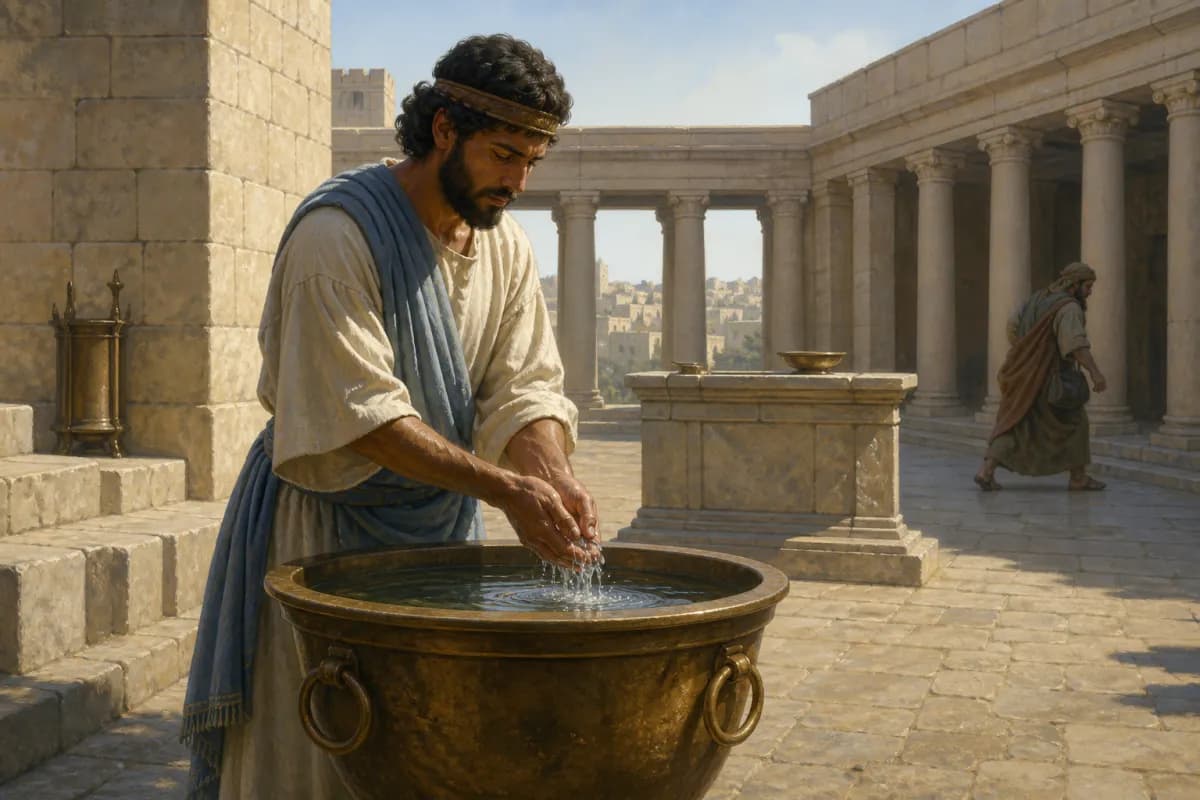
26:6I will wash my hands in innocence, so I will go about your altar, LORD,
26:7that I may make the voice of thanksgiving to be heard and tell of all your wondrous deeds.
26:8LORD, I love the habitation of your house, the place where your glory dwells.
26:9Don’t gather my soul with sinners, nor my life with bloodthirsty men
26:10in whose hands is wickedness; their right hand is full of bribes.
26:11But as for me, I will walk in my integrity. Redeem me, and be merciful to me.
26:12My foot stands in an even place. In the congregations I will bless the LORD.
CONTEXTUAL OVERVIEW
Psalm 26 opens with an audacious but qualified plea: “Vindicate me, O Lord, for I have walked in my integrity.” David immediately grounds that appeal in trust—“I have trusted in the Lord without wavering”—and invites examination of his heart and mind. The supplied word note on *tom* rightly highlights wholeness: the concern is that David’s public worship and private conduct belong together before God.
The poem does not present integrity as self-congratulation. David contrasts his path with people marked by falsehood, hypocrisy, evil schemes, bloodshed, and bribes. He asks not to be swept away with them, then asks God to redeem him and be gracious. His confidence in a distinct pattern of life still depends on mercy from the God before whom he stands.
HISTORICAL AND LITERARY CONTEXT
Psalm 26 is an individual prayer of protest and worship. It does not supply a specific historical accusation, so its words should not be used to invent one. The movement from examination to separated company to altar-centered thanksgiving suggests a worshiper defending the sincerity of his covenant allegiance in the face of a morally compromised public setting.
The altar imagery is concrete. David speaks of washing his hands in innocence and going around the Lord’s altar to proclaim thanksgiving and tell God’s wondrous deeds. Ritual washing by itself could not create a clean conscience; within the psalm, it expresses a desire to approach God without the double life represented by bribes, violence, and deceit.
SECTION-BY-SECTION ANALYSIS
- Verses 1–3 · Psalms 26:1David asks God to examine the integrity rooted in his trust and in the Lord’s steadfast love and faithfulness.
- Verses 4–8 · Psalms 26:7He rejects deceitful company and approaches the altar to give thanks and proclaim God’s wondrous deeds.
- Verses 9–12 · Psalms 26:5David pleads not to share the fate of violent, bribed people and commits himself to bless the Lord in the assembly.
CHRIST IN THIS PASSAGE
Psalm 26 draws a needed distinction between a pattern of integrity and a claim to sinlessness. David can appeal concerning his conduct in a particular setting, but Jesus alone stands wholly without sin before the Father. He was examined by hostile witnesses, yet no true charge could overturn His righteousness; His integrity was complete in worship, speech, and self-giving obedience.
Christ also transforms the psalm’s approach to worship. His once-for-all sacrifice cleanses the conscience of people whose hands and hearts are not innocent, so that they can draw near to God sincerely. The gospel does not excuse bribery, deceit, or violence. It redeems and reforms worshipers so that thanksgiving at God’s altar becomes a life increasingly marked by truth.
REFLECTION
Use Psalm 26 as an invitation to examination, not as a weapon for declaring yourself better than others. Ask Jesus to test the places where your public faith and private conduct may be divided: money, speech, online habits, business dealings, sexual integrity, or how you treat people who cannot help you.
If He exposes sin, do not retreat from worship in shame. Come through the mercy of Christ, confess plainly, make repair where possible, and refuse the company or practice that keeps pulling you toward deception. Then give thanks among God’s people for the grace that cleanses and changes you.
Original Hebrew Word Study
Psalm 26:1
תֹּם
tom · H8537
Usually translated: integrity or wholeness
Tom means integrity. David asks for examination because he wants his public worship and private conduct to be whole before God.
Follow the Scripture trail
Psalm 26: Examine Me Before I Draw Near in the larger story
The connection: Psalm 26 asks God to examine a worshiper whose trust and conduct are meant to be whole, and it seeks mercy rather than fellowship with deceit and bloodshed. Jesus is the perfectly righteous worshiper who cleanses guilty people through His sacrifice and forms them into truthful worshipers before the Father.
Respond to the passage
Ask Jesus to show you one place where your claimed faith and practiced life are out of step. Receive His mercy, make the needed repair, and choose one concrete way to join thanksgiving with integrity this week.
- Why does David invite God to test him rather than simply insist that his enemies are wrong?
- How does the altar-centered worship of verses 6–8 expose a divided life?
- Why does the gospel give both humility and courage for the examination Psalm 26 requests?
Prayer
Lord Jesus, search me and expose the places where I have divided worship from obedience. Cleanse me by Your sacrifice, keep me from deceitful paths, and make my thanksgiving truthful before You and Your people. Amen.