Passage Study
Psalm 27: One Desire in the Face of Fear
Psalms 27:1–27:14
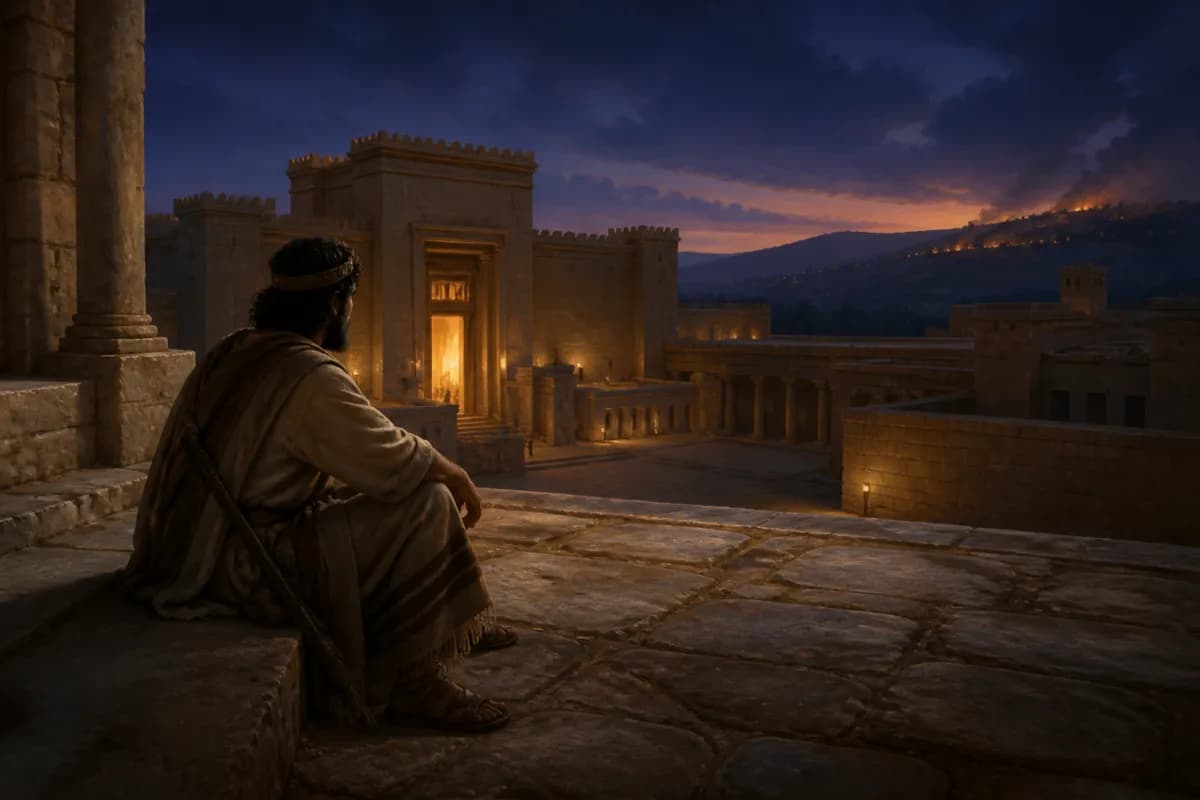
Psalm 27 joins fearless trust with urgent lament. David calls the Lord his light, salvation, and stronghold; seeks one thing above all, to dwell before the Lord; asks not to be abandoned by false witnesses; and tells his own heart to wait with courage. Jesus brings His people into God’s presence, stands with them when others fail, and secures the hope that waiting on the Lord will not end in shame.
- In this study
- 14 verses · 5 movements
Psalms 27
27:1The LORD is my light and my salvation. Whom shall I fear? The LORD is the strength of my life. Of whom shall I be afraid?
27:2When evildoers came at me to eat up my flesh, even my adversaries and my foes, they stumbled and fell.
27:3Though an army should encamp against me, my heart shall not fear. Though war should rise against me, even then I will be confident.
27:4One thing I have asked of the LORD, that I will seek after: that I may dwell in the LORD’s house all the days of my life, to see the LORD’s beauty, and to inquire in his temple.
27:5For in the day of trouble, he will keep me secretly in his pavilion. In the secret place of his tabernacle, he will hide me. He will lift me up on a rock.
27:6Now my head will be lifted up above my enemies around me. I will offer sacrifices of joy in his tent. I will sing, yes, I will sing praises to the LORD.
27:7Hear, LORD, when I cry with my voice. Have mercy also on me, and answer me.
27:8When you said, “Seek my face,” my heart said to you, “I will seek your face, LORD.”
27:9Don’t hide your face from me. Don’t put your servant away in anger. You have been my help. Don’t abandon me, neither forsake me, God of my salvation.
27:10When my father and my mother forsake me, then the LORD will take me up.
27:11Teach me your way, LORD. Lead me in a straight path, because of my enemies.
27:12Don’t deliver me over to the desire of my adversaries, for false witnesses have risen up against me, such as breathe out cruelty.
27:13I am still confident of this: I will see the goodness of the LORD in the land of the living.
27:14Wait for the LORD. Be strong, and let your heart take courage. Yes, wait for the LORD.
CONTEXTUAL OVERVIEW
Psalm 27 begins with questions that faith answers: if the Lord is my light and salvation, whom shall I fear? If the Lord is the stronghold of my life, of whom shall I be afraid? The enemies are not imaginary; evildoers assault, armies encamp, and war rises. David’s confidence is that the Lord’s presence outweighs the threat surrounding him.
The psalm’s center is verse 4: David asks one thing—to dwell in the house of the Lord, gaze on His beauty, and inquire in His temple. He does not seek God’s presence merely as a hiding place from trouble. The supplied word note on *qavah* at the end explains the same posture: waiting for the Lord is expectant hope, a courage formed by wanting God Himself more than immediate control.
HISTORICAL AND LITERARY CONTEXT
Psalm 27 is attributed to David, but it does not identify a single historical event. Its tone moves from confident declaration in verses 1–6 to direct petition in verses 7–14. That change is not a contradiction. It shows how trust speaks when fear returns: David does not abandon his confession; he brings his fear into the Lord’s presence and keeps asking for help.
The house, shelter, tent, rock, and temple are worship images. They should not be reduced to a promise that God will remove every danger immediately. The sanctuary represents the Lord’s covenant presence among His people, and David asks to be kept near that presence while false witnesses and hostile people pursue him.
SECTION-BY-SECTION ANALYSIS
- Verses 1–6 · Psalms 27:4The Lord’s presence gives David courage against enemies and becomes his one desired dwelling, shelter, and reason for praise.
- Verses 7–12 · Psalms 27:12David turns his confidence into petition, asking not to be abandoned and to be led safely amid false witnesses and violence.
- Verses 13–14 · Psalms 27:14Trust looks ahead to the Lord’s goodness and calls the fearful heart to wait with strength and courage.
CHRIST IN THIS PASSAGE
Psalm 27’s longing to dwell with God reaches its saving fulfillment in Jesus. He is the light of the world and, through His death, resurrection, and priestly intercession, brings sinful people into the Father’s presence. David can seek the sanctuary under the old covenant; believers now draw near to God through the Son who has opened the way.
Jesus also knows rejection, false witness, and the anguish of facing violent enemies. He is not rescued from the cross by avoiding suffering, but the Father raises Him, proving that death and accusation are not final. Because the risen Christ receives His people, even family abandonment and prolonged waiting can be met with a hope anchored in His presence and promised kingdom.
REFLECTION
When fear is loud, begin where David begins: name the Lord before naming the threat. Tell Jesus the specific enemy, diagnosis, financial pressure, accusation, or uncertainty that makes your heart race, then answer it with the truth that He is your light and salvation. Courage grows by returning to the God you seek, not by denying the danger.
Practice the psalm’s one desire this week by giving unhurried attention to Christ in Scripture and prayer before you chase a solution. If you are waiting for an outcome, ask Him for the courage to keep doing what is faithful today. His goodness may appear through present sustaining grace, and its final fullness is secured in His resurrection kingdom.
Original Hebrew Word Study
Psalm 27:14
קָוָה
qavah · H6960
Usually translated: to wait with hope
Qavah means to wait with expectant hope. Waiting for the Lord is active trust that finds courage in His promised help.
Follow the Scripture trail
Psalm 27: One Desire in the Face of Fear in the larger story
The connection: Psalm 27 seeks the Lord Himself as light, refuge, and the one desired dwelling amid fear and false accusation. Jesus is the light of the world who brings His people to the Father through His saving death and resurrection, giving courage to wait for His kingdom.
Respond to the passage
Tell Jesus the fear that has most occupied your attention, then set aside time to seek His presence before pursuing another solution. Ask Him to make your heart strong enough to wait faithfully for His good.
- Why is dwelling before the Lord David’s one desire even when enemies surround him?
- How does the psalm hold confident faith and urgent petition together?
- What does waiting for the Lord look like when Jesus has already risen but His kingdom is not yet fully visible?
Prayer
Lord Jesus, You are my light, salvation, and refuge. Meet me in the fear I have named, draw me near to the Father through Your mercy, and make my heart strong as I wait for the goodness of Your kingdom. Amen.