Passage Study
Psalm 37: Do Not Fret When the Wicked Seem to Flourish
Psalms 37:1–37:40
Psalm 37 teaches God’s people not to burn with envy when evildoers prosper. Through repeated calls to trust, do good, delight in the Lord, commit one’s way, be still, and wait, it contrasts their brief flourishing with the lasting inheritance of the righteous. Jesus confirms this hope in His kingdom and gives His people a future no temporary injustice can cancel.
- In this study
- 40 verses · 5 movements
Psalms 37
37:1Don’t fret because of evildoers, neither be envious against those who work unrighteousness.
37:2For they shall soon be cut down like the grass, and wither like the green herb.
37:3Trust in the LORD, and do good. Dwell in the land, and enjoy safe pasture.
37:4Also delight yourself in the LORD, and he will give you the desires of your heart.
37:5Commit your way to the LORD. Trust also in him, and he will do this:
37:6he will make your righteousness shine out like light, and your justice as the noon day sun.
37:7Rest in the LORD, and wait patiently for him. Don’t fret because of him who prospers in his way, because of the man who makes wicked plots happen.
37:8Cease from anger, and forsake wrath. Don’t fret; it leads only to evildoing.
37:9For evildoers shall be cut off, but those who wait for the LORD shall inherit the land.
37:10For yet a little while, and the wicked will be no more. Yes, though you look for his place, he isn’t there.
37:11But the humble shall inherit the land, and shall delight themselves in the abundance of peace.
37:12The wicked plots against the just, and gnashes at him with his teeth.
37:13The Lord will laugh at him, for he sees that his day is coming.
37:14The wicked have drawn out the sword, and have bent their bow, to cast down the poor and needy, to kill those who are upright on the path.
37:15Their sword shall enter into their own heart. Their bows shall be broken.
37:16Better is a little that the righteous has, than the abundance of many wicked.
37:17For the arms of the wicked shall be broken, but the LORD upholds the righteous.
37:18The LORD knows the days of the perfect. Their inheritance shall be forever.
37:19They shall not be disappointed in the time of evil. In the days of famine they shall be satisfied.
37:20But the wicked shall perish. The enemies of the LORD shall be like the beauty of the fields. They will vanish— vanish like smoke.
37:21The wicked borrow, and don’t pay back, but the righteous give generously.
37:22For such as are blessed by him shall inherit the land. Those who are cursed by him shall be cut off.
37:23A man’s steps are established by the LORD. He delights in his way.
37:24Though he stumble, he shall not fall, for the LORD holds him up with his hand.
37:25I have been young, and now am old, yet I have not seen the righteous forsaken, nor his children begging for bread.
37:26All day long he deals graciously, and lends. His offspring is blessed.
37:27Depart from evil, and do good. Live securely forever.
37:28For the LORD loves justice, and doesn’t forsake his saints. They are preserved forever, but the children of the wicked shall be cut off.
37:29The righteous shall inherit the land, and live in it forever.
37:30The mouth of the righteous talks of wisdom. His tongue speaks justice.
37:31The law of his God is in his heart. None of his steps shall slide.
37:32The wicked watch the righteous, and seek to kill him.
37:33The LORD will not leave him in his hand, nor condemn him when he is judged.
37:34Wait for the LORD, and keep his way, and he will exalt you to inherit the land. When the wicked are cut off, you shall see it.
37:35I have seen the wicked in great power, spreading himself like a green tree in its native soil.
37:36But he passed away, and behold, he was not. Yes, I sought him, but he could not be found.
37:37Mark the perfect man, and see the upright, for there is a future for the man of peace.
37:38As for transgressors, they shall be destroyed together. The future of the wicked shall be cut off.
37:39But the salvation of the righteous is from the LORD. He is their stronghold in the time of trouble.
37:40The LORD helps them and rescues them. He rescues them from the wicked and saves them, because they have taken refuge in him.
CONTEXTUAL OVERVIEW
Psalm 37 addresses a familiar moral crisis: evildoers appear to flourish while the faithful bear the cost of obedience. Its opening command, “Do not fret,” is repeated because fret can become envy and then anger. The psalm does not deny the visible success of people who exploit, deceive, or disregard God; it insists that their apparent permanence is false.
Instead of telling the righteous only what not to feel, the poem gives them a practiced way to live: trust the Lord, do good, settle in the land, delight in the Lord, commit your way to Him, be still, and wait patiently. These commands root hope in God’s promised inheritance rather than in immediate control of outcomes.
HISTORICAL AND LITERARY CONTEXT
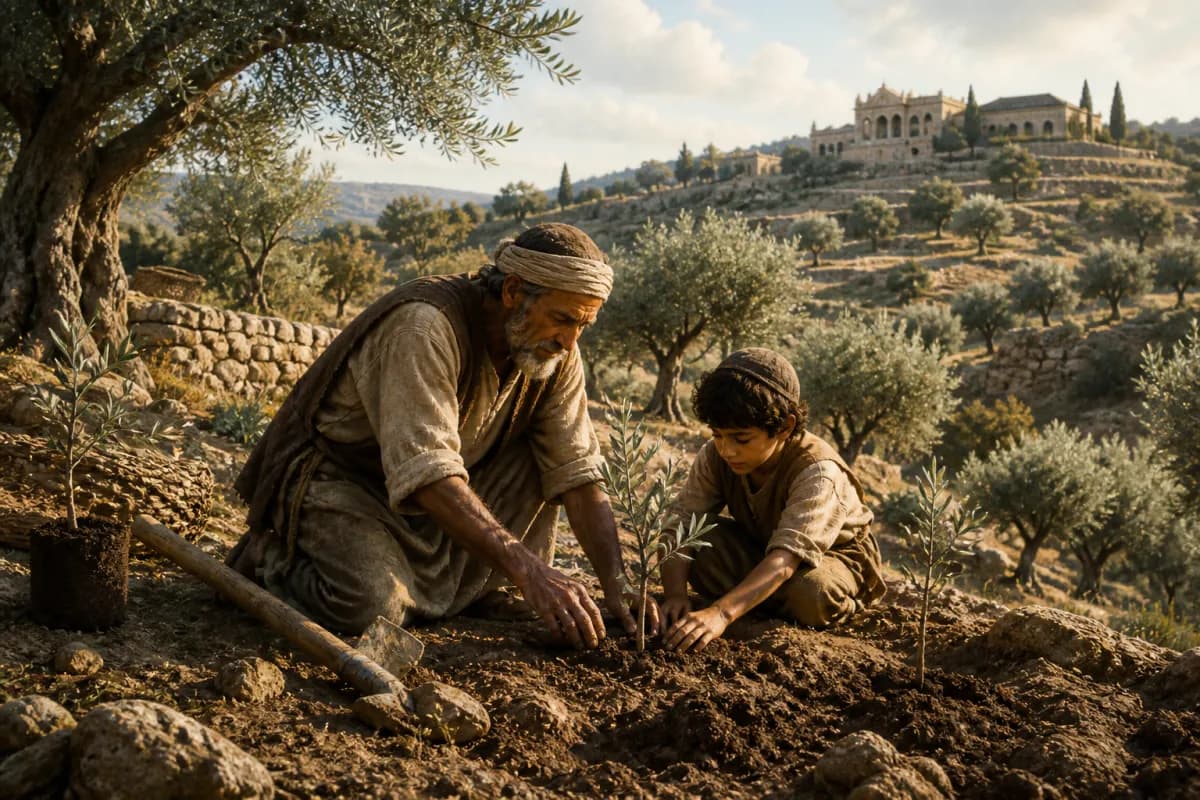
Psalm 37 is an acrostic wisdom psalm attributed to David. Its ordered form serves patient moral instruction rather than a report of one isolated emergency. The repeated land and inheritance language recalls Israel’s covenant life in the land, where possession was ultimately God’s gift and faithfulness could not be measured by a wicked neighbor’s present wealth.
The supplied note on yarash, “inherit” or “possess,” clarifies the psalm’s refrain. To inherit the land is not a promise that every righteous individual will receive immediate property or immunity from loss. It is the settled hope that the Lord will preserve His people’s future while the apparently secure rule of evil comes to an end.
SECTION-BY-SECTION ANALYSIS
- Verses 1–11 · Psalms 37:3Fretful envy gives way to trusting, doing good, delighting in the Lord, and waiting for the meek person’s inheritance.
- Verses 12–26 · Psalms 37:17The wicked’s weapons and wealth prove temporary, while the Lord upholds the righteous and forms them into generous people.
- Verses 27–40 · Psalms 37:7The psalm calls for continued obedience and waiting because the Lord loves justice and is the refuge of those who trust Him.
CHRIST IN THIS PASSAGE
Jesus directly echoes Psalm 37 when He blesses the meek with the promise that they will inherit the earth. He does not use the psalm to bless passivity in the face of evil; His own life joins meekness to truth, courage, mercy, and obedience to the Father. The kingdom promise confirms that the righteous future Psalm 37 seeks is secured by God, not seized through envy or violence.
Jesus bears the injustice the psalm describes without being defeated by it. His resurrection exposes the temporary character of hostile power, and His return guarantees final judgment and renewal. Those united to Him can pursue good and wait because their inheritance is held in the kingdom of the risen King.
REFLECTION
When someone else’s dishonest success makes you angry, do not pretend the injustice is good. Tell Jesus exactly what you see, then refuse to let envy decide your next action. Choose the psalm’s alternative: do one good thing, commit one unresolved outcome to the Lord, and wait without abandoning what is right.
Psalm 37 also asks whether your hope has room for generosity. Give time, money, or practical help to a person whose need cannot repay you, trusting that Jesus has secured a future larger than what you can protect today.
Original Hebrew Word Study
Psalm 37:9
יָרַשׁ
yarash · H3423
Usually translated: to possess or inherit
Yarash means to inherit or take possession. The psalm steadies the righteous with God’s promise that patient trust, not envy, receives the lasting inheritance.
Follow the Scripture trail
Psalm 37: Do Not Fret When the Wicked Seem to Flourish in the larger story
The connection: Psalm 37 steadies the righteous against envy by promising that the Lord, not present wickedness, determines their inheritance. Jesus confirms this promise to the meek, defeats hostile powers through His resurrection, and secures the renewed-earth hope for everyone who belongs to Him.
Respond to the passage
Name the success or security you envy, and place it before Jesus without minimizing the injustice involved. Then choose one act of goodness or generosity that shows you trust His promised inheritance more than immediate comparison.
- Why does Psalm 37 treat fretful envy as spiritually dangerous rather than merely unpleasant?
- How do trust, doing good, delight, commitment, stillness, and waiting reshape the response to injustice?
- What does Jesus’ promise to the meek add to the psalm’s hope of inheritance?
Prayer
Lord Jesus, keep me from envy when evil appears to prosper. Teach me to trust You, do good, wait for Your justice, and live generously because You have secured my inheritance in Your coming kingdom. Amen.