Passage Study
Psalm 44: Faithful Sufferers Cry Out for Redemption
Psalms 44:1–44:26
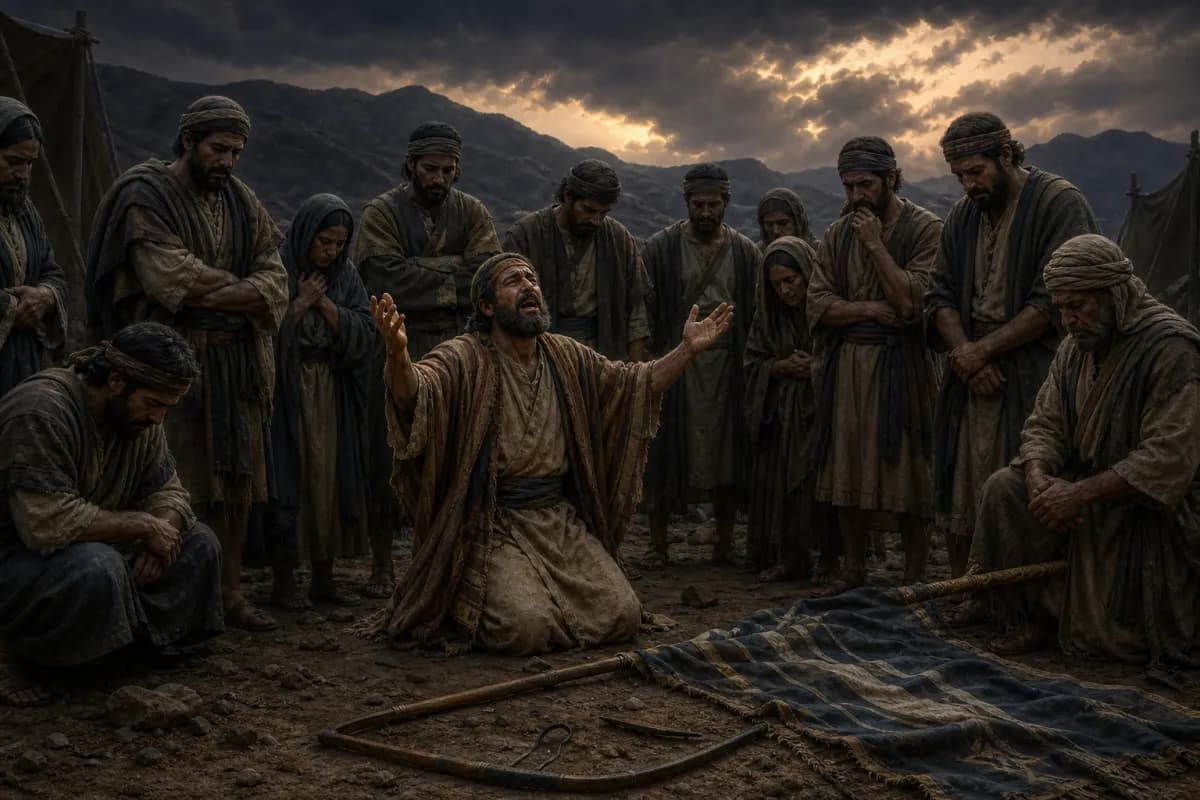
Psalm 44 remembers God giving Israel the land, confesses that no human weapon saves, and then protests that the covenant people are suffering despite not forgetting God or turning to idols. The congregation asks why God seems asleep and pleads, “Rise up; come to our help.” In Jesus, the righteous sufferer and risen King, this cry becomes hope that persecution cannot separate His people from God’s steadfast love.
- In this study
- 26 verses · 5 movements
Psalms 44
44:1We have heard with our ears, God; our fathers have told us what work you did in their days, in the days of old.
44:2You drove out the nations with your hand, but you planted them. You afflicted the peoples, but you spread them abroad.
44:3For they didn’t get the land in possession by their own sword, neither did their own arm save them; but your right hand, your arm, and the light of your face, because you were favorable to them.
44:4God, you are my King. Command victories for Jacob!
44:5Through you, we will push down our adversaries. Through your name, we will tread down those who rise up against us.
44:6For I will not trust in my bow, neither will my sword save me.
44:7But you have saved us from our adversaries, and have shamed those who hate us.
44:8In God we have made our boast all day long. We will give thanks to your name forever. Selah.
44:9But now you rejected us, and brought us to dishonor, and don’t go out with our armies.
44:10You make us turn back from the adversary. Those who hate us take plunder for themselves.
44:11You have made us like sheep for food, and have scattered us among the nations.
44:12You sell your people for nothing, and have gained nothing from their sale.
44:13You make us a reproach to our neighbors, a scoffing and a derision to those who are around us.
44:14You make us a byword among the nations, a shaking of the head among the peoples.
44:15All day long my dishonor is before me, and shame covers my face,
44:16at the taunt of one who reproaches and verbally abuses, because of the enemy and the avenger.
44:17All this has come on us, yet we haven’t forgotten you. We haven’t been false to your covenant.
44:18Our heart has not turned back, neither have our steps strayed from your path,
44:19though you have crushed us in the haunt of jackals, and covered us with the shadow of death.
44:20If we have forgotten the name of our God, or spread out our hands to a strange god,
44:21won’t God search this out? For he knows the secrets of the heart.
44:22Yes, for your sake we are killed all day long. We are regarded as sheep for the slaughter.
44:23Wake up! Why do you sleep, Lord? Arise! Don’t reject us forever.
44:24Why do you hide your face, and forget our affliction and our oppression?
44:25For our soul is bowed down to the dust. Our body clings to the earth.
44:26Rise up to help us. Redeem us for your loving kindness’ sake.
CONTEXTUAL OVERVIEW
Psalm 44 is a communal lament spoken by people who know the stories of God’s past deliverance. Their ancestors did not possess the land by their own sword; God’s right hand, arm, and favor gave the victory. That memory makes the present crisis more acute: the same people now feel rejected, scattered, mocked, and handed over like sheep for slaughter.
The congregation does not answer its loss with a polished explanation. It says that it has not forgotten God, stretched hands to a foreign god, or turned its heart back from the covenant. The psalm therefore matters when suffering cannot honestly be traced to a specific act of rebellion. It teaches believers to protest faithfully before the God whose steadfast love they still invoke.
HISTORICAL AND LITERARY CONTEXT
Psalm 44 is a maskil, an instructive poem of the Korahite collection. It does not name a date or invading army, and attempts to locate it in one national disaster remain uncertain. Its language is communal rather than private: the “we” remembers Israel’s settlement, confesses present shame, and asks the covenant King to act for the whole people.
The supplied note on gaal, to redeem, illuminates the final cry. Israel asks God to act as the One who rescues a helpless people because of His steadfast love. Redemption in the psalm is not earned by Israel’s military success; verses 3 and 6–8 explicitly deny that the bow, sword, or human strength gives victory.
SECTION-BY-SECTION ANALYSIS
- Verses 1–8 · Psalms 44:4Israel remembers that God, not human weapons, gave the land and remains the King in whom it trusts.
- Verses 9–16 · Psalms 44:12Present defeat, scattering, and mockery create a crisis of public shame for the covenant people.
- Verses 17–26 · Psalms 44:1Without denying suffering, the people insist they have not abandoned God and plead for redemption by His steadfast love.
CHRIST IN THIS PASSAGE
Paul cites Psalm 44:22—“for your sake we are being killed all day long”—when addressing suffering Christians. He does not use it to explain persecution as evidence of abandonment. He uses it to show that the faithful people of God have long endured suffering while belonging to the Lord, and that such suffering cannot separate them from God’s love in Christ.
Jesus is the faithful righteous sufferer who enters rejection and death without turning from the Father. His resurrection is God’s definitive answer to the apparent defeat of the cross, and His reign ensures that the church’s affliction is not its final identity. The psalm’s plea for redemption therefore reaches its saving center in the crucified and risen King who holds His persecuted people fast.
REFLECTION
Psalm 44 gives a congregation permission to say that it has suffered without a tidy explanation. In persecution, grief, or a season when obedience seems costly, do not invent secret sins simply to make pain understandable. Search your heart truthfully, then bring your unanswered “why” to the God whose character you have learned from His past faithfulness.
The psalm also corrects every confidence in force, influence, or public success. Pray for the church where believers are mocked or endangered, and speak Romans 8’s assurance over them: in Christ, suffering is real but it cannot sever His steadfast love. Let that promise produce endurance and public fidelity rather than despair.
Original Hebrew Word Study
Psalm 44:26
גָּאַל
gaal · H1350
Usually translated: to redeem or act as a kinsman-redeemer
Gaal means to redeem. Israel appeals to God’s steadfast love, asking Him to act for His people when their own strength has failed.
Follow the Scripture trail
Psalm 44: Faithful Sufferers Cry Out for Redemption in the larger story
The connection: Psalm 44 remembers God’s saving acts while faithful people suffer and plead for redemption. Jesus, the righteous sufferer raised as King, fulfills the pattern Paul applies to the church and keeps His persecuted people secure in God’s steadfast love.
Respond to the passage
Pray Psalm 44 for a church or believer facing hostility, naming their need before God without minimizing it. Then reject one source of self-protective confidence and ask the risen Jesus to make your public witness faithful even when obedience costs you.
- Why does the community begin by remembering God’s past victories before naming present defeat?
- How do verses 17–22 guard against assuming that every hardship proves hidden rebellion?
- What does Paul’s use of verse 22 contribute to Christian hope in persecution?
Prayer
Lord Jesus, righteous sufferer and risen King, remember Your afflicted people. Forgive our false trust in strength, hold us when we cannot explain our losses, and redeem us by Your steadfast love so that no suffering can silence our witness to You. Amen.