Passage Study
Psalm 46: The God Who Is Our Refuge amid Upheaval
Psalms 46:1–46:11
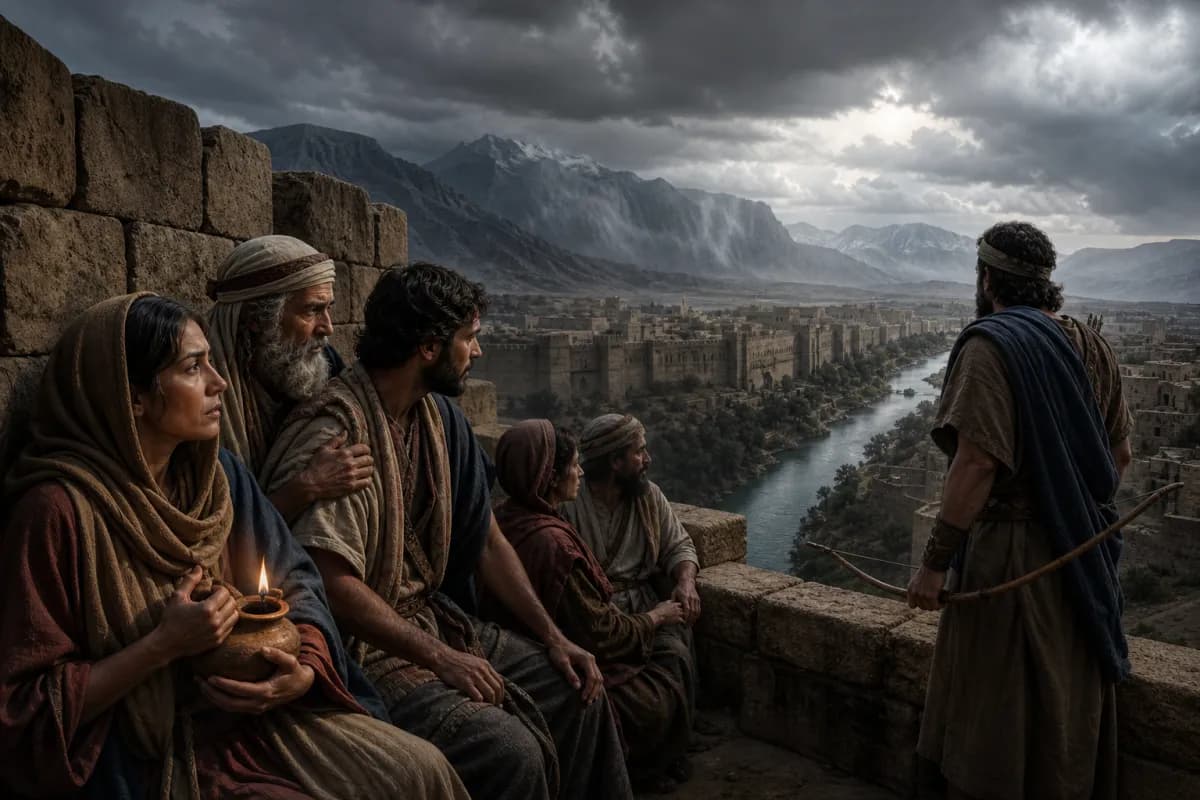
Psalm 46 declares that God is a present refuge when creation shakes, nations rage, and war threatens the earth. A river gladdens the city where God dwells, and the Lord of hosts brings violent powers to an end. Jesus’ resurrection and reign give this confidence its fullest horizon: the kingdom of God cannot be undone, and He will make all things new.
- In this study
- 11 verses · 5 movements
Psalms 46
46:1God is our refuge and strength, a very present help in trouble.
46:2Therefore we won’t be afraid, though the earth changes, though the mountains are shaken into the heart of the seas;
46:3though its waters roar and are troubled, though the mountains tremble with their swelling. Selah.
46:4There is a river, the streams of which make the city of God glad, the holy place of the tents of the Most High.
46:5God is within her. She shall not be moved. God will help her at dawn.
46:6The nations raged. The kingdoms were moved. He lifted his voice and the earth melted.
46:7The LORD of Armies is with us. The God of Jacob is our refuge. Selah.
46:8Come, see the LORD’s works, what desolations he has made in the earth.
46:9He makes wars cease to the end of the earth. He breaks the bow, and shatters the spear. He burns the chariots in the fire.
46:10“Be still, and know that I am God. I will be exalted among the nations. I will be exalted in the earth.”
46:11The LORD of Armies is with us. The God of Jacob is our refuge. Selah.
CONTEXTUAL OVERVIEW
Psalm 46 begins at the scale of catastrophe: earth changes, mountains slide into the sea, and waters roar and foam. The psalmist does not calculate a way to control those forces. He says, “God is our refuge and strength, a very present help in trouble,” and therefore declares that God’s people will not fear even when the most stable parts of their world seem to collapse.
The song then moves from turbulent waters to a quiet river that gladdens the city of God. Nations rage and kingdoms totter, but God is in the midst of His city. The repeated confession, “The Lord of hosts is with us; the God of Jacob is our refuge,” joins God’s cosmic authority to His covenant presence with a vulnerable people.
HISTORICAL AND LITERARY CONTEXT
The heading assigns the psalm to the Korahites and identifies it as a song. The city of God is Zion, the place associated with the Lord’s dwelling among His people. The psalm does not identify a specific invasion or deliverance, so its poetry should not be reduced to a single battle account, even though it speaks in the world of threatened cities and warring nations.
Psalm 46 has three movements marked by the recurring refuge confession. Its images are poetic but not escapist: mountains, floodwaters, weapons, and armies name the forces that make human security feel fragile. The command to “be still” comes after God has shattered bows and spears; it summons hostile powers and anxious hearts alike to acknowledge a rule they cannot overturn.
SECTION-BY-SECTION ANALYSIS
- Verses 1–3 · Psalms 46:1When the created order feels unstable, God Himself is named as a present refuge and strength.
- Verses 4–7 · Psalms 46:4God’s dwelling gives His city joy and stability while the voice of the Lord of hosts outranks every raging nation.
- Verses 8–11 · Psalms 46:10The God who ends war commands the earth to recognize His rule and promises His exaltation among all peoples.
CHRIST IN THIS PASSAGE
Psalm 46 does not directly predict Jesus, but it speaks of God’s kingly presence, His city, and His final victory over the weapons of war. Jesus announces God’s kingdom, rises from death as its victorious King, and will bring His reign to completion when violence and death are finally judged. This is a strong thematic connection, not a claim that every image in the psalm is a code for Christ.
Christ’s saving mission also gives refuge its deepest meaning. He bears sin and defeats death so that people who were enemies of God can be reconciled to Him. Believers still live amid disasters and wars, but the risen Lord is with His people, and His promised new creation means upheaval does not have the final word.
REFLECTION
Psalm 46 does not ask you to minimize real danger. It redirects the place where you seek security. When news, conflict, illness, or loss makes the ground feel unstable, say with the psalm that God is present help, then bring the particular fear to Him instead of allowing it to become your refuge.
“Be still” is an invitation to surrender the illusion that you can govern the nations, future, or outcome. Trust the crucified and risen King. Let His promised reign make you a peacemaker in the place where you do have responsibility, praying for those caught in violence and refusing to feed rage with your own speech.
Original Hebrew Word Study
Psalm 46:1
מַחֲסֶה
machaseh · H4268
Usually translated: refuge or shelter
Machaseh means refuge. God is a present shelter when the earth itself seems unstable and nations rage around His people.
Follow the Scripture trail
Psalm 46: The God Who Is Our Refuge amid Upheaval in the larger story
The connection: Psalm 46’s refuge and universal King find their fullest horizon in the risen Jesus. By reconciling enemies to God and reigning until all hostile powers are put down, He secures a kingdom that will outlast every upheaval and culminate in a renewed creation.
Respond to the passage
Identify the situation that has made your world feel most unstable, and tell God specifically why you fear it. Trust Christ’s reign by taking one peacemaking step in your own sphere and by praying for a place where nations are raging.
- Why does Psalm 46 begin with upheaval rather than with a promise that upheaval will never occur?
- What is the contrast between the roaring waters and the river that gladdens God’s city?
- How does Christ’s resurrection give Christians durable hope while violence and disaster still remain?
Prayer
Lord of hosts, You are my refuge when the ground beneath me feels uncertain. Thank You for Jesus, the risen King who has overcome sin and death. Quiet my anxious striving, make me an instrument of Your peace, and fix my hope on Your coming new creation. Amen.