Passage Study
Psalm 57: Sheltered Under God’s Wings Until the Storm Passes
Psalms 57:1–57:11
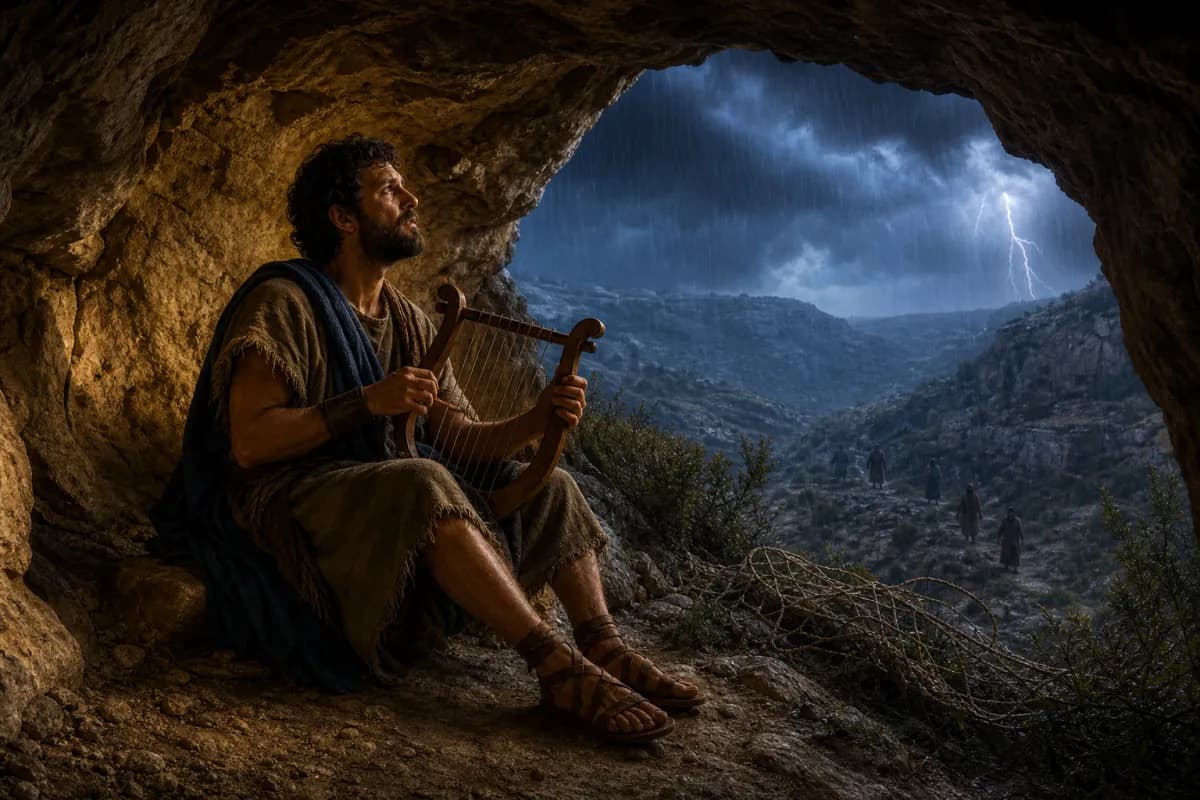
Psalm 57 is David’s prayer from a cave while enemies seek to devour him. He asks mercy beneath God’s wings, expects God’s steadfast love and faithfulness to reach from heaven, and turns from danger to praise. Jesus faces hostile violence without abandoning the Father, rises in vindication, and brings threatened sinners into the mercy of God.
- In this study
- 11 verses · 5 movements
Psalms 57
57:1Be merciful to me, God, be merciful to me, for my soul takes refuge in you. Yes, in the shadow of your wings, I will take refuge, until disaster has passed.
57:2I cry out to God Most High, to God who accomplishes my requests for me.
57:3He will send from heaven, and save me, he rebukes the one who is pursuing me. Selah. God will send out his loving kindness and his truth.
57:4My soul is among lions. I lie among those who are set on fire, even the sons of men, whose teeth are spears and arrows, and their tongue a sharp sword.
57:5Be exalted, God, above the heavens! Let your glory be above all the earth!
57:6They have prepared a net for my steps. My soul is bowed down. They dig a pit before me. They fall into the middle of it themselves. Selah.
57:7My heart is steadfast, God. My heart is steadfast. I will sing, yes, I will sing praises.
57:8Wake up, my glory! Wake up, lute and harp! I will wake up the dawn.
57:9I will give thanks to you, Lord, among the peoples. I will sing praises to you among the nations.
57:10For your great loving kindness reaches to the heavens, and your truth to the skies.
57:11Be exalted, God, above the heavens. Let your glory be over all the earth.
CONTEXTUAL OVERVIEW
Psalm 57 begins with a hunted man asking twice for mercy. David’s refuge is not the cave itself but the shadow of God’s wings, where he waits until destructive trouble passes. The image evokes the safety of God’s presence; it does not promise that danger has already disappeared.
The center of the psalm is God’s action from heaven. David expects the Most High to fulfill His purpose for him and to send steadfast love and faithfulness. The supplied note on hesed matters here: God’s covenant love, rather than David’s cleverness or hiding place, is the ground of his confidence.
HISTORICAL AND LITERARY CONTEXT
The superscription locates this song during David’s flight from Saul “in the cave.” Both the cave at Adullam and the cave at En-gedi have been proposed, but the psalm does not require a decision between them. Its setting explains the urgent images of lions, flaming anger, nets, pits, and a life pressed close to the ground.
The poem moves in two matching halves. Each half describes hostile people, asks that God be exalted above the heavens, and ends with praise. That movement is crucial: David does not deny the snare or call it harmless. He looks beyond it to the God whose glory is larger than his enemies’ plan.
SECTION-BY-SECTION ANALYSIS
- Verses 1–3 · Psalms 57:2David seeks mercy beneath God’s wings and trusts the Most High to send covenant love and faithfulness.
- Verses 4–6 · Psalms 57:5Hostile words and hidden traps threaten David, yet God’s glory remains the prayer’s highest concern.
- Verses 7–11 · Psalms 57:7A heart made steadfast by God breaks into praise that reaches beyond Israel to the peoples.
CHRIST IN THIS PASSAGE
Psalm 57 does not predict a particular scene in Jesus’ life, but it strongly illuminates His faithful suffering. Jesus faces slander, plotting, and armed arrest while entrusting Himself to the Father rather than escaping through violence. His resurrection shows that those who lay traps against God’s righteous servant do not overturn God’s saving purpose.
Jesus also makes refuge in God available to sinners. At the cross He bears the judgment that keeps us from God, and in His risen life He gathers people under the Father’s mercy. David’s praise among the peoples becomes a fitting gospel horizon: Christ’s deliverance sends worship outward to the nations.
REFLECTION
When your safety feels thin, tell Jesus where the threat is real and ask for the mercy David seeks. Do not make a job, a plan, or an escape route your final refuge. Wait beneath the Father’s care while you take the wise next step available to you.
Notice whether fear has made your heart fixed on an enemy’s words. Ask Christ to make your heart steadfast, and name one reason for praise before the crisis resolves. Let His saving mercy move you toward truthful witness instead of retaliation.
Original Hebrew Word Study
Psalm 57:3
חֶסֶד
hesed · H2617
Usually translated: steadfast covenant love
Hesed is God’s faithful love. Even in a cave under threat, David expects that love to reach from heaven and rescue him.
Follow the Scripture trail
Psalm 57: Sheltered Under God’s Wings Until the Storm Passes in the larger story
The connection: Psalm 57 trusts the God whose steadfast love reaches from heaven while a righteous sufferer is trapped by violent words and schemes. Jesus suffers hostility, is vindicated in resurrection, and brings sinners under the Father’s mercy so that His praise may be declared among the nations.
Respond to the passage
Bring the danger or pressure that has made you feel cornered to Jesus by name. Ask Him to be your refuge, refuse one retaliatory word, and choose one act of praise that declares His mercy is greater than the trap before you.
- Why does David call the cave less important than refuge beneath God’s wings?
- How do the repeated requests for God’s glory reshape David’s desire for rescue?
- How does Jesus’ resurrection strengthen praise while danger is still present?
Prayer
Lord Jesus, when threats close in around me, hide me in the Father’s mercy. Make my heart steadfast, guard my speech from revenge, and turn my fear into praise for Your saving faithfulness. Amen.