Passage Study
Psalm 65: Forgiveness, Fruitfulness, and Praise to God
Psalms 65:1–65:13
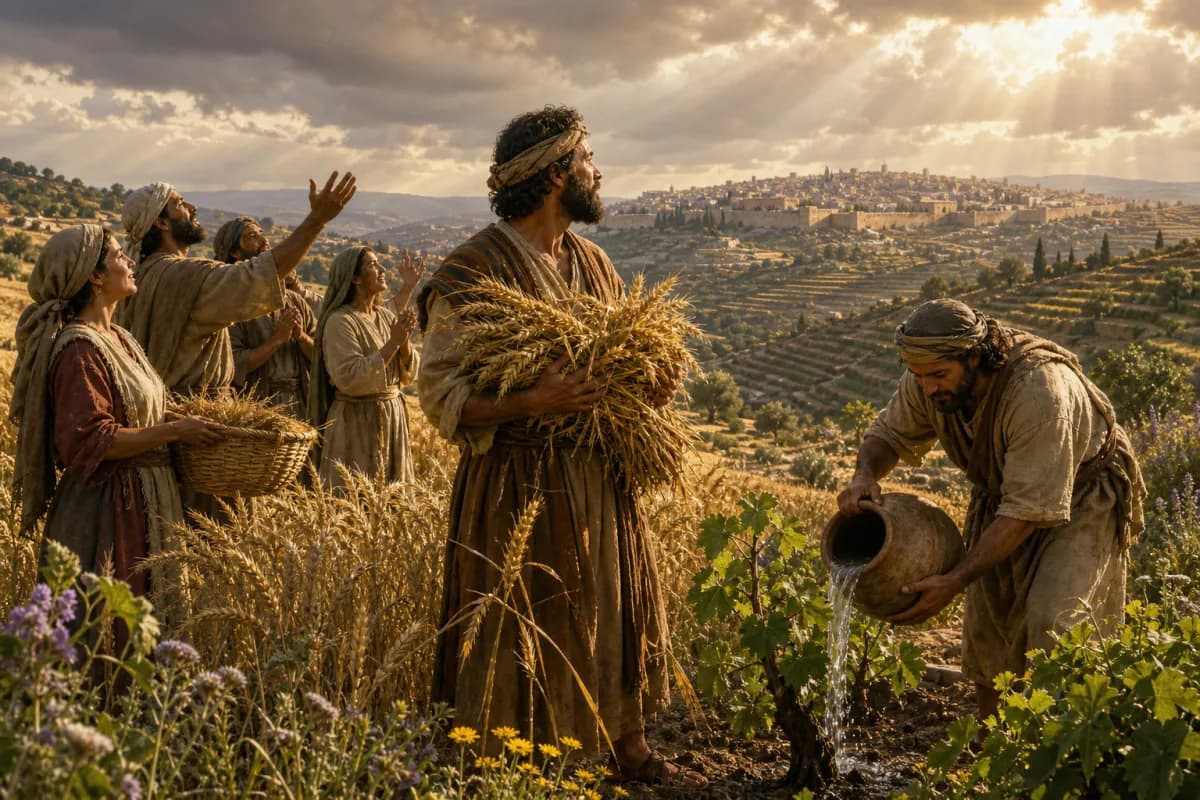
Psalm 65 praises God from Zion as the One who hears prayer, atones for overwhelming sin, draws worshipers near, stills the seas and nations, and visits the earth with abundance. David sees forgiveness and creation’s fruitfulness as gifts of the same generous Lord. Jesus accomplishes the cleansing sinners need and gathers a worshiping people who proclaim God’s grace to the ends of the earth.
- In this study
- 13 verses · 5 movements
Psalms 65
65:1Praise waits for you, God, in Zion. Vows shall be performed to you.
65:2You who hear prayer, all men will come to you.
65:3Sins overwhelmed me, but you atoned for our transgressions.
65:4Blessed is the one whom you choose and cause to come near, that he may live in your courts. We will be filled with the goodness of your house, your holy temple.
65:5By awesome deeds of righteousness, you answer us, God of our salvation. You who are the hope of all the ends of the earth, of those who are far away on the sea.
65:6By your power, you form the mountains, having armed yourself with strength.
65:7You still the roaring of the seas, the roaring of their waves, and the turmoil of the nations.
65:8They also who dwell in faraway places are afraid at your wonders. You call the morning’s dawn and the evening with songs of joy.
65:9You visit the earth, and water it. You greatly enrich it. The river of God is full of water. You provide them grain, for so you have ordained it.
65:10You drench its furrows. You level its ridges. You soften it with showers. You bless it with a crop.
65:11You crown the year with your bounty. Your carts overflow with abundance.
65:12The wilderness grasslands overflow. The hills are clothed with gladness.
65:13The pastures are covered with flocks. The valleys also are clothed with grain. They shout for joy! They also sing.
CONTEXTUAL OVERVIEW
Psalm 65 begins at Zion with worship that is waiting to be offered. The first reason for praise is not harvest or scenery but mercy toward sinners: iniquities prevail against God’s people, and God atones for their transgressions. The God who receives prayer is therefore holy enough to confront guilt and gracious enough to bring worshipers near.
The supplied note on paqad, “to attend to, visit, or care for,” illuminates the psalm’s later description of God visiting the earth. Rain, river water, grain, flocks, and valleys are not presented as automatic processes detached from God. They are gifts of His attentive rule, answered by fields and hills that the poem describes as rejoicing before their Creator.
HISTORICAL AND LITERARY CONTEXT
Psalm 65 is a song of David shaped by Zion worship and agricultural abundance. It likely belongs naturally with the praise of a harvest season, though the psalm gives no date or festival label that lets readers identify a single occasion. Its ordering is theologically important: forgiveness and welcome into God’s courts come before the celebration of rain and grain.
The psalm broadens outward in carefully widening circles. Zion is the place where God’s people praise; all flesh comes to the One who hears prayer; God is the hope of the ends of the earth; then mountains, seas, nations, and cultivated fields all display His power and generosity. Israel’s worship is never meant to shrink God’s concern to Israel alone.
SECTION-BY-SECTION ANALYSIS
- Verses 1–4 · Psalms 65:4God hears prayer, atones for prevailing sin, and brings worshipers near to the goodness of His house.
- Verses 5–8 · Psalms 65:5The God worshiped in Zion is also the hope of the earth’s ends, ruling mountains, seas, and restless nations.
- Verses 9–13 · Psalms 65:9God attends to the earth with water and growth, leading the land itself to declare His generous provision.
CHRIST IN THIS PASSAGE
Psalm 65’s most direct gospel need is atonement: transgressions prevail, and God must deal with them if worshipers are to draw near. The sacrifices and worship of Zion anticipate, but do not themselves exhaust, the cleansing that Jesus accomplishes. Through His once-for-all offering, Christ makes forgiveness real and opens access to God for those who come by faith.
The psalm’s wide horizon also fits Jesus’ saving mission. The crucified and risen Messiah gathers people from every nation into worship of the God who hears prayer, and He is Lord over the creation that Psalm 65 praises. This is a canonical fulfillment, not a claim that every detail of rain or harvest secretly predicts Christ: the psalm’s Creator and Atoner is made known most fully in the Son through whom all things were made and reconciled.
REFLECTION
Begin praise where Psalm 65 begins: with the mercy that deals with real guilt. Do not use gratitude for daily provision to avoid confession. Bring the transgression that feels stronger than your resolve to Jesus, receive the forgiveness He purchased, and approach the Father as one whom He has graciously brought near.
Then let ordinary provision become worship. Thank God for a meal, rain, work that bears fruit, or a field that feeds others without pretending creation is always painless. Ask Christ to widen your prayer beyond your own needs, remembering that the God who supplies His people is the hope of the ends of the earth.
Original Hebrew Word Study
Psalm 65:9
פָּקַד
paqad · H6485
Usually translated: to attend to, visit, or care for
Paqad means to attend to with care. God visits the earth with rain and abundance, showing His generous rule over creation.
Follow the Scripture trail
Psalm 65: Forgiveness, Fruitfulness, and Praise to God in the larger story
The connection: Psalm 65 praises the God who atones for sin, draws people near, rules every land, and sustains creation. Jesus fulfills the need for cleansing through His sacrifice and gathers forgiven worshipers from the earth’s ends into the Father’s generous kingdom.
Respond to the passage
Bring one specific sin to Christ before you count today’s gifts. Then thank God for one ordinary provision and pray that His saving way will be known beyond your own table, neighborhood, and concerns.
- Why does Psalm 65 place atonement before its celebration of the harvest?
- How does the psalm connect worship in Zion with people at the ends of the earth?
- What does God’s care for fields and water teach about receiving ordinary provision?
Prayer
Lord Jesus, thank You for making a way for sinners to draw near to God. Forgive my sin, make my daily gratitude honest worship, and use my life to point others to the generous Father who hears prayer and gives life. Amen.