Passage Study
Psalm 67: Blessed So That the Nations May Praise God
Psalms 67:1–67:7
Psalm 67 asks God to show Israel the favor once associated with His shining face, but its horizon is the whole earth: God’s way and saving power are to become known among every people. The nations’ joy comes from God’s righteous rule, and the harvest becomes a reason for worldwide praise. Jesus sends this blessing outward as the gospel gathers worshipers from every nation.
- In this study
- 7 verses · 5 movements
Psalms 67
67:1May God be merciful to us, bless us, and cause his face to shine on us. Selah.
67:2That your way may be known on earth, and your salvation among all nations,
67:3let the peoples praise you, God. Let all the peoples praise you.
67:4Oh let the nations be glad and sing for joy, for you will judge the peoples with equity, and govern the nations on earth. Selah.
67:5Let the peoples praise you, God. Let all the peoples praise you.
67:6The earth has yielded its increase. God, even our own God, will bless us.
67:7God will bless us. All the ends of the earth shall fear him.
CONTEXTUAL OVERVIEW
Psalm 67 is a short communal prayer whose repeated center is, “Let the peoples praise you.” Israel asks for mercy and blessing, yet the request refuses to stop at Israel’s comfort. The supplied note on barakh, “to bless,” clarifies the purpose in verse 1: the favor of God is sought so that His way and saving power will be recognized among all nations.
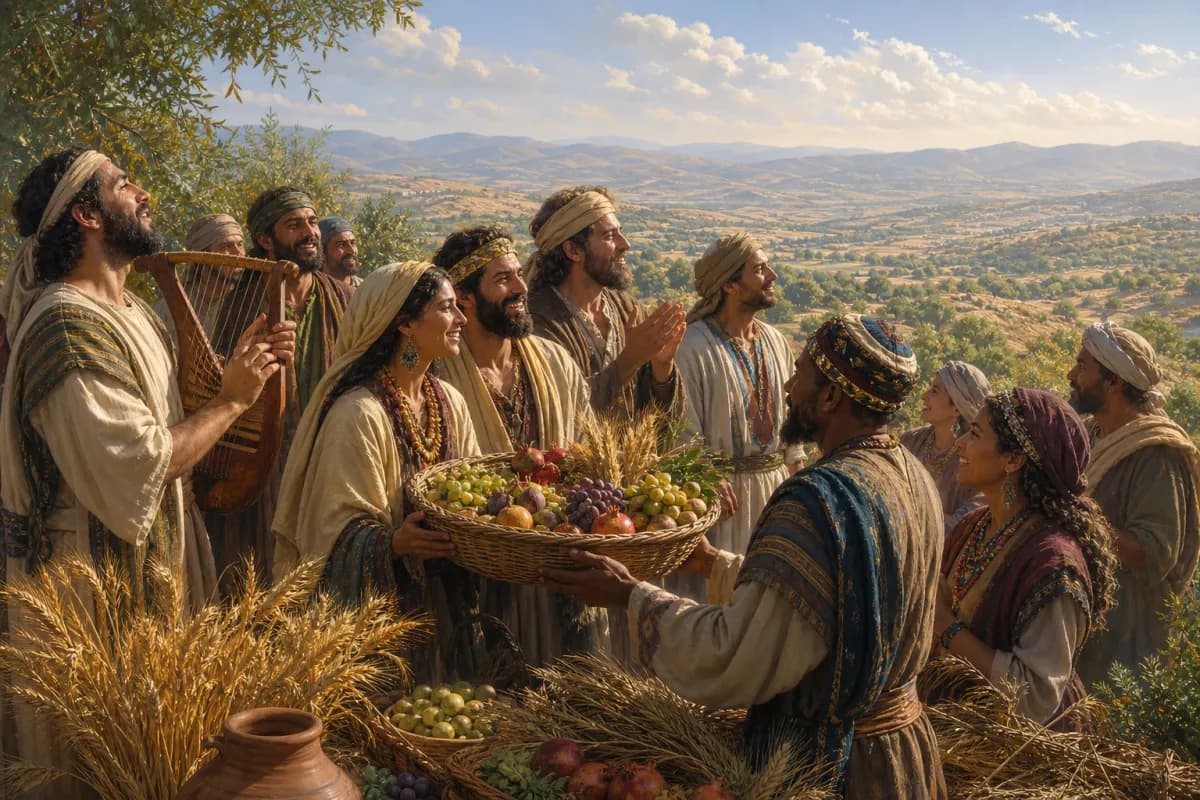
The psalm holds together worship, justice, and harvest. The nations are invited to sing because God judges the peoples with equity and guides the nations on earth. Israel’s land has yielded its increase, but the song treats this gift as a witness to the God before whom the ends of the earth should stand in reverent joy.
HISTORICAL AND LITERARY CONTEXT
The opening deliberately echoes the priestly blessing in Numbers: God’s gracious face shining on His people. Psalm 67 turns that covenant blessing outward. Israel is not asked to surrender its distinct calling; rather, its life under God’s favor is meant to display the character and saving rule of Israel’s God to the nations.
Its compact structure alternates prayer and invitation. The repeated call for the peoples to praise surrounds the reason for their gladness: God rules without the crookedness that marks human rulers. The final harvest line may fit a thanksgiving setting, but the text gives no occasion that permits a more precise reconstruction.
SECTION-BY-SECTION ANALYSIS
- Verses 1–2 · Psalms 67:2Israel asks for God’s shining favor so that His saving way will become known among every nation.
- Verses 3–5 · Psalms 67:3The peoples are summoned to rejoice because God judges uprightly and guides the nations.
- Verses 6–7 · Psalms 67:1A fruitful land becomes an occasion for worldwide reverence before the God who blesses.
CHRIST IN THIS PASSAGE
Psalm 67 does not identify the Messiah by name, but it provides a strong canonical pattern for Jesus’ mission. The blessing of Abraham was always aimed at the blessing of all families of the earth, and this psalm prays for that purpose to become visible. Jesus fulfills Israel’s calling as the faithful Son and sends witnesses to make repentance and forgiveness known among all peoples.
The risen Christ does more than invite the nations to admire Israel’s God from afar. Through His death He reconciles sinners to God, and through His reign He gathers a worshiping people from every language. The psalm’s confidence in God’s equitable judgment also finds its true horizon in Jesus, whom God has appointed to judge the world in righteousness.
REFLECTION
Psalm 67 corrects prayers that ask for God’s help while never considering whom His help might serve. Ask the Lord to make His mercy in your home, work, church, and suffering a truthful witness to His saving way rather than an occasion for self-congratulation.
Give thanks for ordinary provision without treating it as proof that you deserve more than others. Let the harvests God gives—food, work, strength, opportunity, and friendship—move you toward worship, generosity, and a concrete concern that someone beyond your familiar circle may hear of Jesus.
Original Hebrew Word Study
Psalm 67:1
בָּרַךְ
barakh · H1288
Usually translated: to bless
Barakh means to bless. Israel asks for God’s blessing so that His saving way will become known among every nation.
Follow the Scripture trail
Psalm 67: Blessed So That the Nations May Praise God in the larger story
The connection: Psalm 67 asks that God’s blessing on His people reveal His saving way among every nation. Jesus fulfills that mission through His death and resurrection, sending forgiven worshipers to announce His kingdom until people from every nation praise God.
Respond to the passage
Thank Jesus for the mercy that reached you, then name one person or people-group beyond your normal concern for whom you will pray and one generous or truthful action that can serve the spread of His gospel.
- Why does Psalm 67 ask for blessing in order that God’s saving way may be known?
- What makes the nations’ joy in verses 4–5 different from mere national success?
- How can a gift you have received become a witness to Jesus rather than a possession to guard?
Prayer
Lord Jesus, let Your mercy in my life make Your saving way known. Teach me to receive Your gifts with gratitude, rejoice in Your righteous reign, and seek the praise of God among every people. Amen.