Passage Study
Psalm 71: Hope from Youth to Old Age
Psalms 71:1–71:24
Psalm 71 trusts God across an entire life. The singer remembers God as refuge from youth, asks not to be cast off in old age, and expects to keep proclaiming God’s might to coming generations. Though enemies interpret weakness as abandonment, the psalmist relies on God’s righteousness and future restoration. Jesus’ resurrection secures this hope and makes lifelong witness possible.
- In this study
- 24 verses · 5 movements
Psalms 71
71:1In you, LORD, I take refuge. Never let me be disappointed.
71:2Deliver me in your righteousness, and rescue me. Turn your ear to me, and save me.
71:3Be to me a rock of refuge to which I may always go. Give the command to save me, for you are my rock and my fortress.
71:4Rescue me, my God, from the hand of the wicked, from the hand of the unrighteous and cruel man.
71:5For you are my hope, Lord GOD, my confidence from my youth.
71:6I have relied on you from the womb. You are he who took me out of my mother’s womb. I will always praise you.
71:7I am a marvel to many, but you are my strong refuge.
71:8My mouth shall be filled with your praise, with your honor all day long.
71:9Don’t reject me in my old age. Don’t forsake me when my strength fails.
71:10For my enemies talk about me. Those who watch for my soul conspire together,
71:11saying, “God has forsaken him. Pursue and take him, for no one will rescue him.”
71:12God, don’t be far from me. My God, hurry to help me.
71:13Let my accusers be disappointed and consumed. Let them be covered with disgrace and scorn who want to harm me.
71:14But I will always hope, and will add to all of your praise.
71:15My mouth will tell about your righteousness, and of your salvation all day, though I don’t know its full measure.
71:16I will come with the mighty acts of the Lord GOD. I will make mention of your righteousness, even of yours alone.
71:17God, you have taught me from my youth. Until now, I have declared your wondrous works.
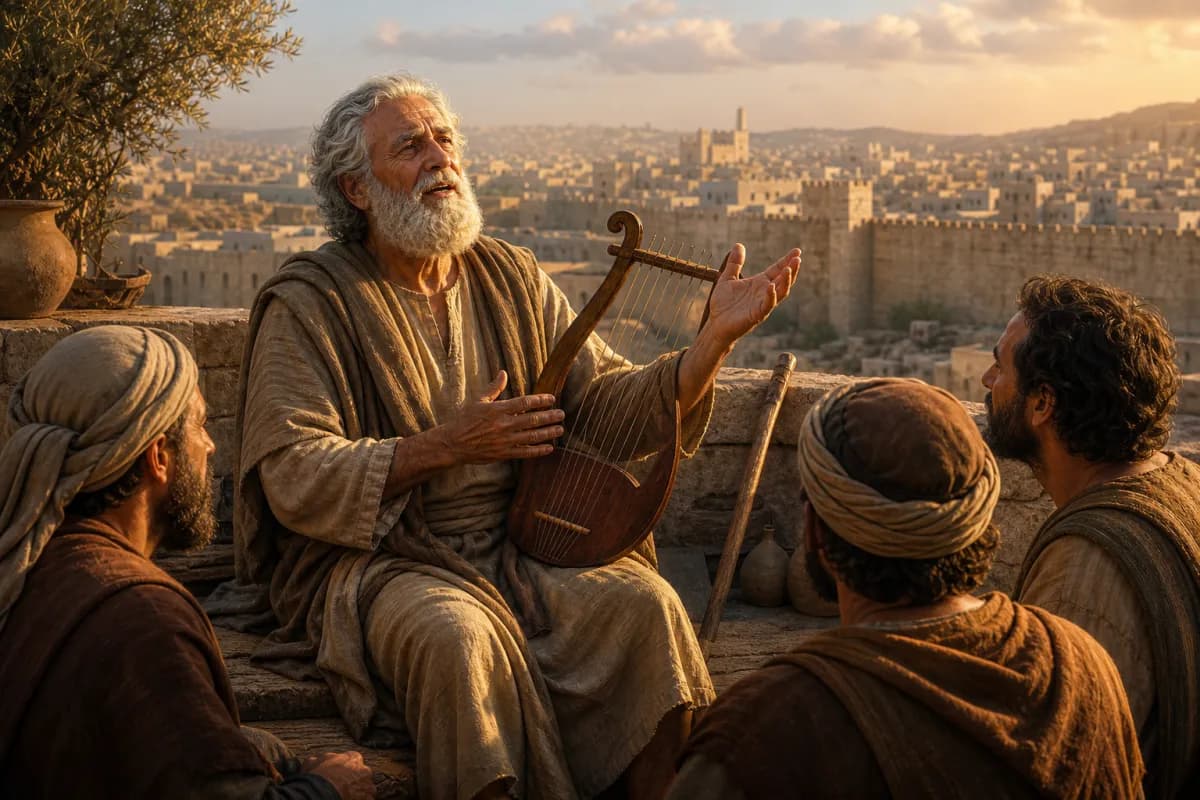
71:18Yes, even when I am old and gray-haired, God, don’t forsake me, until I have declared your strength to the next generation, your might to everyone who is to come.
71:19God, your righteousness also reaches to the heavens. You have done great things. God, who is like you?
71:20You, who have shown us many and bitter troubles, you will let me live. You will bring us up again from the depths of the earth.
71:21Increase my honor and comfort me again.
71:22I will also praise you with the harp for your faithfulness, my God. I sing praises to you with the lyre, Holy One of Israel.
71:23My lips shall shout for joy! My soul, which you have redeemed, sings praises to you!
71:24My tongue will also talk about your righteousness all day long, for they are disappointed, and they are confounded, who want to harm me.
CONTEXTUAL OVERVIEW
Psalm 71 is a prayer for a later season of life, but its faith is rooted in a much longer memory. The singer calls God his rock, fortress, and hope, then says that the Lord has been his trust from youth. The supplied note on tiqvah, “hope” or “expectation,” gives verse 5 its depth: this hope is not vague optimism but a life-long dependence on God’s faithful character.
Old age brings a particular fear in the poem. Strength is failing, enemies are watching, and they interpret weakness as proof that God has forsaken the singer. The psalm answers that accusation by remembering God’s past help and by asking for enough renewed life and comfort to continue telling the next generation about God’s righteousness and mighty deeds.
HISTORICAL AND LITERARY CONTEXT
Psalm 71 has no superscription and is closely linked in language and mood with Psalm 31. It is an individual lament shaped by testimony: the speaker remembers divine help from birth, names a present threat, and turns his own continued life into a platform for praise. The text does not name the enemy or a specific illness, so a precise historical setting cannot be established.
Its movement is especially notable because it does not romanticize aging. The singer asks not to be cast off when strength is spent and speaks of descending from the depths of the earth. At the same time, he refuses to reduce late life to decline: God’s righteousness remains inexhaustible, and testimony to the next generation remains a living vocation.
SECTION-BY-SECTION ANALYSIS
- Verses 1–8 · Psalms 71:5God has been the singer’s refuge and hope from youth, giving him reason for continual praise.
- Verses 9–16 · Psalms 71:18In failing strength and hostile accusation, the singer asks God to draw near and renew his hope.
- Verses 17–24 · Psalms 71:15A lifetime of God’s faithfulness becomes a calling to tell the next generation of His power and righteousness.
CHRIST IN THIS PASSAGE
Psalm 71 does not predict an episode in Jesus’ ministry, but it directs hope toward the God whose righteousness outlasts human strength. Jesus enters mortal weakness without sin, defeats death through His resurrection, and promises that those who belong to Him will be raised. The psalm’s plea to be brought up from the depths therefore has a strong thematic horizon in the resurrection hope secured by Christ.
Jesus also establishes a people in which no stage of life is spiritually disposable. His saving mission reconciles believers to the Father and gives older saints a vital witness: they can testify to God’s faithfulness, encourage the young, and keep hoping in the risen Lord even when their bodies weaken. This is not a promise that every illness will be removed now; it is confidence that Christ will not abandon His own.
REFLECTION
If age, weakness, or limitation has made you feel sidelined, pray Psalm 71 without shame. Tell God where strength is failing, and remember specific ways He has sustained you from earlier years. Your history with God can become a gift to those who have not yet walked as far.
If you are younger, receive the testimony of older believers as part of God’s care for you. Ask someone whose faith has endured suffering to tell you what God has taught them, and let Jesus train you to measure a life by faithfulness and witness rather than visible strength.
Original Hebrew Word Study
Psalm 71:5
תִּקְוָה
tiqvah · H8615
Usually translated: hope or expectation
Tiqvah means hope. The psalmist’s hope has been the Lord from youth, giving old age a confidence rooted in a lifetime of God’s faithfulness.
Follow the Scripture trail
Psalm 71: Hope from Youth to Old Age in the larger story
The connection: Psalm 71 trusts God from youth through failing strength and looks for life beyond the depths. Jesus’ resurrection gives this hope its sure foundation: He will not abandon His people, and He makes every generation’s witness part of His saving mission.
Respond to the passage
Name one memory of God’s faithfulness that you can tell to a younger believer or family member this week. Bring your present weakness to Jesus, and ask Him to turn it into a place of hope and patient witness rather than shame.
- How does the singer’s memory of God from youth answer the fear of old age?
- What do the enemies wrongly conclude from the psalmist’s weakness?
- How does Jesus’ resurrection make lifelong testimony more than nostalgia?
Prayer
Lord Jesus, You are my hope from youth to old age. Do not leave me in weakness, renew my confidence in Your resurrection, and make my life a truthful witness to Your faithfulness for those who come after me. Amen.