Passage Study
Psalm 73: Nearness to God When the Wicked Prosper
Psalms 73:1–73:28
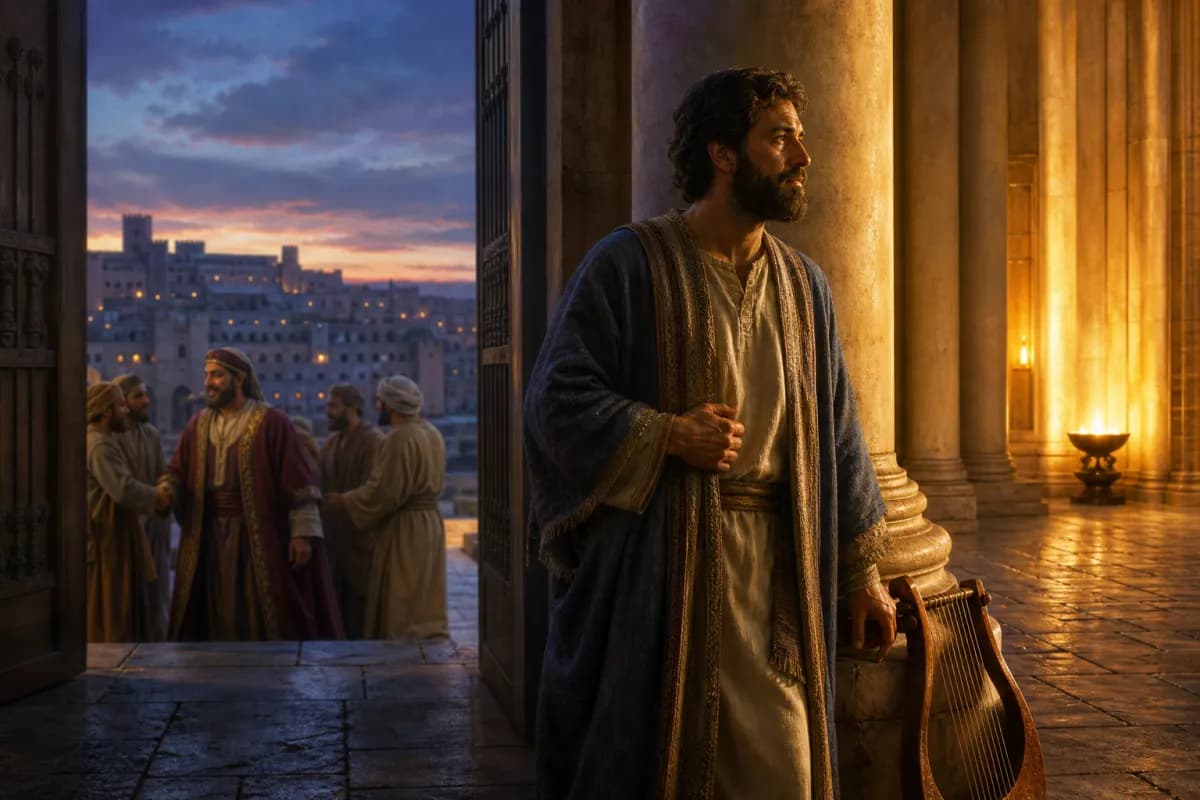
Psalm 73 follows Asaph’s crisis as he sees arrogant and violent people prosper while he has sought a clean heart. Entering God’s sanctuary reshapes his perspective: their apparent security ends in ruin, while God holds him, guides him, and remains his portion. The psalm finds its lasting answer in Jesus, whose cross and resurrection expose false security and secure fellowship with God.
- In this study
- 28 verses · 5 movements
Psalms 73
73:1Surely God is good to Israel, to those who are pure in heart.
73:2But as for me, my feet were almost gone. My steps had nearly slipped.
73:3For I was envious of the arrogant, when I saw the prosperity of the wicked.
73:4For there are no struggles in their death, but their strength is firm.
73:5They are free from burdens of men, neither are they plagued like other men.
73:6Therefore pride is like a chain around their neck. Violence covers them like a garment.
73:7Their eyes bulge with fat. Their minds pass the limits of conceit.
73:8They scoff and speak with malice. In arrogance, they threaten oppression.
73:9They have set their mouth in the heavens. Their tongue walks through the earth.
73:10Therefore their people return to them, and they drink up waters of abundance.
73:11They say, “How does God know? Is there knowledge in the Most High?”
73:12Behold, these are the wicked. Being always at ease, they increase in riches.
73:13Surely I have cleansed my heart in vain, and washed my hands in innocence,
73:14For all day long I have been plagued, and punished every morning.
73:15If I had said, “I will speak thus”, behold, I would have betrayed the generation of your children.
73:16When I tried to understand this, it was too painful for me—
73:17until I entered God’s sanctuary, and considered their latter end.
73:18Surely you set them in slippery places. You throw them down to destruction.
73:19How they are suddenly destroyed! They are completely swept away with terrors.
73:20As a dream when one wakes up, so, Lord, when you awake, you will despise their fantasies.
73:21For my soul was grieved. I was embittered in my heart.
73:22I was so senseless and ignorant. I was a brute beast before you.
73:23Nevertheless, I am continually with you. You have held my right hand.
73:24You will guide me with your counsel, and afterward receive me to glory.
73:25Whom do I have in heaven? There is no one on earth whom I desire besides you.
73:26My flesh and my heart fails, but God is the strength of my heart and my portion forever.
73:27For, behold, those who are far from you shall perish. You have destroyed all those who are unfaithful to you.
73:28But it is good for me to come close to God. I have made the Lord GOD my refuge, that I may tell of all your works.
CONTEXTUAL OVERVIEW
Psalm 73 begins with a conviction—God is good to Israel, to the pure in heart—and then immediately admits how close the singer came to losing his footing. Asaph did not envy the wicked because they seemed morally admirable. He envied their ease while they wore pride, spoke violence, and treated heaven with contempt.
The turning point is not a sudden improvement in circumstances. Asaph enters the sanctuary of God and considers their end. Worship gives him a truer horizon for wealth, power, and death; the final confession is not that life has become easy, but that nearness to God is his good.
HISTORICAL AND LITERARY CONTEXT
Psalm 73 is an Asaphite wisdom psalm. It wrestles with the same moral problem found in Job and Ecclesiastes: why do the proud sometimes flourish while the faithful suffer? Its honesty distinguishes it from a simplistic theology of reward in which visible prosperity always reveals God’s favor.
The sanctuary is not presented as a magical escape from hard facts. It is the place of God’s presence, worship, and revealed judgment, where the singer’s measurements are corrected. The psalm’s final language of portion and refuge recalls Israel’s covenant vocabulary: God Himself is more secure than the circumstances envied at the beginning.
SECTION-BY-SECTION ANALYSIS
- Verses 2–12 · Psalms 73:6The wicked appear secure while pride, violence, and contempt for God grow unchecked.
- Verses 13–17 · Psalms 73:17Asaph’s envy is exposed when sanctuary worship gives him God’s perspective on their end.
- Verses 18–28 · Psalms 73:1God’s grip, guidance, and presence become Asaph’s true wealth when bitterness is confessed.
CHRIST IN THIS PASSAGE
Psalm 73 does not promise that faithful people will quickly become prosperous. It asks where lasting security can be found when unjust people appear to win. Jesus answers that question through His own path: He was rejected and killed, yet God raised Him and gave Him the name above every name. The cross judges the world’s standards of success, and the resurrection reveals that God’s verdict is not delayed forever.
Through Jesus, God gives more than an answer about the wicked; He brings repentant sinners near to Himself. Christ bears judgment for those who turn from pride and violence, and His resurrection secures the future Asaph could only confess in hope. The psalm’s “Whom have I in heaven but you?” becomes a gospel-shaped trust in the Father made known through the Son.
REFLECTION
Psalm 73 gives permission to admit envy before it hardens into cynicism. Identify the person, platform, income, health, or influence that has made obedience look pointless to you. Bring that comparison into prayer rather than rehearsing it until it becomes a verdict against God’s goodness.
Return to the means by which God recalibrates desire: worship, Scripture, and truthful fellowship with His people. Ask Jesus to show you where prosperity has become a false measurement of blessing. Practice drawing near to Him today by naming one evidence of His faithful presence that money or public approval cannot provide.
Original Hebrew Word Study
Psalm 73:28
קָרוֹב
qarov · H7138
Usually translated: near or close
Qarov means near. After wrestling with the prosperity of the wicked, Asaph finds the true good in drawing near to God.
Follow the Scripture trail
Psalm 73: Nearness to God When the Wicked Prosper in the larger story
The connection: Asaph learns that prosperity without God is a precarious illusion and that God Himself is his portion. Jesus confirms this hope through His cross and resurrection, bringing sinners near to the Father and ensuring that evil’s apparent triumph is not its final word.
Respond to the passage
Name the comparison that is making obedience look empty, bring it to Jesus, and replace one habit of envy with a concrete act of worship or generosity that declares God Himself to be your good.
- What aspects of the wicked person’s apparent ease most threaten Asaph’s faith?
- How does entering the sanctuary change Asaph’s judgment without denying the reality of injustice?
- Why is God’s nearness a deeper answer than a promise of immediate prosperity?
Prayer
Lord Jesus, forgive my envy and the false measurements that have weakened my trust. Hold my hand, make Your presence my portion, and keep me from envying a prosperity that cannot survive Your righteous judgment. Amen.