Passage Study
Psalm 76: The Fearsome God Who Saves the Humble
Psalms 76:1–76:12
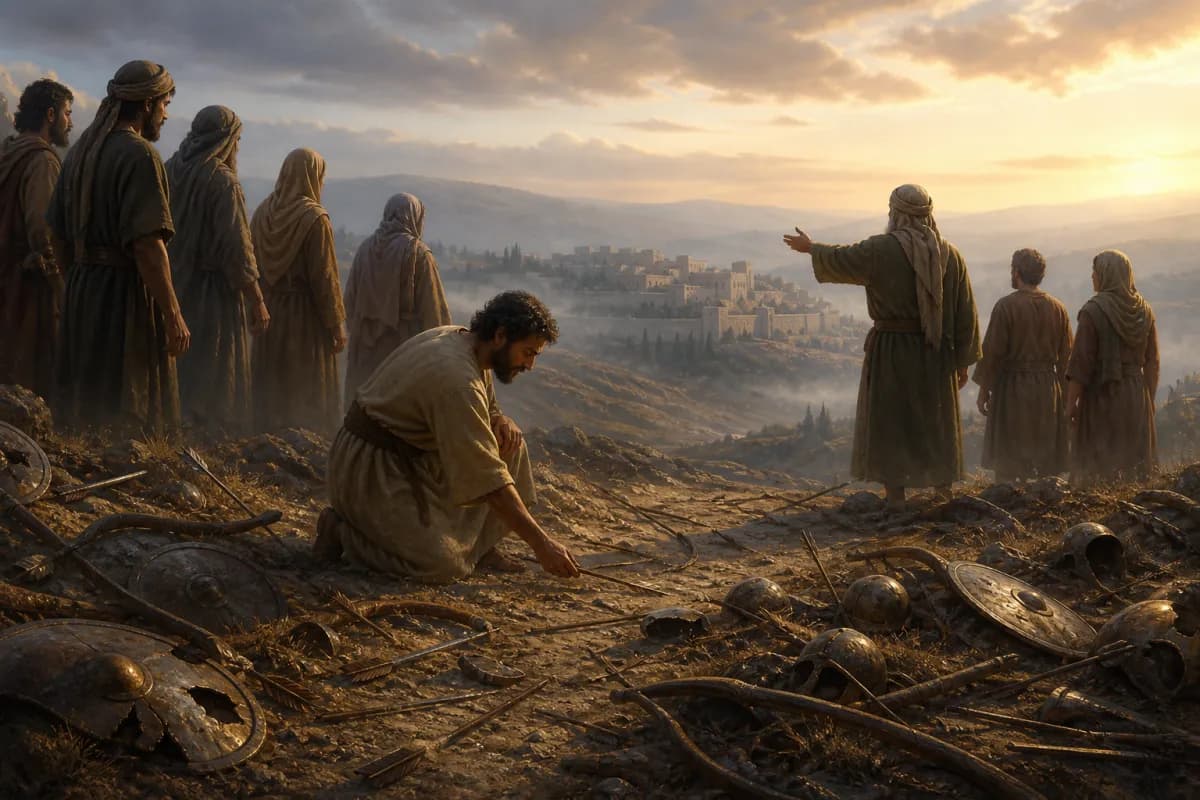
Psalm 76 celebrates God’s known name in Judah after He shatters weapons of war and silences the mighty. His judgment terrifies the earth, yet it rises to save the humble. The psalm calls rulers to bring their vows to the God no human army can resist. Jesus reveals this holy kingship through His cross and resurrection and will bring every rule under His righteous peace.
- In this study
- 12 verses · 5 movements
Psalms 76
76:1In Judah, God is known. His name is great in Israel.
76:2His tabernacle is also in Salem. His dwelling place in Zion.
76:3There he broke the flaming arrows of the bow, the shield, and the sword, and the weapons of war. Selah.
76:4Glorious are you, and excellent, more than mountains of game.
76:5Valiant men lie plundered, they have slept their last sleep. None of the men of war can lift their hands.
76:6At your rebuke, God of Jacob, both chariot and horse are cast into a dead sleep.
76:7You, even you, are to be feared. Who can stand in your sight when you are angry?
76:8You pronounced judgment from heaven. The earth feared, and was silent,
76:9when God arose to judgment, to save all the afflicted ones of the earth. Selah.
76:10Surely the wrath of man praises you. The survivors of your wrath are restrained.
76:11Make vows to the LORD your God, and fulfill them! Let all of his neighbors bring presents to him who is to be feared.
76:12He will cut off the spirit of princes. He is feared by the kings of the earth.
CONTEXTUAL OVERVIEW
Psalm 76 begins with God’s name known in Judah and His dwelling associated with Salem and Zion. The scene is local, but its claim is larger than Israel’s border: the God who dwells among His people breaks weapons of war and leaves the mighty unable to save themselves.
The supplied note on yare, “to fear with awe,” captures the psalm’s repeated question: who can stand before God when He is angry? This fear is not mere panic before arbitrary power. It is the proper recognition that God’s holy judgment exposes the limits of every armed ruler and every self-confident heart.
HISTORICAL AND LITERARY CONTEXT
The psalm may celebrate a particular deliverance of Jerusalem, but it does not name the opposing army or event. It should therefore not be tied with certainty to one battle. Its poetry presents the Lord as the divine warrior whose rebuke renders chariots, weapons, and warrior courage useless.
The phrase “wrath of man” in the final movement is difficult, but the broad message is plain: human hostility cannot escape God’s rule. He restrains what remains and turns even rebellion into an occasion for His praise. The response required from rulers and worshipers is reverent submission, not confidence in military display.
SECTION-BY-SECTION ANALYSIS
- Verses 1–3 · Psalms 76:1God makes His name known from Zion by breaking the instruments on which warriors rely.
- Verses 4–8 · Psalms 76:9No strong warrior can stand when God rebukes and the earth hears His judgment.
- Verses 9–12 · Psalms 76:11God’s judgment saves the humble and requires kings to honor the One who cuts off proud rule.
CHRIST IN THIS PASSAGE
Psalm 76 is not a detailed prediction of a Gospel episode, but it provides a strong kingdom pattern fulfilled in Jesus. He enters Jerusalem as the humble King, refuses the weapons of worldly conquest, and defeats sin, death, and hostile powers through His obedient death and resurrection.
The psalm’s promise that God rises to save the humble finds its clearest expression in Christ’s welcome of the poor in spirit and His final reign. His cross shows that divine victory is not secured by human violence; His return assures the church that rulers and nations will finally answer to the King whose judgment is both holy and saving.
REFLECTION
Psalm 76 asks what weapons you instinctively trust: intimidation, money, reputation, political access, or control of information. These may look decisive, but God can strip their power in a moment. Bring your fear of stronger people to Jesus, whose kingdom does not depend on the weapons that frighten you.
Practice the humility the psalm names. Fear God enough to keep promises, honor His name, and reject triumph over the weak. The risen King saves those who depend on Him and teaches His people to seek peace without surrendering truth.
Original Hebrew Word Study
Psalm 76:7
יָרֵא
yare · H3372
Usually translated: to fear or stand in awe
Yare means to fear with awe. No ruler can stand when God rises in judgment, because His authority is more fearsome than every earthly power.
Follow the Scripture trail
Psalm 76: The Fearsome God Who Saves the Humble in the larger story
The connection: Psalm 76 praises the God whose judgment breaks weapons and saves the humble. Jesus fulfills this kingdom pattern as the humble, crucified, and risen King who disarms sin and hostile powers and will bring every ruler under His righteous peace.
Respond to the passage
Tell Jesus where another person’s strength has made you afraid or tempted you to fight with the same weapons. Ask Him for humble courage and keep one concrete promise that honors His reign.
- Why does Psalm 76 place God’s dwelling in Zion beside the defeat of weapons?
- How does God’s judgment become good news for the humble?
- What is the difference between Christ’s victory and the forms of power the psalm exposes?
Prayer
Lord Jesus, You are the King no weapon can overcome. Deliver me from trusting force or fearing it too much, and form in me the humble faith that honors Your righteous reign. Amen.