Passage Study
Psalm 79: A Ruined Sanctuary and a Plea for Mercy
Psalms 79:1–79:13
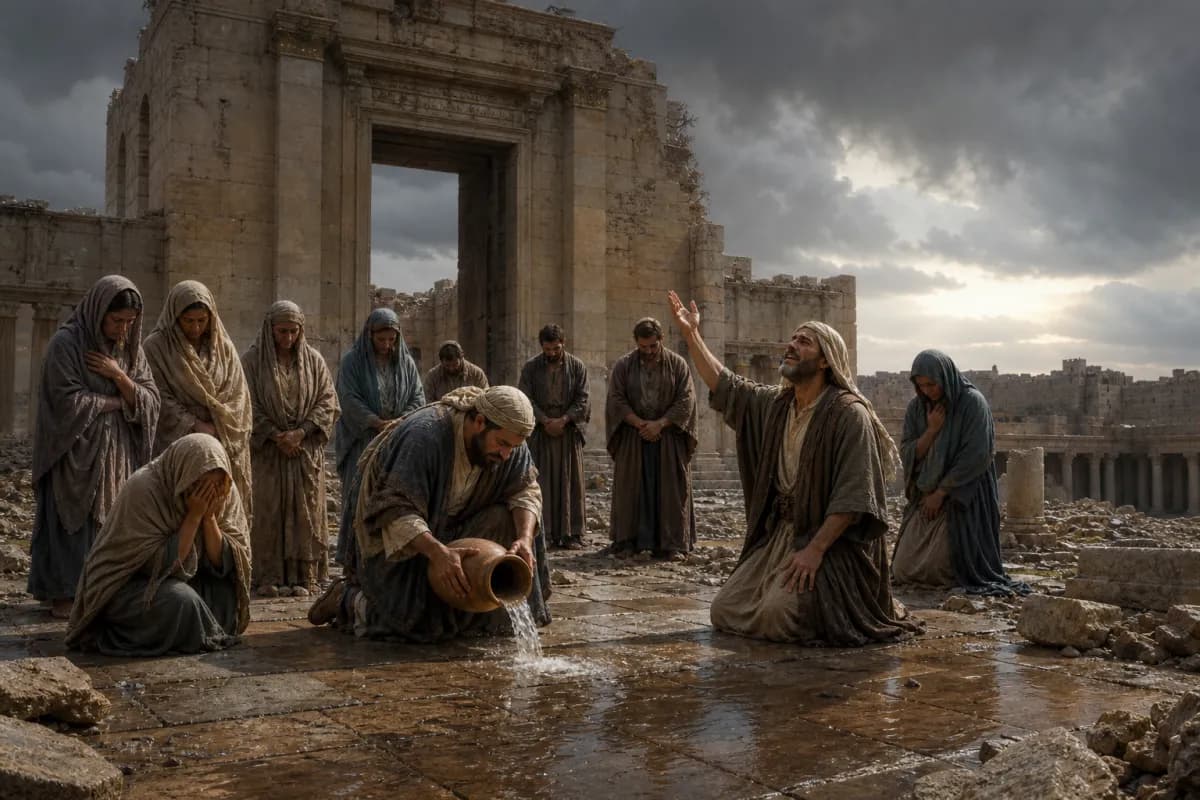
Psalm 79 gives devastated Jerusalem a voice after invaders defile the temple, leave bodies unburied, and mock the God of Israel. The community asks God to remember His covenant name, forgive its accumulated guilt, and vindicate His honor among the nations. In Jesus, the forgiveness for which the psalm pleads is secured, and God preserves a people who praise Him even amid deserved judgment and public shame.
- In this study
- 13 verses · 5 movements
Psalms 79
79:1God, the nations have come into your inheritance. They have defiled your holy temple. They have laid Jerusalem in heaps.
79:2They have given the dead bodies of your servants to be food for the birds of the sky, the flesh of your saints to the animals of the earth.
79:3They have shed their blood like water around Jerusalem. There was no one to bury them.
79:4We have become a reproach to our neighbors, a scoffing and derision to those who are around us.
79:5How long, LORD? Will you be angry forever? Will your jealousy burn like fire?
79:6Pour out your wrath on the nations that don’t know you, on the kingdoms that don’t call on your name,
79:7for they have devoured Jacob, and destroyed his homeland.
79:8Don’t hold the iniquities of our forefathers against us. Let your tender mercies speedily meet us, for we are in desperate need.
79:9Help us, God of our salvation, for the glory of your name. Deliver us, and forgive our sins, for your name’s sake.
79:10Why should the nations say, “Where is their God?” Let it be known among the nations, before our eyes, that vengeance for your servants’ blood is being poured out.
79:11Let the sighing of the prisoner come before you. According to the greatness of your power, preserve those who are sentenced to death.
79:12Pay back to our neighbors seven times into their bosom their reproach with which they have reproached you, Lord.
79:13So we, your people and sheep of your pasture, will give you thanks forever. We will praise you forever, to all generations.
CONTEXTUAL OVERVIEW
Psalm 79 begins after catastrophe has already entered Jerusalem. The nations have come into God’s inheritance, defiled His holy temple, and made the city a ruin. The song does not soften the horror: bodies of God’s servants lie unburied, blood is poured out, and the surviving community has become a taunt to its neighbors. This is a prayer from the wreckage of worship, not a detached reflection on suffering.
The supplied note on kaphar, “to atone or cover over guilt,” is crucial in verse 9. The community does not blame only foreign enemies. It asks God to forgive its sins and deliver it for the glory of His name. The ruined sanctuary creates a question about God’s honor among the nations, while the confession recognizes that Israel needs mercy as surely as it needs rescue.
HISTORICAL AND LITERARY CONTEXT
The desecrated temple and devastated Jerusalem fit a national disaster, most naturally the destruction associated with Babylon, though the psalm itself does not name an invader or date. Its prayer uses covenant language: Israel is God’s inheritance, the people are His sheep, and Jerusalem is the city connected with His name. These terms make the crisis theological as well as political.
The lament moves from description to imprecation, confession, and praise. Its requests that God repay hostile nations arise from a world in which those nations are saying, “Where is their God?” The psalm does not give private grievance a sacred mask; it places public violence, Israel’s sin, and God’s reputation together before the Judge of all the earth.
SECTION-BY-SECTION ANALYSIS
- Verses 1–4 · Psalms 79:1The community brings the defiled temple, ruined city, unburied dead, and public reproach directly before God.
- Verses 5–8 · Psalms 79:10It asks God to confront violent nations while confessing that Israel’s own accumulated sin requires compassion.
- Verses 9–13 · Psalms 79:9For the glory of His name, God is asked to atone, rescue, and preserve His sheep for unending praise.
CHRIST IN THIS PASSAGE
Psalm 79 does not predict a particular Gospel scene, but its plea for atonement exposes the need that temple sacrifices pointed toward. A ruined sanctuary cannot by itself cleanse a guilty people. Jesus gives the decisive sacrifice for sins, bearing judgment so that those who trust Him may be forgiven and brought near to God. This is a strong canonical fulfillment of the mercy for which the psalm cries.
Jesus also bears public reproach and suffering without God’s name being defeated. In His cross, apparent shame becomes the place where God’s holy love is displayed; in His resurrection, God vindicates His Son. Christians therefore may lament real devastation and oppose cruelty while confessing their own sin, asking that Christ make God’s mercy known rather than using another people’s suffering as a reason for self-righteousness.
REFLECTION
When a church, family, or community has been wounded, do not rush past the facts with polished language. Psalm 79 teaches faithful people to name defilement, loss, and shame before God. It also prevents a posture of pure accusation: ask where confession and repentance are needed, while still asking God to judge violence and protect the harmed.
Bring to Jesus the guilt you cannot cover and the public situation you cannot repair. Pray for God to act in a way that honors His name, then live as one of His sheep: tell the truth about evil, care for those left exposed, and keep giving thanks for the Savior whose mercy is deeper than ruin.
Original Hebrew Word Study
Psalm 79:9
כָּפַר
kaphar · H3722
Usually translated: to atone or cover over guilt
Kaphar means to deal with guilt through atonement. The devastated community asks God to forgive their sins for the sake of His name.
Follow the Scripture trail
Psalm 79: A Ruined Sanctuary and a Plea for Mercy in the larger story
The connection: Psalm 79 asks God to forgive a guilty, devastated people for the honor of His name. Jesus bears sin and shame at the cross, securing the atonement the prayer seeks and forming a people who can praise God amid suffering without hiding their need for mercy.
Respond to the passage
Bring one wound and one sin honestly to Jesus. Ask Him to protect those harmed, expose cruelty, forgive what needs forgiveness, and make your response display the mercy of the God whose name you bear.
- Why does Psalm 79 connect the ruined temple with the glory of God’s name?
- How can the psalm ask for justice against violent nations while also confessing Israel’s own guilt?
- What changes when you bring both public shame and personal sin to Christ for mercy?
Prayer
Lord Jesus, You bore our sin and shame to bring us near to God. Hear the grief of those wounded by violence, forgive our guilt, defend Your name, and make us faithful sheep who speak truth and praise Your mercy. Amen.