Passage Study
Psalm 82: God Calls Unjust Rulers to Account
Psalms 82:1–82:8
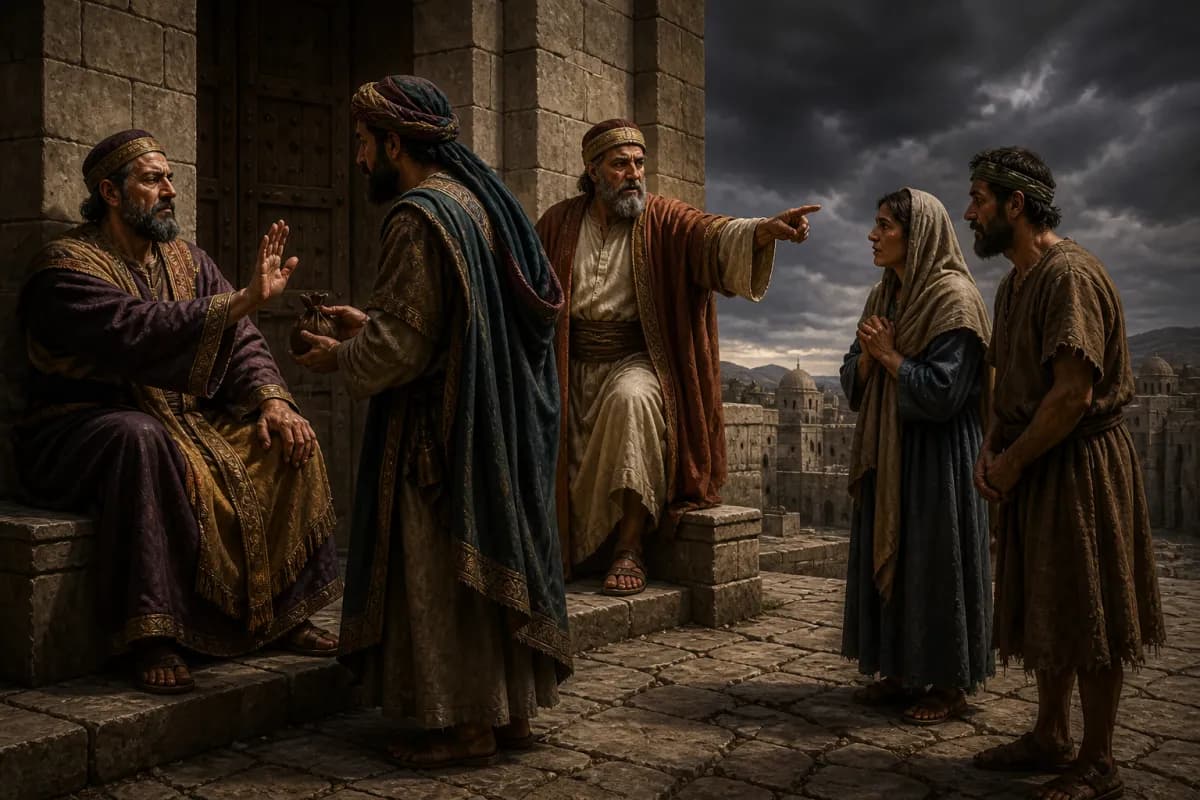
Psalm 82 presents God standing in the divine council to condemn rulers who show partiality to the wicked and fail the weak, orphan, poor, and needy. Their unjust judgments shake the foundations of the earth. Though called gods, they will die like mortals. The final plea asks God to judge the earth because every nation belongs to Him, a hope fulfilled in Jesus, the righteous Judge who saves the oppressed and will set all things right.
- In this study
- 8 verses · 5 movements
Psalms 82
82:1God presides in the great assembly. He judges among the gods.
82:2“How long will you judge unjustly, and show partiality to the wicked?” Selah.
82:3“Defend the weak, the poor, and the fatherless. Maintain the rights of the poor and oppressed.
82:4Rescue the weak and needy. Deliver them out of the hand of the wicked.”
82:5They don’t know, neither do they understand. They walk back and forth in darkness. All the foundations of the earth are shaken.
82:6I said, “You are gods, all of you are sons of the Most High.
82:7Nevertheless you shall die like men, and fall like one of the rulers.”
82:8Arise, God, judge the earth, for you inherit all of the nations.
CONTEXTUAL OVERVIEW
Psalm 82 is a courtroom scene. God stands to judge those entrusted with authority, confronting their partiality toward the wicked and their failure to defend people who have little social power. The psalm is blunt: justice is not an optional ornament of rule. When those who judge ignore the weak, the foundations of the earth are shaken.
The supplied note on shaphat, “to judge or govern,” explains the final request that God rise and judge the earth. The word concerns public rule as well as a verdict. The singer asks for God’s own governance because every nation belongs to Him, and human authorities have shown that they cannot be treated as ultimate or morally self-authenticating.
HISTORICAL AND LITERARY CONTEXT
The psalm uses the language of a divine council, calling the addressed figures “gods” and “sons of the Most High.” Interpreters differ over whether these are human judges, spiritual beings, or a poetic scene involving both heavenly authority and earthly rule. The passage’s practical indictment is unmistakable in any case: those being judged fail to protect the weak, needy, and oppressed and will answer to God.
Its brevity intensifies the verdict. God’s questions in verses 2–4 give way to the declaration that these rulers walk in darkness, then to a death sentence: they will die like mortals and fall like any prince. The ending transfers hope away from compromised rulers to the God whose inheritance includes every nation.
SECTION-BY-SECTION ANALYSIS
- Verses 1–2 · Psalms 82:1God confronts authorities who make wickedness easier by rendering partial and unjust judgments.
- Verses 3–4 · Psalms 82:3Righteous rule is measured by protection and vindication of the weak, orphan, poor, and needy.
- Verses 5–8 · Psalms 82:8Darkness in authority destabilizes the world, so the psalm asks God to judge every nation that belongs to Him.
CHRIST IN THIS PASSAGE
Psalm 82 does not permit Christians to claim that every earthly cause or leader represents Christ. It sets every ruler beneath God’s judgment. Jesus embodies the righteous kingship the psalm requires: He welcomes those pushed aside, exposes hypocritical power, and gives Himself for sinners rather than exploiting them. His ministry makes God’s concern for the vulnerable visible without reducing salvation to social reform alone.
The final plea for God to judge the earth has its New Testament horizon in the risen Jesus, appointed as Judge of the living and the dead. His judgment is good news for the oppressed and a warning to the powerful, because the Judge is also the Savior who bore sin at the cross. Those who repent can receive mercy; unrepentant injustice will not be hidden forever.
REFLECTION
Psalm 82 should make us examine the authority we possess, however limited: a workplace decision, a family responsibility, a ministry role, a vote, a courtroom, or access to resources. Ask whose voice becomes easy to ignore and whether your habits protect people who are already secure while leaving the weak unprotected.
Bring both anger at injustice and your own complicity to Jesus. Seek concrete ways to tell the truth, support fair processes, and stand with the needy, while refusing the fantasy that a human system can become the final savior. Christ will judge rightly; His church is called to reflect His mercy and justice now.
Original Hebrew Word Study
Psalm 82:8
שָׁפַט
shaphat · H8199
Usually translated: to judge or govern
Shaphat means to judge and rule. The psalm ends by asking God to rise and judge the earth because every nation belongs to Him.
Follow the Scripture trail
Psalm 82: God Calls Unjust Rulers to Account in the larger story
The connection: Psalm 82 exposes every unjust authority before God and asks Him to judge the nations that are His inheritance. Jesus is the righteous Judge who serves the vulnerable, bears sinners’ guilt at the cross, and will finally bring hidden injustice into the light.
Respond to the passage
Ask Jesus to show you one place where you hold influence and could protect someone with less power. Take a truthful, practical step toward justice, and entrust the final judgment of rulers and systems to Christ rather than to cynicism or revenge.
- Why does Psalm 82 make care for the weak central to the work of judging?
- What is the consequence when authorities walk in darkness?
- How does Jesus as both Savior and Judge shape a Christian response to injustice?
Prayer
Lord Jesus, righteous Judge and merciful Savior, expose the partiality in my heart and use what influence I have to protect the weak. Keep me from trusting human power, and make Your church a truthful witness to Your coming justice. Amen.