Passage Study
Psalm 87: Zion, the City Where the Nations Are Counted as Born
Psalms 87:1–87:7
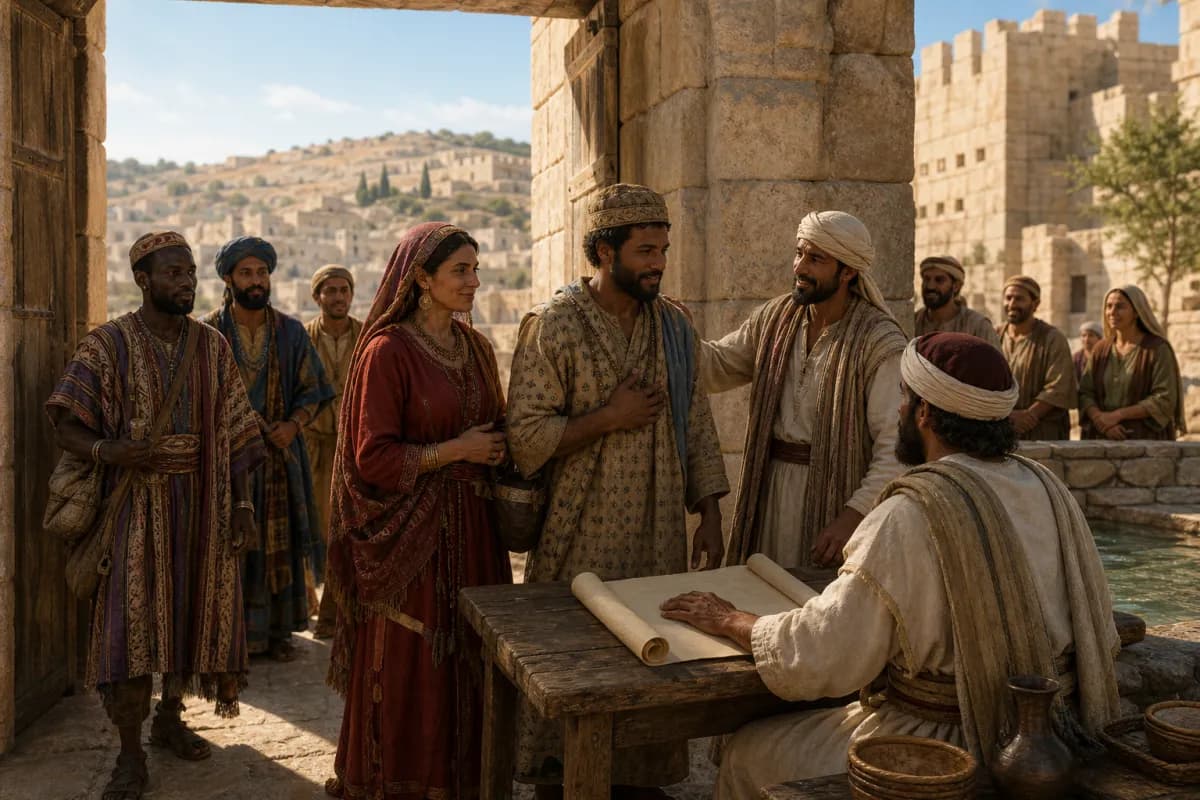
Psalm 87 celebrates Zion as the city God loves and then says something startling: peoples once named as historic outsiders—Rahab, Babylon, Philistia, Tyre, and Cush—will be counted as though born there. God Himself records them among His people. Jesus fulfills this outward-looking hope by gathering people from every nation into God’s household through His saving mission.
- In this study
- 7 verses · 5 movements
Psalms 87
87:1His foundation is in the holy mountains.
87:2The LORD loves the gates of Zion more than all the dwellings of Jacob.
87:3Glorious things are spoken about you, city of God. Selah.
87:4I will record Rahab and Babylon among those who acknowledge me. Behold, Philistia, Tyre, and also Ethiopia: “This one was born there.”
87:5Yes, of Zion it will be said, “This one and that one was born in her;” the Most High himself will establish her.
87:6The LORD will count, when he writes up the peoples, “This one was born there.” Selah.
87:7Those who sing as well as those who dance say, “All my springs are in you.”
CONTEXTUAL OVERVIEW
Psalm 87 is brief, but its claim about Zion is unusually bold. God loves the gates of Zion, and glorious things are spoken of the city of God. The supplied note on tsiyyon identifies the place at the center of the poem: Zion is Jerusalem as the city God chose for His dwelling and the focal point of Israel’s worship.
The surprise comes in verses 4–6. Rahab, a poetic name for Egypt, Babylon, Philistia, Tyre, and Cush are named not simply as nations who will pay tribute to Zion, but as people God counts as born there. The psalm imagines former outsiders receiving a status of belonging that only God, the divine registrar, can confer.
HISTORICAL AND LITERARY CONTEXT
Zion songs celebrate Jerusalem as the place where the Lord made His name known among Israel. Psalm 87 belongs to that worshiping tradition, but it does not turn election into ethnic self-congratulation. Its holy-city language reaches outward toward peoples who had often been enemies, trading powers, or distant nations in Israel’s experience.
The exact historical occasion is unstated. The literary force is clear: birth normally establishes one’s city and family, yet the Lord says of people from far-off places, “This one was born there.” The psalm therefore speaks of a God-given incorporation into His people, not merely of visitors admiring Jerusalem.
SECTION-BY-SECTION ANALYSIS
- Verses 1–3 · Psalms 87:3God’s love for Zion identifies it as the holy center where His glorious purposes are spoken.
- Verses 4–5 · Psalms 87:2Historic outsiders are named as people who know the Lord and are counted as belonging to Zion.
- Verses 6–7 · Psalms 87:1God records their new belonging, and worshipers confess that every spring of life is in His city.
CHRIST IN THIS PASSAGE
Psalm 87 gives a strong canonical pattern for the mission of Jesus: God’s chosen city becomes the place from which formerly distant peoples receive belonging. Jesus begins the proclamation of repentance and forgiveness from Jerusalem, then sends witnesses to all nations. Through His death He breaks the barrier between Jew and Gentile and creates one household of God.
The psalm does not teach that national distinctions vanish or that Jerusalem is merely a symbol with no history. It anticipates the larger people of God gathered around Christ, the true source of life. In the New Testament, Gentiles who once were far off are brought near by His blood and become fellow citizens with the saints.
REFLECTION
Psalm 87 confronts the instinct to make Christian belonging a reward for people who already resemble us. God names Egypt, Babylon, Philistia, Tyre, and Cush as people He can count among His own. Receive the welcome Christ has given you with humility, and resist contempt toward people whose history, culture, or reputation differs from yours.
Pray specifically for the church to become a truthful foretaste of the city Psalm 87 celebrates: a people joined by the mercy of God, not by shared status. Let the question “Who could be counted as born there?” turn into a concrete act of welcome, witness, or intercession in Jesus’ name.
Original Hebrew Word Study
Psalm 87:2
צִיּוֹן
tsiyyon · H6726
Usually translated: Zion
Tsiyyon is Zion, the city of God’s love. The psalm looks outward, imagining even the nations being counted among those who belong there.
Follow the Scripture trail
Psalm 87: Zion, the City Where the Nations Are Counted as Born in the larger story
The connection: Psalm 87 envisions God counting former outsiders as citizens of Zion. Jesus fulfills that hope by dying to reconcile Jew and Gentile to God, sending the gospel from Jerusalem to every nation, and forming one household in His name.
Respond to the passage
Thank Jesus that He brought you near by grace, then identify one person or community you are tempted to keep at a distance and take a concrete step of prayer, welcome, or witness shaped by His reconciling mission.
- Why is it striking that Egypt and Babylon are counted as born in Zion?
- What does God’s role as the one who records belonging reveal about grace?
- How does Jesus’ mission from Jerusalem to the nations fulfill Psalm 87’s hope?
Prayer
Lord Jesus, You have brought people far from God into one household by Your blood. Make me grateful for Your welcome, free me from contempt, and use Your church to announce life in You among every people. Amen.