Passage Study
Psalm 88: Faithful Prayer from the Darkness
Psalms 88:1–88:18
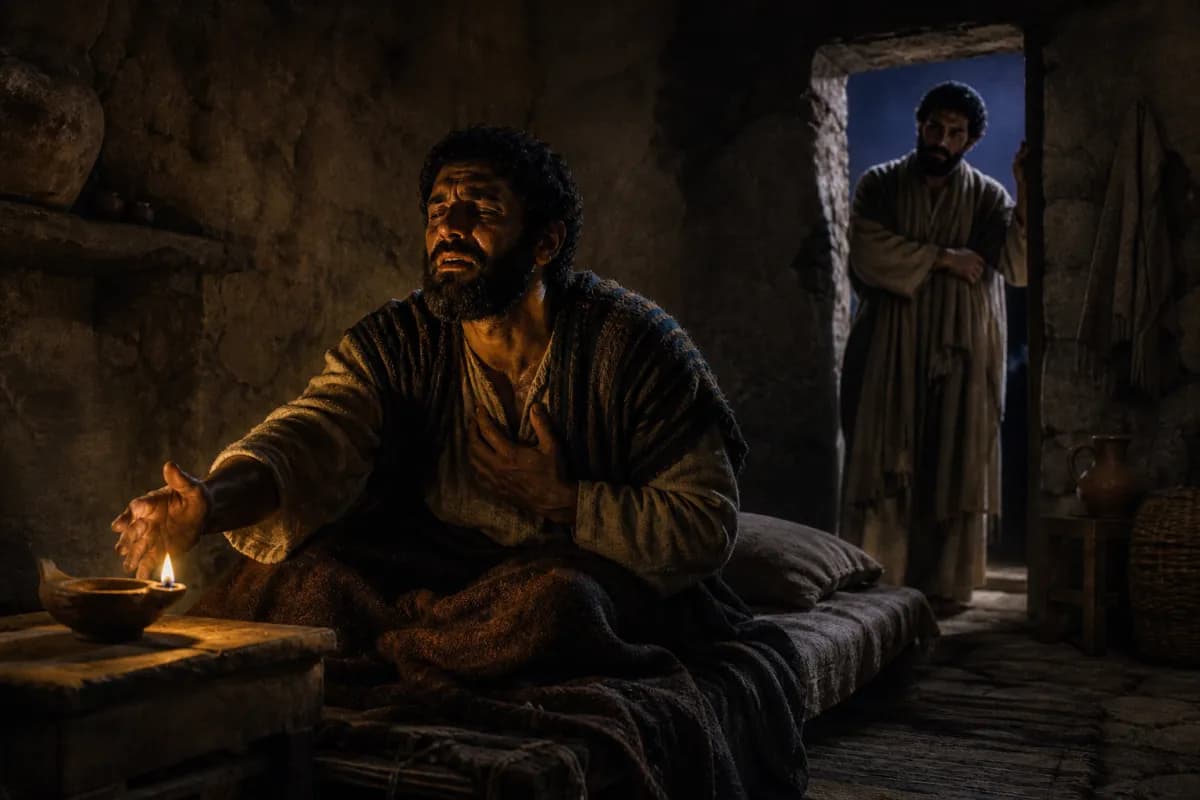
Psalm 88 is the Bible’s starkest lament. Heman cries day and night to the God of his salvation while illness, abandonment, the grave, and darkness close in around him. The psalm offers no visible resolution, yet it refuses silence: the sufferer keeps addressing God. Jesus enters the depths of suffering and death, giving wounded believers a Savior who has borne darkness and secured resurrection hope.
- In this study
- 18 verses · 5 movements
Psalms 88
88:1LORD, the God of my salvation, I have cried day and night before you.
88:2Let my prayer enter into your presence. Turn your ear to my cry.
88:3For my soul is full of troubles. My life draws near to Sheol.
88:4I am counted among those who go down into the pit. I am like a man who has no help,
88:5set apart among the dead, like the slain who lie in the grave, whom you remember no more. They are cut off from your hand.
88:6You have laid me in the lowest pit, in the darkest depths.
88:7Your wrath lies heavily on me. You have afflicted me with all your waves. Selah.
88:8You have taken my friends from me. You have made me an abomination to them. I am confined, and I can’t escape.
88:9My eyes are dim from grief. I have called on you daily, LORD. I have spread out my hands to you.
88:10Do you show wonders to the dead? Do the departed spirits rise up and praise you? Selah.
88:11Is your loving kindness declared in the grave? Or your faithfulness in Destruction?
88:12Are your wonders made known in the dark? Or your righteousness in the land of forgetfulness?
88:13But to you, LORD, I have cried. In the morning, my prayer comes before you.
88:14LORD, why do you reject my soul? Why do you hide your face from me?
88:15I am afflicted and ready to die from my youth up. While I suffer your terrors, I am distracted.
88:16Your fierce wrath has gone over me. Your terrors have cut me off.
88:17They came around me like water all day long. They completely engulfed me.
88:18You have put lover and friend far from me, and my friends into darkness.
CONTEXTUAL OVERVIEW
Psalm 88 opens with a confession that must not be missed: “O Lord, God of my salvation.” Heman calls God his Savior while describing a life filled with troubles and a soul near Sheol. His faith is not a cheerful feeling that pain cannot touch; it is the stubborn act of bringing unbearable pain to the only God who can hear.
The supplied note on choshekh, darkness, makes the final line especially severe. The poem ends by saying darkness is the singer’s closest companion. No turn to praise follows, no enemy is visibly defeated, and no explanation is supplied. Scripture deliberately preserves prayer for the person whose suffering has not yet lifted.
HISTORICAL AND LITERARY CONTEXT
Psalm 88 is a Korahite lament associated with Heman the Ezrahite. Its language belongs to Israel’s prayer vocabulary: pit, grave, Sheol, wrath, waves, abandonment, and the silence of death. The superscription does not identify an event, and the psalm gives no basis for diagnosing a particular illness or assigning a simple cause to the suffering.
Unlike many laments, this psalm does not move from complaint to an announced confidence that circumstances will change. Its questions about the dead praising God are not a full doctrine of the afterlife; they press the urgency of worship in the land of the living. The singer pleads for God to act because death seems to extinguish his public praise.
SECTION-BY-SECTION ANALYSIS
- Verses 1–9 · Psalms 88:1The psalmist cries to the God of salvation while feeling near death, overwhelmed, and abandoned by companions.
- Verses 10–12 · Psalms 88:12Questions about the grave intensify the plea that God’s steadfast love and righteousness be made known in life.
- Verses 13–18 · Psalms 88:17Long affliction, terror, and isolation remain unresolved, yet the singer continues to pray at dawn.
CHRIST IN THIS PASSAGE
Psalm 88 does not directly predict a particular moment in Jesus’ passion, and it should not erase Heman’s own suffering. It nevertheless gives a profound canonical analogy to the suffering Jesus entered: rejection, grief, abandonment, death, and the cry to God from a place where human help has failed. At the cross Jesus bears sin’s curse for His people and truly dies.
The gospel does not rebuke Psalm 88 for ending in darkness. Jesus’ resurrection is God’s answer to death, not an order that every believer’s present anguish must quickly feel resolved. Because the risen Christ has passed through death and lives, Christians may pray this psalm honestly while holding a hope stronger than the darkness they can presently see.
REFLECTION
Psalm 88 gives permission to keep praying when prayer feels like it is disappearing into the dark. If you cannot find a triumphant sentence, borrow the psalm’s first line and address God as the God of your salvation. Tell Him plainly about isolation, fear, bodily pain, or the exhaustion of another sleepless night.
Do not use this lament to withdraw permanently from the people of God. The singer’s grief includes lost companions, and Christ often cares for sufferers through patient presence. Ask one trusted believer to sit with you, pray a short portion of this psalm, or help you seek the practical care your suffering requires.
Original Hebrew Word Study
Psalm 88:18
חֹשֶׁךְ
choshekh · H2822
Usually translated: darkness
Choshekh means darkness. This lament ends without visible relief, preserving a place in Scripture for faith that can only keep crying from the dark.
Follow the Scripture trail
Psalm 88: Faithful Prayer from the Darkness in the larger story
The connection: Psalm 88 preserves faithful prayer when darkness has not lifted. Jesus enters suffering and death for sinners, rises in victory, and remains a sympathetic Savior who gives believers permission to cry honestly while awaiting the resurrection hope He secured.
Respond to the passage
Bring one unrelieved sorrow to Jesus without editing it into an answer. Then contact one trusted person for prayer or practical companionship, trusting that Christ’s risen life makes your darkness real but not ultimate.
- Why does the opening address, “God of my salvation,” matter when the psalm ends in darkness?
- What does Psalm 88 teach us about prayer when no immediate relief comes?
- How does Jesus’ death and resurrection give hope without making this lament less honest?
Prayer
Lord Jesus, when darkness feels closest, keep me turning toward You. You have entered death and risen in victory; hold me in my sorrow, give me faithful companions, and keep my hope fixed on Your life. Amen.