Passage Study
Psalm 95: Worship the Creator, Hear His Voice Today
Psalms 95:1–95:11
Psalm 95 calls God’s people to joyful worship because the Lord made the depths, mountains, sea, and dry land and is Israel’s shepherd. It then warns them not to harden their hearts as Israel did at Meribah and Massah. Jesus, the great Shepherd, speaks God’s final word and grants the rest that wilderness unbelief forfeited.
- In this study
- 11 verses · 5 movements
Psalms 95
95:1Oh come, let’s sing to the LORD. Let’s shout aloud to the rock of our salvation!
95:2Let’s come before his presence with thanksgiving. Let’s extol him with songs!
95:3For the LORD is a great God, a great King above all gods.
95:4In his hand are the deep places of the earth. The heights of the mountains are also his.
95:5The sea is his, and he made it. His hands formed the dry land.
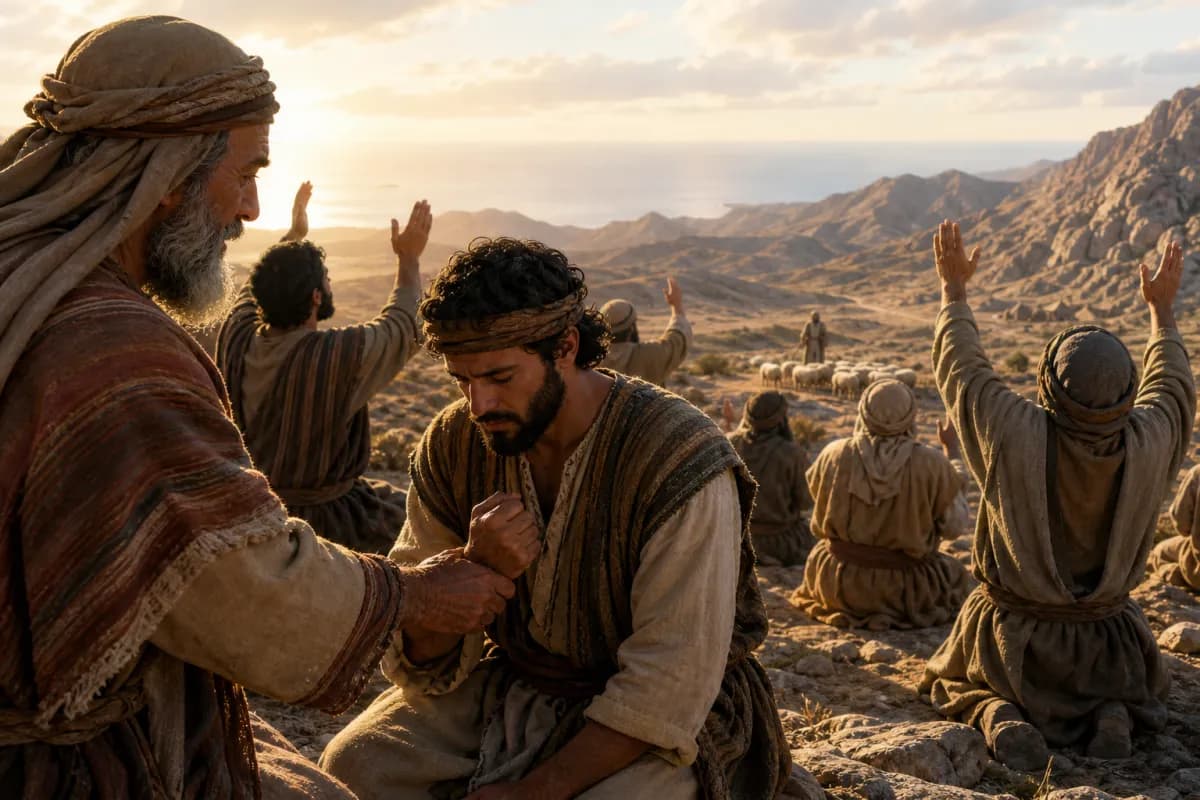
95:6Oh come, let’s worship and bow down. Let’s kneel before the LORD, our Maker,
95:7for he is our God. We are the people of his pasture, and the sheep in his care. Today, oh that you would hear his voice!
95:8Don’t harden your heart, as at Meribah, as in the day of Massah in the wilderness,
95:9when your fathers tempted me, tested me, and saw my work.
95:10Forty long years I was grieved with that generation, and said, “They are a people who err in their heart. They have not known my ways.”
95:11Therefore I swore in my wrath, “They won’t enter into my rest.”
CONTEXTUAL OVERVIEW
Psalm 95 begins with noise: singing, joyful shouts, thanksgiving, and music before “the rock of our salvation.” Worship is fitting because the Lord is not a local deity competing for a corner of creation. The depths of the earth, mountain heights, sea, and dry land all belong to the King who made them.
The tone changes sharply after the congregation bows as sheep under God’s hand. The same God they celebrate speaks directly: “Today, if you hear his voice, do not harden your hearts.” The psalm refuses to separate lively praise from obedient listening. A gathered people can sing loudly and still repeat the unbelief of the wilderness.
HISTORICAL AND LITERARY CONTEXT
Psalm 95 is a call to worship shaped by Israel’s exodus memory. Meribah and Massah recall the place where Israel quarreled with Moses and tested the Lord by demanding proof of His presence despite the deliverance they had already seen. The names themselves preserve the memory of quarrelling and testing in the wilderness.
The psalm likely served Israel’s corporate worship, but it deliberately brings the old wilderness event into the present with the word “Today.” The warning is therefore not only about ancestors long gone. Every generation that hears God’s voice must answer whether it will trust the Shepherd or harden itself against Him.
SECTION-BY-SECTION ANALYSIS
- Verses 1–5 · Psalms 95:1The Lord receives joyful praise because every part of creation is His work and possession.
- Verses 6–7 · Psalms 95:7The congregation bows before its Maker as the sheep of His pasture and is summoned to hear His voice.
- Verses 8–11 · Psalms 95:8Meribah and Massah warn that seeing God’s works without trusting His word leads away from His rest.
CHRIST IN THIS PASSAGE
The New Testament quotes Psalm 95 at length in Hebrews 3–4, applying its “Today” to people who hear the gospel. Hebrews identifies Jesus as greater than Moses and calls believers to hold fast to Him so they do not repeat Israel’s unbelief. This is an explicit apostolic application of the psalm’s wilderness warning.
Jesus also calls Himself the good shepherd who knows His sheep and lays down His life for them. Through His cross He deals with the sin that hardens the heart, and through His resurrection He brings His people toward God’s promised rest. The psalm’s command to hear God’s voice therefore becomes a call to receive Christ in persevering faith, not merely to participate in worship services.
REFLECTION
Psalm 95 asks whether your worship includes surrender to God’s actual voice. Consider one command of Christ that you have heard often but have kept at a safe distance: forgiveness, truthfulness, sexual integrity, generosity, reconciliation, or witness. The danger is not only open rebellion; it is slow hardening that keeps demanding a different God.
Come to Jesus today as both your Maker and Shepherd. Let gathered worship train your heart to listen, and invite a trusted Christian to help you obey one clear word from Scripture before delay turns into resistance.
Original Hebrew Word Study
Psalm 95:6
שָׁחָה
shachah · H7812
Usually translated: to bow down or worship
Shachah means to bow low in worship. The Creator and Shepherd deserves a response of humble adoration rather than hardened resistance.
Follow the Scripture trail
Psalm 95: Worship the Creator, Hear His Voice Today in the larger story
The connection: Psalm 95 turns Israel’s wilderness failure into a present summons to worship and obedience. Jesus, greater than Moses and the good Shepherd, speaks God’s final word, dies for hard-hearted sinners, and leads those who trust Him into God’s rest.
Respond to the passage
Identify one area where you have heard Christ’s command but delayed obedience. Bring that hardness to Him today, ask for a listening heart, and take a specific step that shows you trust your Shepherd.
- Why does Psalm 95 connect joyful singing with the warning not to harden the heart?
- What did Israel’s testing at Massah and Meribah reveal about its heart?
- How does Hebrews’ use of “Today” make this wilderness warning a personal gospel call?
Prayer
Good Shepherd, forgive the ways I have heard Your voice without trusting it. Make my worship truthful, soften my heart through Your grace, and lead me into the rest You have secured by Your death and resurrection. Amen.