Truth-Scrolling

Exodus 6:14–6:27

73 of 876 · Passage study

The Family Line of Moses and Aaron: God Works Through Named People

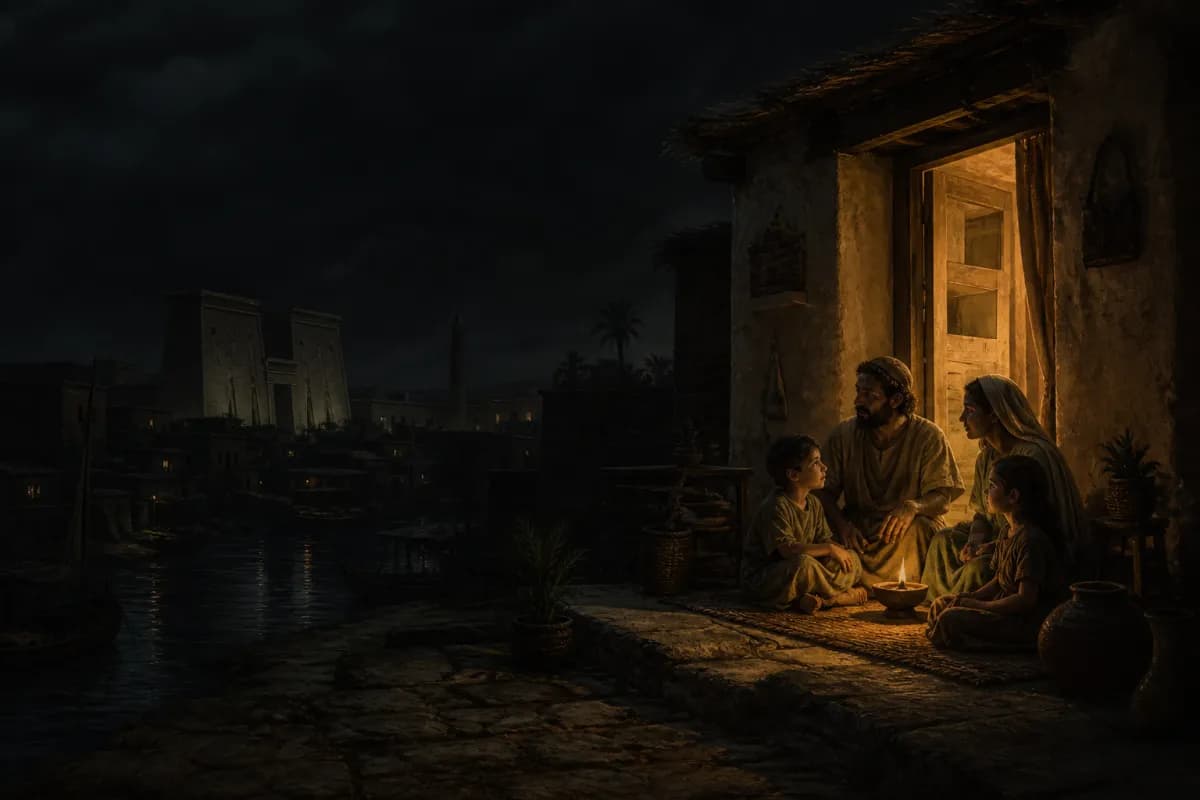
Exodus 6:14–27 interrupts the confrontation with Pharaoh to identify the families of Reuben, Simeon, and especially Levi, culminating in Moses and Aaron. The genealogy anchors the exodus in Israel’s real tribes and identifies the brothers commissioned for this task. It reminds us that God’s saving work enters particular families and histories, reaching its fulfillment in Jesus, the promised Son who gathers a people from every nation.
Study this passage →
Exodus 6:28–6:30

74 of 876 · Passage study

Moses Is Sent to Pharaoh: God Speaks Through a Reluctant Servant

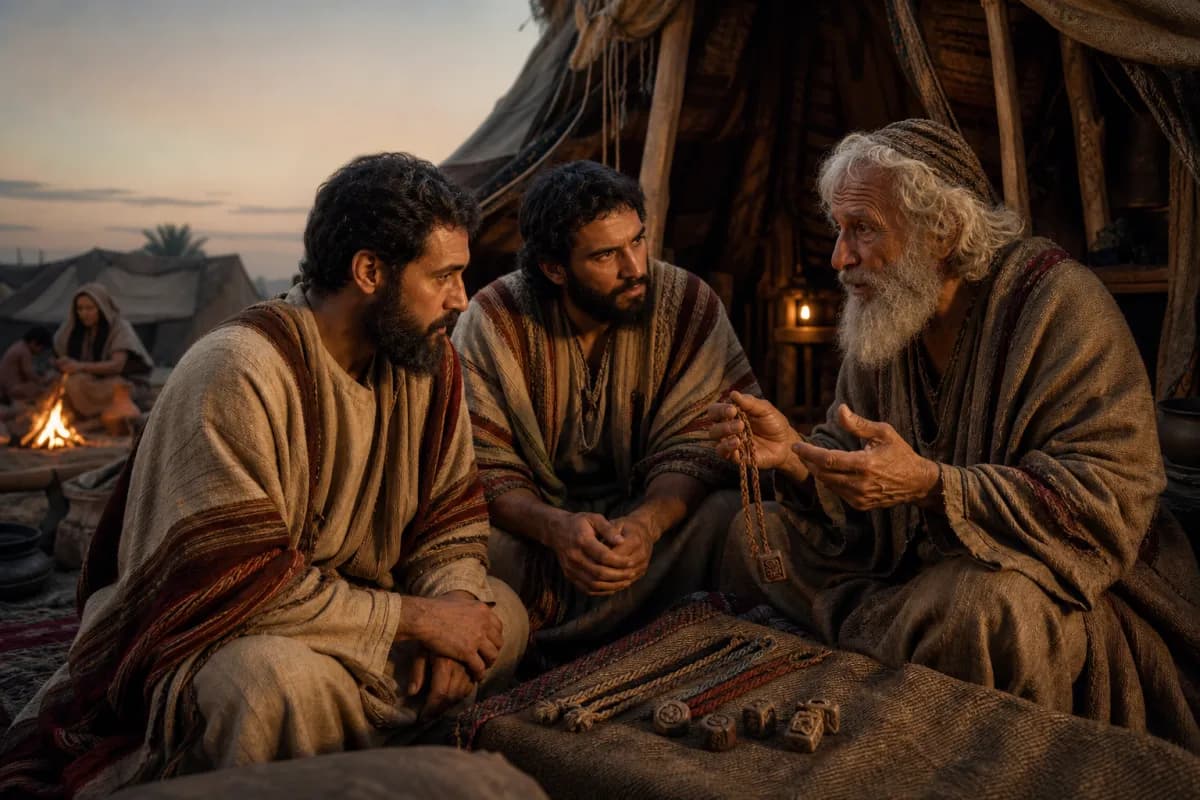
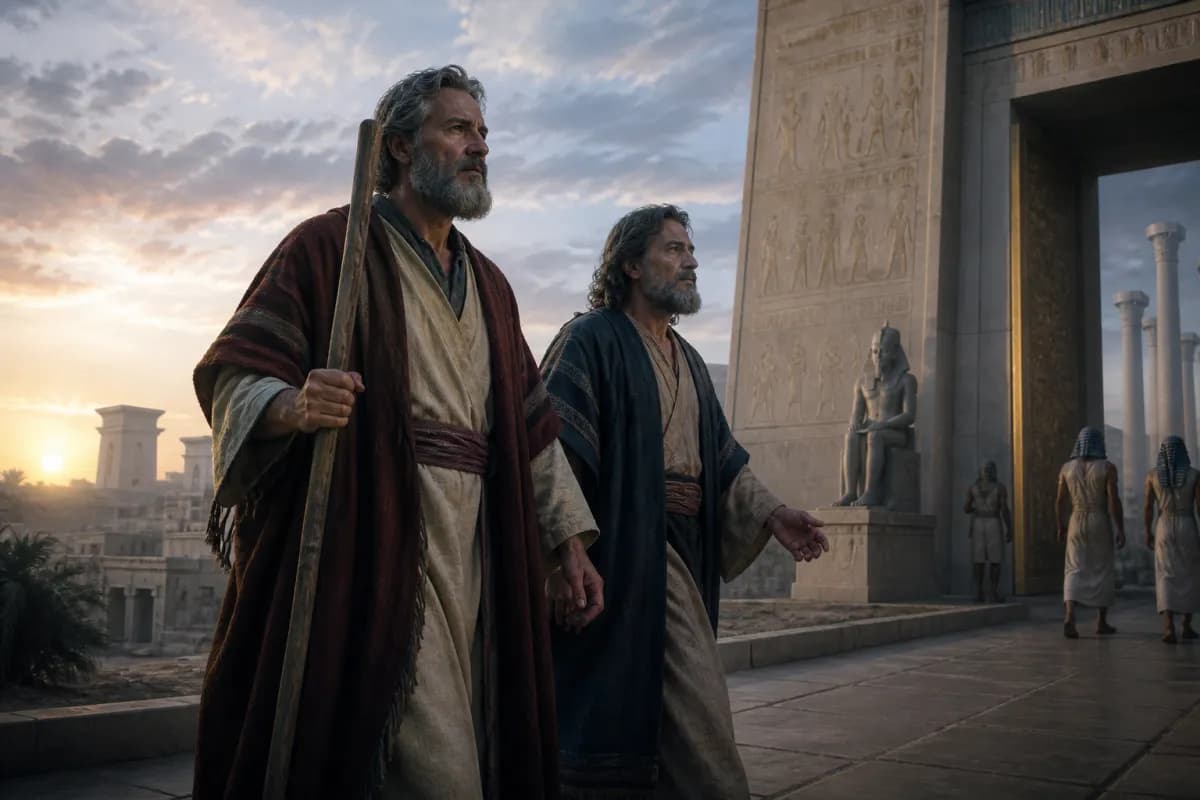
Exodus 6:28–7:7 returns to Moses’ objection that he cannot speak effectively before Pharaoh. God answers by defining Moses’ and Aaron’s roles, giving a precise message, and reminding them that Pharaoh’s resistance will display God’s power. The passage shows that God’s mission does not rest on the messenger’s eloquence and points to Jesus, whose saving word comes with divine authority and sends His people to testify faithfully.

Study this passage →
Exodus 7:1–7:13

75 of 876 · Passage study

Aaron’s Staff Before Pharaoh: The Lord’s Sign in the Royal Court

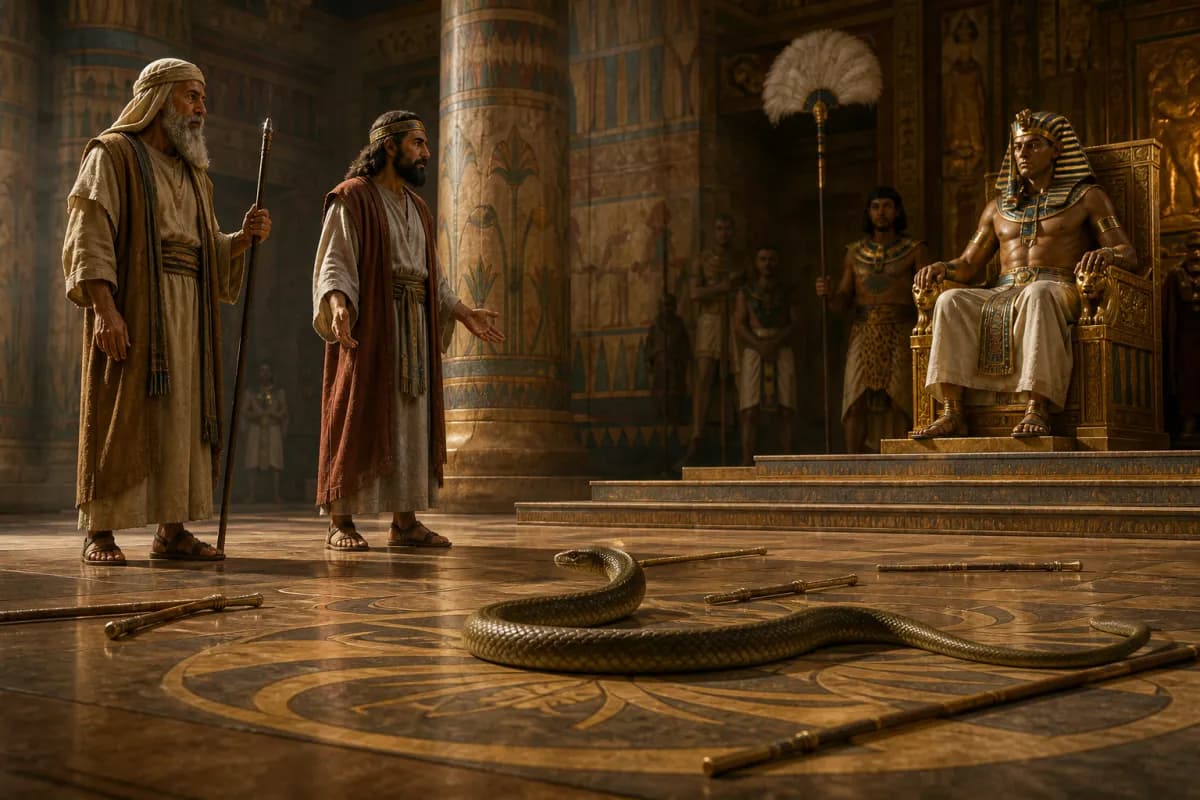
Exodus 7:8–13 brings Moses and Aaron before Pharaoh with the sign God appointed: Aaron’s staff becomes a serpent, and his staff swallows the staffs of Egypt’s magicians. Pharaoh’s court can imitate the outer wonder, but it cannot overcome the Lord’s authority. The scene begins the public exposure of Egypt’s false security and points to Jesus, whose resurrection triumphs over the powers that enslave humanity.

Study this passage →
Exodus 7:14–7:25

76 of 876 · Passage study

Water Turned to Blood: The Lord Judges Egypt’s Source of Life

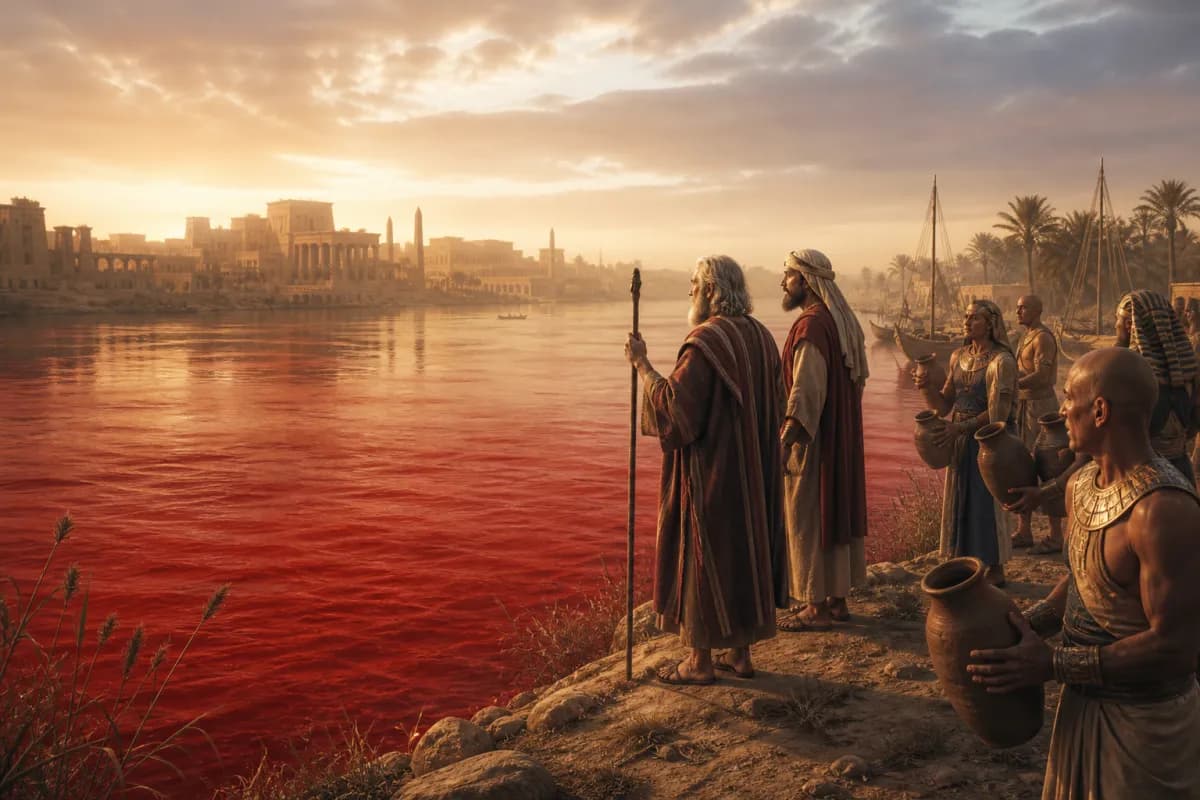
Exodus 7:14–25 begins the plagues by turning the Nile and Egypt’s stored water to blood. The river that sustained Egypt becomes undrinkable, while Pharaoh’s heart remains hard and his magicians only duplicate the sign. God judges the kingdom that used its waters in Israel’s oppression and makes known that He alone is Lord; the passage directs us to Jesus, whose saving blood brings true cleansing and life.

Study this passage →
Exodus 8:1–8:15

77 of 876 · Passage study

The Plague of Frogs: A King Who Will Not Yield

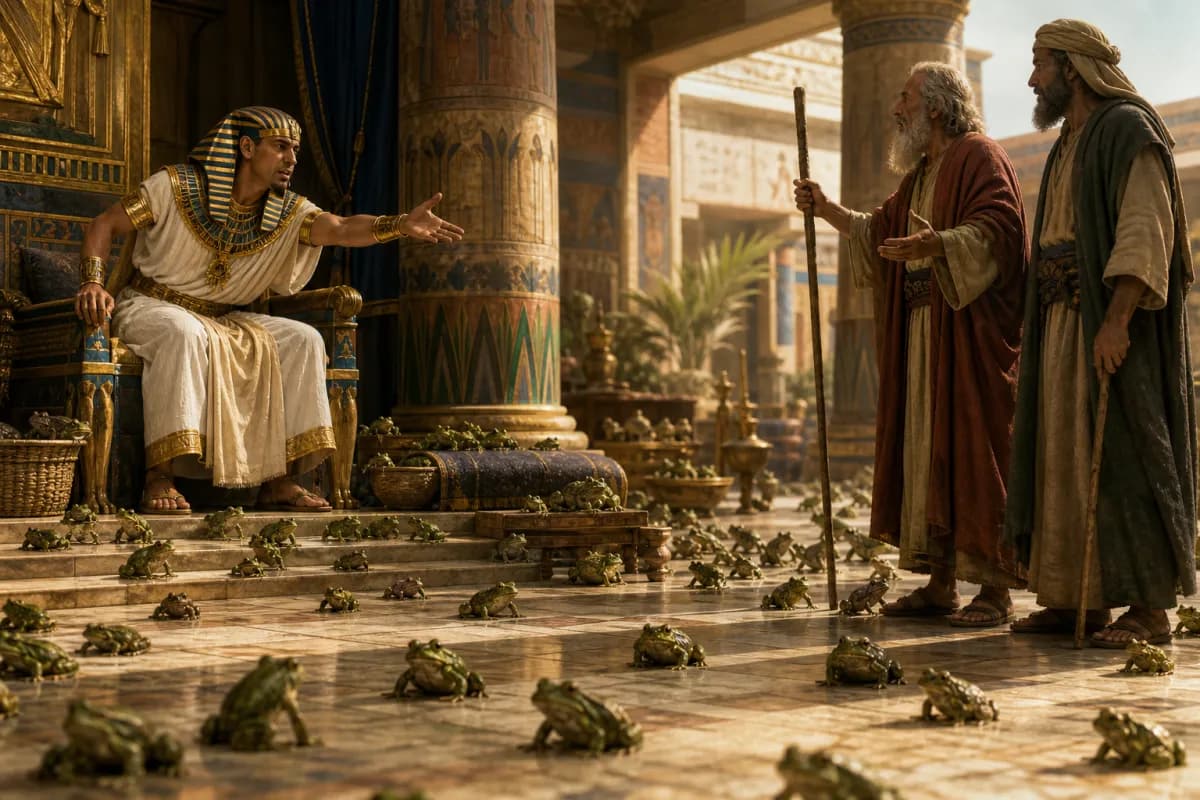
Exodus 8:1–15 shows the Lord sending frogs throughout Egypt after Pharaoh refuses to release Israel for worship. Pharaoh asks Moses to intercede, but hardens his heart once relief comes. The episode exposes repentance that wants pain removed without yielding the heart, and it directs readers to Jesus, who frees people from sin so that they may belong to and worship God.

Study this passage →
Exodus 8:16–8:19

78 of 876 · Passage study

The Plague of Gnats: The Finger of God

Exodus 8:16–19 describes dust becoming gnats throughout Egypt and records the magicians admitting that this work is the finger of God. Pharaoh still hardens his heart. The brief scene shows that clear evidence alone cannot create a willing heart, and it points to Jesus, whose Spirit works not only to expose evil but to bring resistant people into repentance and life.

Study this passage →
Exodus 8:20–8:32

79 of 876 · Passage study

The Plague of Flies: God Makes a Distinction

Exodus 8:20–32 sends swarms of flies over Egypt while sparing Goshen, where Israel lives. God makes this distinction so Egypt may know He is present in the land. Pharaoh offers compromised worship and then breaks another promise, while the passage points to Jesus, who brings people near to God through His saving work rather than through negotiated allegiance to old masters.

Study this passage →
Exodus 9:1–9:7

80 of 876 · Passage study

The Plague on Livestock: The Lord’s Hand Against Egypt

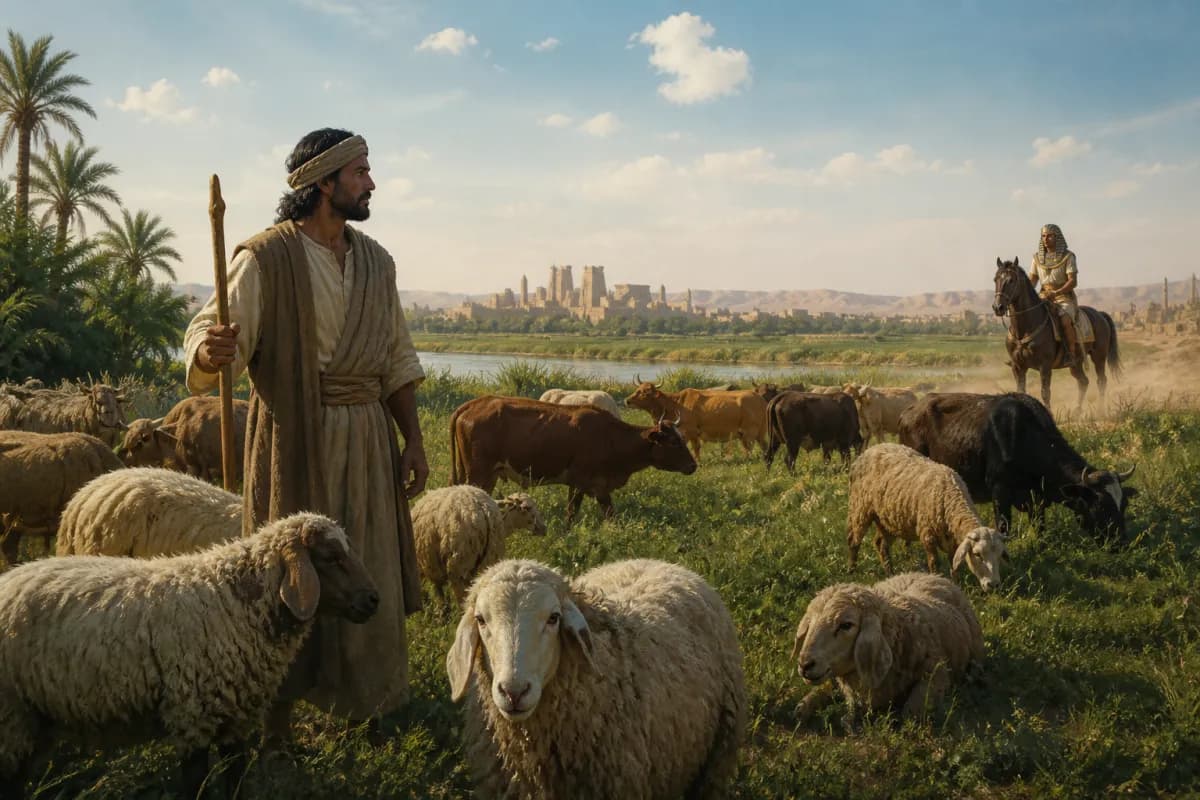
Exodus 9:1–7 announces a severe pestilence on Egypt’s livestock while preserving Israel’s herds. Pharaoh investigates and learns that the Lord’s word has happened exactly as Moses said, yet he hardens his heart. The passage shows that God’s judgments expose false security and that Jesus offers a truer refuge by bringing sinners into the Father’s care through His saving mission.

Study this passage →
Exodus 9:8–9:12

81 of 876 · Passage study

The Plague of Boils: Judgment No Court Can Heal

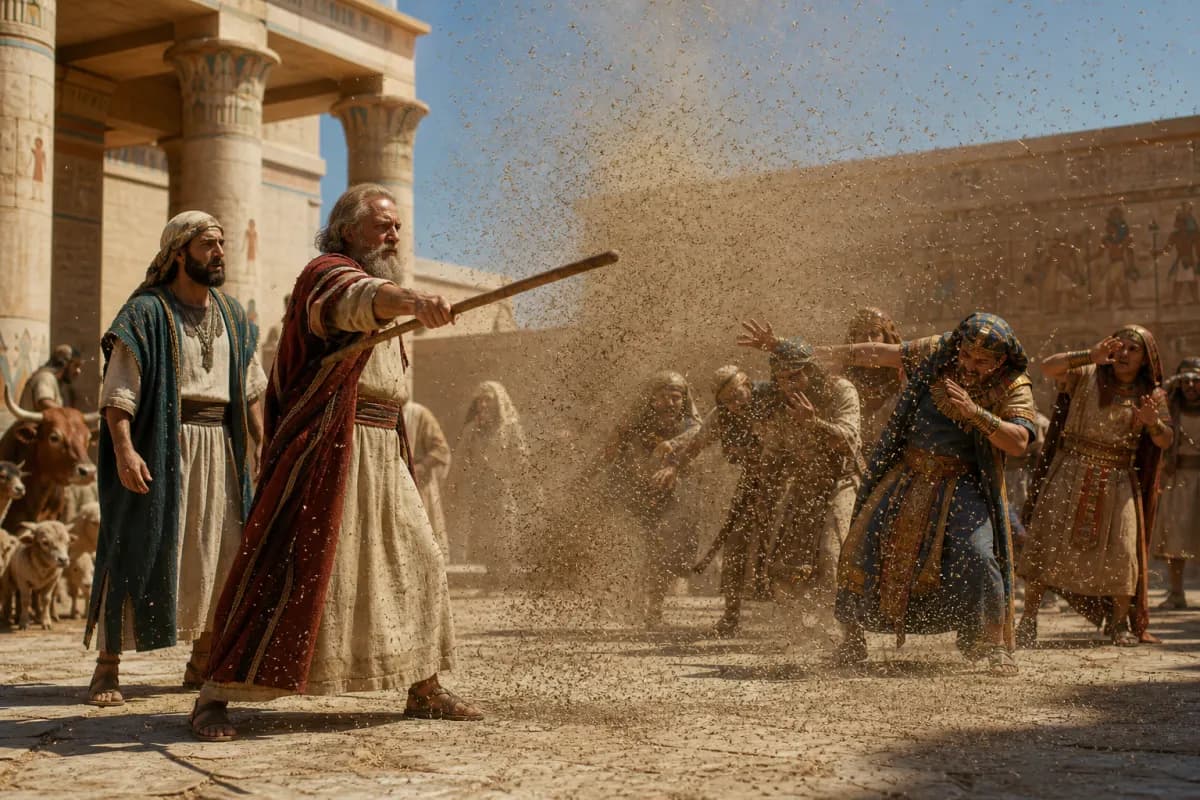
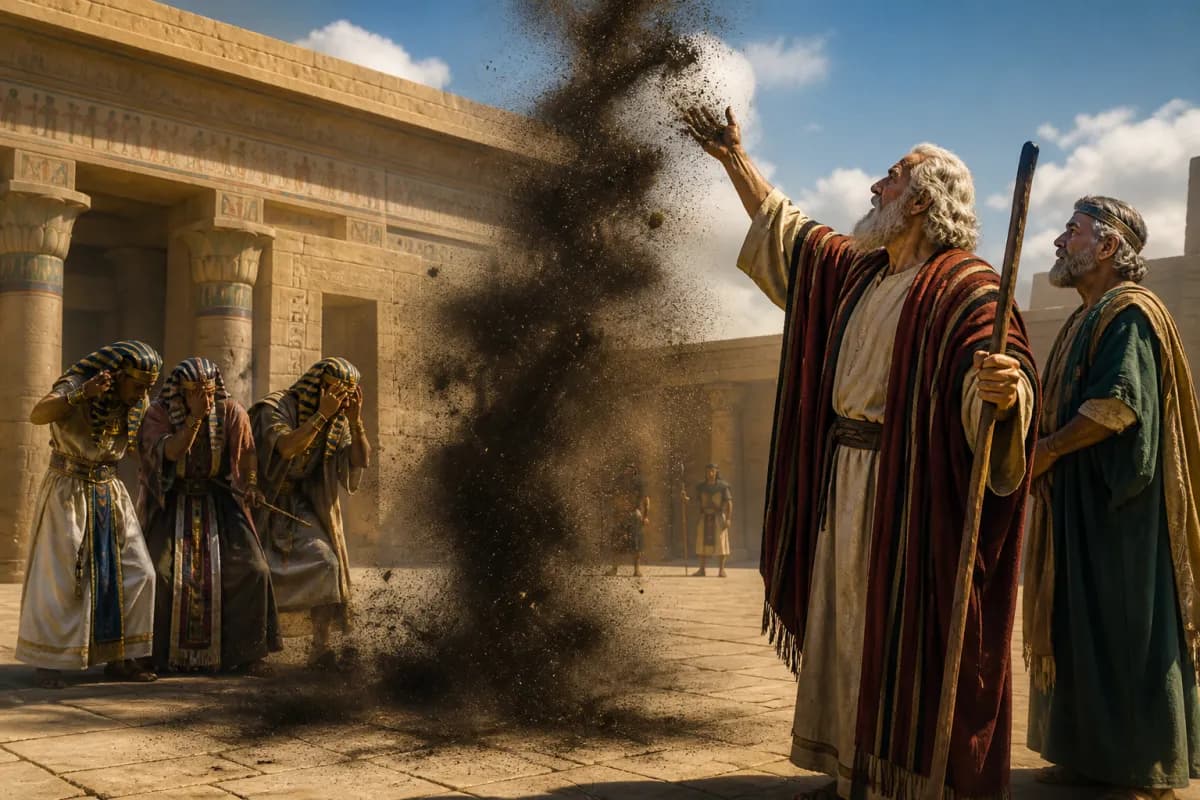
Exodus 9:8–12 records Moses scattering furnace soot toward heaven, after which boils break out on people and animals throughout Egypt. The magicians cannot stand before Moses because they too are afflicted, and Pharaoh’s heart remains hard. The passage exposes the helplessness of a court that cannot heal itself and points to Jesus, who bears human brokenness and brings lasting cleansing and restoration through His saving work.

Study this passage →
Exodus 9:13–9:35

82 of 876 · Passage study

The Plague of Hail: Mercy in the Warning

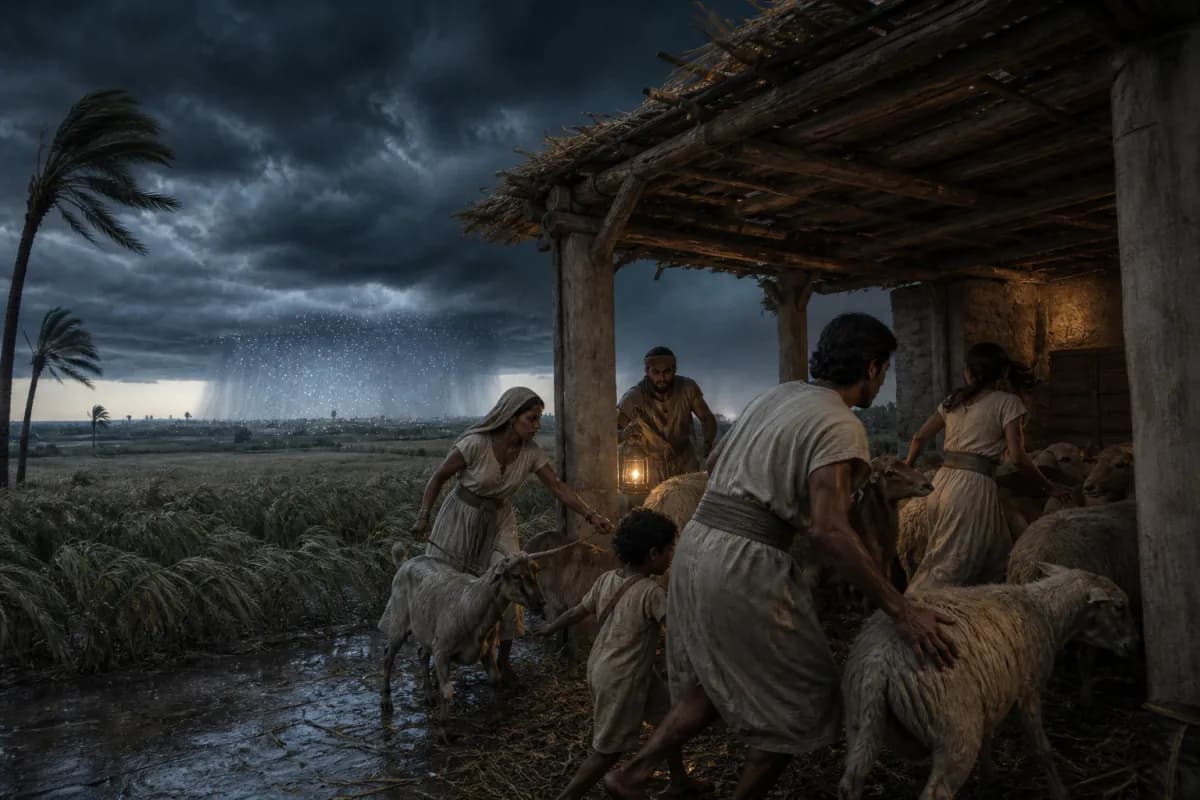
Exodus 9:13–35 brings devastating hail upon Egypt after Pharaoh refuses to release Israel, yet the Lord first warns Egypt so that servants and livestock can be brought under shelter. Some Egyptians fear the Lord’s word and act on it; Pharaoh admits sin under pressure but hardens again when the storm stops. The passage joins righteous judgment with offered mercy and directs readers to Jesus, who calls people to take refuge in God rather than harden themselves against His saving word.

Study this passage →
Exodus 10:1–10:20

83 of 876 · Passage study

The Plague of Locusts: Let God’s People Go

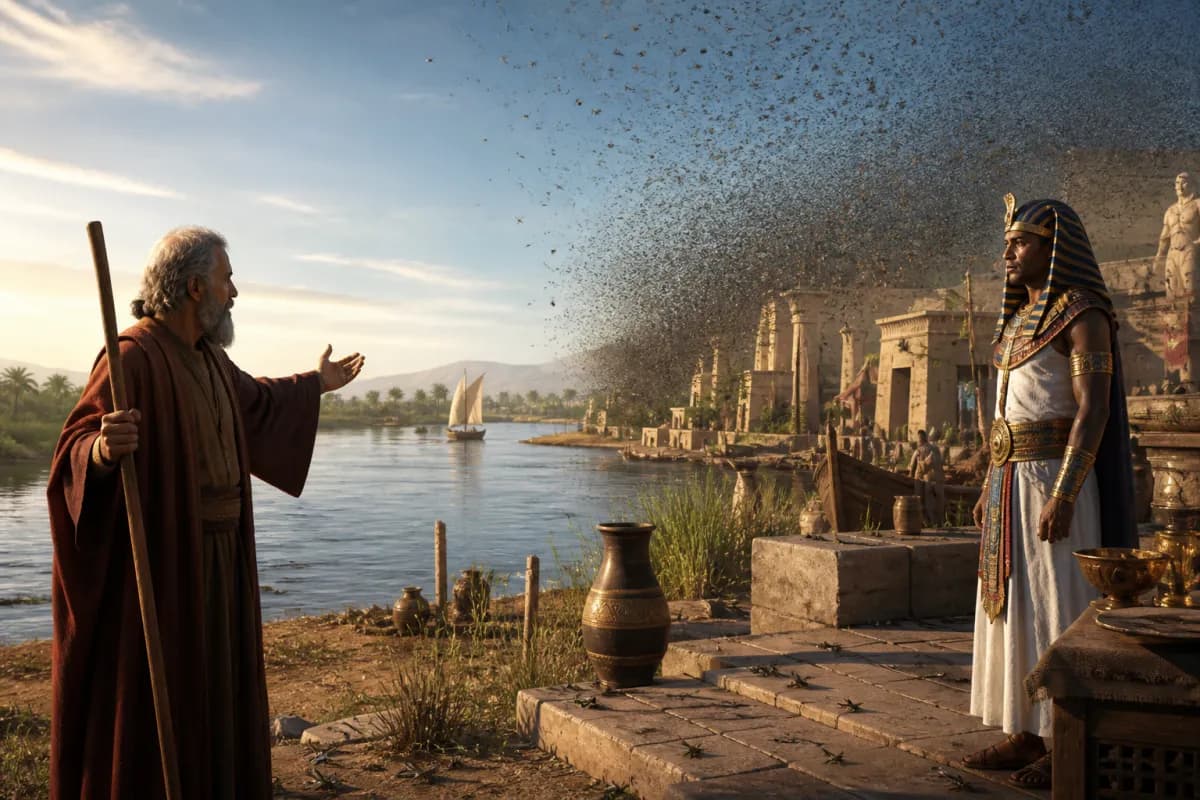
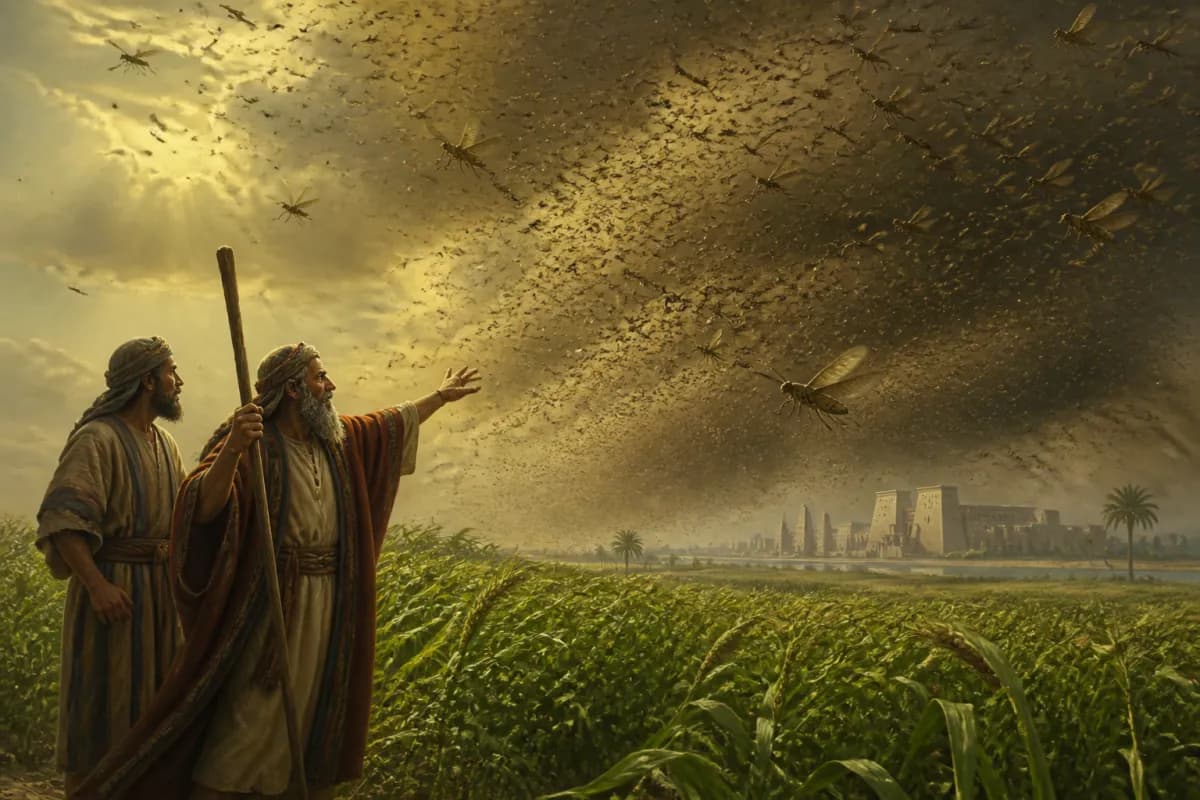
Exodus 10:1–20 records the locust plague that consumes what the hail left behind after Pharaoh tries to control the terms of Israel’s worship. Moses insists that young and old, sons and daughters, flocks and herds must go because they do not yet know how the Lord will require them to serve. The passage exposes negotiated obedience and points to Jesus, who saves a whole people to belong to God without Pharaoh-like masters setting the boundaries of worship.

Study this passage →
Exodus 10:21–10:29

84 of 876 · Passage study

The Plague of Darkness: Light Where God’s People Dwell

Exodus 10:21–29 tells of a darkness so thick that Egypt cannot move for three days, while the Israelites have light where they live. Pharaoh again offers a partial release, demanding that Israel leave its animals behind; Moses refuses because Israel must take what the Lord may require for worship. The contrast between darkness and light points to Jesus, the light of the world, who brings people out of sin’s darkness into the freedom of serving God.

Study this passage →
Keep scrolling for the next passage.