Passage Study
Psalm 136: His Steadfast Love Endures Forever
Psalms 136:1–136:26
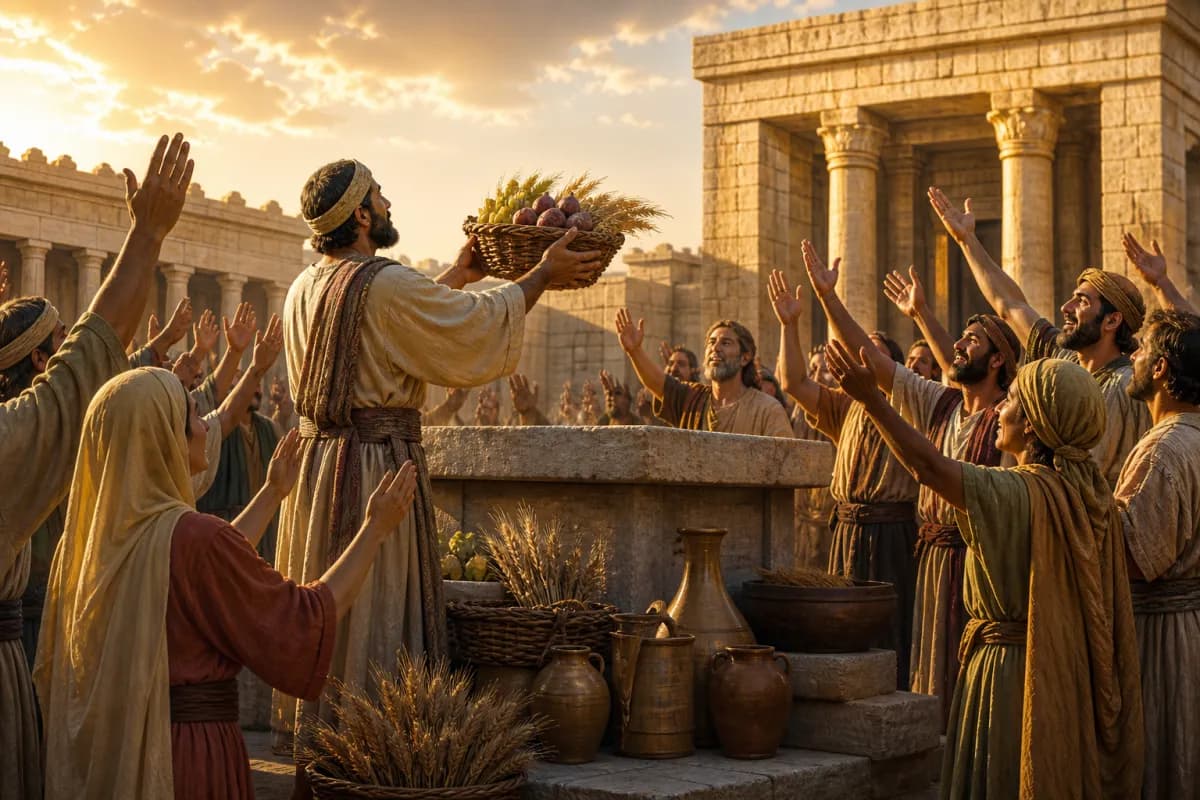
Psalm 136 gives Israel’s whole history a repeated refrain: the Lord’s steadfast love endures forever. The congregation thanks the God above all gods for creation, the exodus, wilderness guidance, victory over hostile kings, land, food, and remembered lowliness. Jesus brings this covenant love to its fullest saving expression by giving Himself for sinners and rising to secure their lasting hope.
- In this study
- 26 verses · 5 movements
Psalms 136
136:1Give thanks to the LORD, for he is good, for his loving kindness endures forever.
136:2Give thanks to the God of gods, for his loving kindness endures forever.
136:3Give thanks to the Lord of lords, for his loving kindness endures forever;
136:4to him who alone does great wonders, for his loving kindness endures forever;
136:5to him who by understanding made the heavens, for his loving kindness endures forever;
136:6to him who spread out the earth above the waters, for his loving kindness endures forever;
136:7to him who made the great lights, for his loving kindness endures forever;
136:8the sun to rule by day, for his loving kindness endures forever;
136:9the moon and stars to rule by night, for his loving kindness endures forever;
136:10to him who struck down the Egyptian firstborn, for his loving kindness endures forever;
136:11and brought out Israel from among them, for his loving kindness endures forever;
136:12with a strong hand, and with an outstretched arm, for his loving kindness endures forever;
136:13to him who divided the Red Sea apart, for his loving kindness endures forever;
136:14and made Israel to pass through the middle of it, for his loving kindness endures forever;
136:15but overthrew Pharaoh and his army in the Red Sea, for his loving kindness endures forever;
136:16to him who led his people through the wilderness, for his loving kindness endures forever;
136:17to him who struck great kings, for his loving kindness endures forever;
136:18and killed mighty kings, for his loving kindness endures forever;
136:19Sihon king of the Amorites, for his loving kindness endures forever;
136:20Og king of Bashan, for his loving kindness endures forever;
136:21and gave their land as an inheritance, for his loving kindness endures forever;
136:22even a heritage to Israel his servant, for his loving kindness endures forever;
136:23who remembered us in our low estate, for his loving kindness endures forever;
136:24and has delivered us from our adversaries, for his loving kindness endures forever;
136:25who gives food to every creature, for his loving kindness endures forever.
136:26Oh give thanks to the God of heaven, for his loving kindness endures forever.
CONTEXTUAL OVERVIEW
Psalm 136 is built for responsive worship. A leader could name the Lord’s act and the congregation could answer, “for his steadfast love endures forever.” The refrain does not flatten the psalm into repetition. It teaches Israel to interpret every remembered mercy—from the making of the heavens to daily food—as evidence of the Lord’s faithful covenant love.
The supplied note on hesed, “steadfast covenant love,” names that refrain. Hesed is not a passing mood. It is God’s committed mercy toward His people, displayed in rescue, provision, and faithfulness when they are low. The psalm therefore ties theology to history rather than leaving love as an abstract idea.
HISTORICAL AND LITERARY CONTEXT
The twenty-six verses form a litany in which each declaration receives the same response. The structure suits corporate worship and helps a community learn its identity by retelling God’s acts. It names the God of gods, Lord of lords, and God of heaven, placing Israel’s story inside the rule of the Creator rather than a narrow local deity.
The sequence follows major scriptural memories: creation, the exodus, passage through the sea, wilderness travel, victory over Sihon and Og, and the inheritance of land. The psalm does not pretend these were easy events or explain every moral question raised by conquest. Its focused claim is that the Lord’s covenant faithfulness carried His people through threats they could not overcome alone.
SECTION-BY-SECTION ANALYSIS
- Verses 1–9 · Psalms 136:9The Creator’s goodness and steadfast love are displayed in the ordered heavens, earth, sun, moon, and stars.
- Verses 10–22 · Psalms 136:1Exodus, wilderness guidance, and inheritance are remembered as the Lord’s faithful rescue and provision.
- Verses 23–26 · Psalms 136:25The God of heaven remembers the lowly, rescues from foes, and gives food for all flesh.
CHRIST IN THIS PASSAGE
Psalm 136 does not reduce steadfast love to pleasant circumstances; it locates love in God’s costly, sovereign rescue of a people who could not free themselves. That exodus pattern reaches its deepest fulfillment in Jesus. At the cross, God acts to deliver sinners from the tyranny of sin and death; in the resurrection, He confirms that this rescue will endure.
The refrain is therefore not a slogan Christians repeat to deny suffering. In Christ, God’s enduring love is made visible precisely where judgment and mercy meet. Jesus gives Himself for His people, gathers them into a new covenant family, and promises a final inheritance in which the love celebrated by Psalm 136 will be known without opposition or loss.
REFLECTION
Use the refrain as a discipline of truthful memory. Trace one thread of God’s care through your own story: a rescue, a season of provision, a needed correction, or grace received when you were low. Give thanks for the act itself, but let it lead you to the God whose steadfast love is the deeper gift.
When present circumstances make that refrain hard to say, take your uncertainty to Jesus rather than treating the psalm as a demand for forced cheerfulness. His cross proves that God’s love is not absent from costly places. Ask Him for daily bread, remember His saving mercy, and wait for the inheritance He has secured.
Original Hebrew Word Study
Psalm 136:1
חֶסֶד
hesed · H2617
Usually translated: steadfast covenant love
Hesed is repeated after every line because God’s faithful love is the thread running through creation, exodus, wilderness, and daily provision.
Follow the Scripture trail
Psalm 136: His Steadfast Love Endures Forever in the larger story
The connection: Psalm 136 interprets creation, exodus, provision, and rescue through the Lord’s enduring covenant love. Jesus embodies that love in His saving death and resurrection, delivering sinners from sin and death and securing the inheritance for which God’s people give thanks.
Respond to the passage
Choose one line of your own story that you tend to explain only by chance or effort. Thank Jesus for His mercy there, then bring one present low place to Him and ask for the help the God of heaven delights to give.
- Why does the psalm attach the same refrain to creation, exodus, wilderness, and daily food?
- What does hesed add to a simple statement that God is loving?
- How does the cross keep the refrain from becoming denial of present suffering?
Prayer
God of heaven, Your steadfast love endures forever. Thank You for creating, sustaining, and rescuing Your people. Through Jesus, teach me to remember Your mercy honestly, receive today’s provision gratefully, and hope in Your lasting inheritance. Amen.